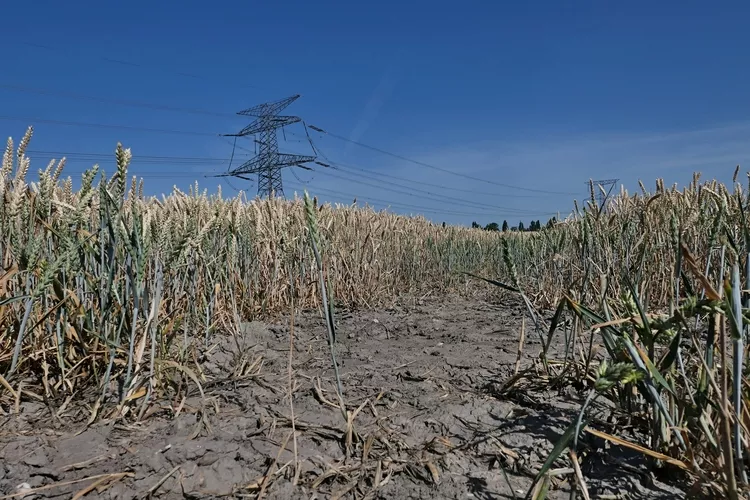
In 2023, heat was linked to a record 710,000 deaths worldwide, with more than 70 per cent attributable to human-caused climate change
By
A Lancet Countdown report found that the health impacts of climate change are accelerating faster than a decade ago, with experts calling for climate change to be declared a global health emergency.
Almost 10 years after the Paris Agreement came into force, the latest report – produced by an international collaboration of 146 researchers from 71 collaborating institutions – found that climate-related health harms are growing faster than the global response.
Enjoying this article? Check out our related reads…
According to the report, the most comprehensive assessment yet of the links between climate change and health, annual average heat-related deaths increased by nearly 36 per cent in the years following the Paris Agreement, compared with the previous decade. In 2023, heat was linked to a record 710,000 deaths worldwide, with more than 70 per cent attributable to human-caused climate change.
Droughts plagued many regions last year, with the report finding they affected more than half of global land for at least one month in 2025. The area affected by extreme drought has also grown more than 700 per cent faster than it did in 2006–2015.

Rising temperatures are also affecting the transmission of diseases such as dengue and causing economic issues worldwide. Globally, heat exposure led to the loss of 573 billion potential work hours in 2025, causing $1.07trillion in income losses.
However, Lancet Countdown also revealed important progress made in climate action. Around the world, investment in clean energy reached a record $2.1trillion in 2025. Many countries have also reduced fossil fuel-related air pollution, and cleaner air already prevents an estimated 323,000 deaths a year in 70 countries.
The report’s authors call for formally recognising climate change as a global health emergency, and for integrating health considerations across climate mitigation, adaptation, and financing decisions.
Ultimately, while this progress has been made, the report stresses it is not enough to offset the negative impacts from fossil-fuel-driven climate change.
‘Climate change is already harming health in every region of the world, and the evidence shows that many of these impacts are accelerating,’ said Dr Diarmid Campbell-Lendrum.
‘At the same time, this report demonstrates that climate action is a health intervention. Cleaner energy, stronger health systems and early warning systems are saving lives today. As countries prepare for COP31, placing health at the centre of climate policies can help protect communities, strengthen resilience and deliver immediate benefits for people’s health and well-being.’
The latest report comes at the same time as a study from Potsdam Institute For Climate Impact Research (PIK) revealing that global warming is now accelerating at a record-breaking pace. Researchers found that the planet has warmed by about 0.35°C per decade over the last 10 years, nearly twice the average rate per decade recorded between 1970 and 2015.