
• Skip to main content
  • Skip to secondary menu
  • Skip to primary sidebar
  • Skip to footer
Geographical

Geographical

Official magazine of the Royal Geographical Society (with IBG)

  • Home
  • Briefing
  • Science & Environment
  • Climate
    • Climatewatch
  • Wildlife
  • Culture
  • Geopolitics
    • Geopolitical hotspots
  • Study Geography
    • University directory
    • Masters courses
    • Course guides
      • Climate change
      • Environmental science
      • Human geography
      • Physical geography
    • University pages
      • Aberystwyth University
      • Brunel University
      • Cardiff University
      • University of Chester
      • Edge Hill University
      • The University of Edinburgh
      • Newcastle University
      • Nottingham Trent University
      • Oxford Brookes University
      • The University of Plymouth
      • Queen Mary University of London
    • Geography careers
      • Charity/non-profit
      • Education & research
      • Environment
      • Finance & consulting
      • Government and Local Government
    • Applications and advice
  • Quizzes
  • Magazine
    • Issue previews
    • Subscribe
    • Manage My Subscription
    • Special Editions
    • Podcasts
    • Geographical Archive
    • Book reviews
    • Crosswords
    • Advertise with us
  • Subscribe
    • Direct Debit Changes

Air pollution slows lung growth during childhood, study finds

29 May 2026
3 minutes

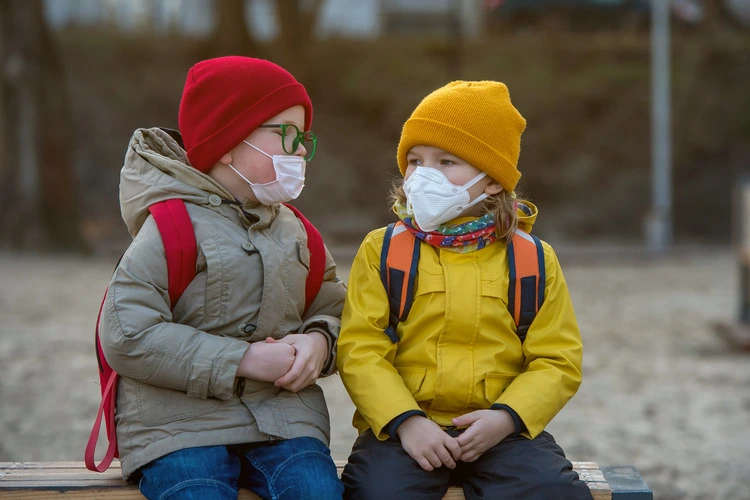
Child boy and girl playing outdoors with face mask protection.
Long-term exposure to air pollution can lead to chronic conditions, such as cardiovascular and respiratory diseases. Image: Shutterstock

Breathing more air pollution during pregnancy, infancy and early childhood can slow lung development, say researchers


By Victoria Heath

Air pollution is slowing the lung growth of children in the UK, a new study has revealed.

Scientists have found that breathing more air pollution during pregnancy, infancy, and early childhood can slow lung development into early adulthood. In particular, researchers discovered that the most impact occurred during adolescence, the time when lung growth accelerates.


Enjoying this article? Check out our related reads…

  • Why are so many non-smokers getting lung cancer in the UK?
  • Mums for Lungs wants wood-burning stoves outlawed
  • The best things to plan to watch in 2025
  • Excessive heat harms young children’s development, study suggests
  • Better World Video Awards 2024: Child soldiers rescued

To reach their conclusions, scientists tracked lung function in more than 5,000 people born in and around Bristol in the 1990s, with their health assessed from birth onwards.

The capabilities of their lungs were measured using spirometry, a process where individuals are asked to breathe as hard and as fast as possible into a mouthpiece. A machine then measures the amount of air participants can exhale and the speed of their breathing, allowing researchers to assess how well each individual’s lungs are working.

The individuals’ lungs were tested as they grew up, at eight and 15 years old and then as adults, aged 24, when lung function is expected to reach its maximum.

Researchers calculated the air pollution exposure in each trimester of pregnancy, and then for each year of early childhood. This air pollution exposure figure included particle pollution and nitrogen dioxide – a gas emitted by many diesel cars and gas boilers.

Previous studies have shown how detrimental air pollution can be to lung growth. One study found that air pollution was reducing the growth of children’s lungs in East London by approximately the volume of two hen’s eggs. And in Sweden, studies on children have shown that lung growth increases when air quality improves.
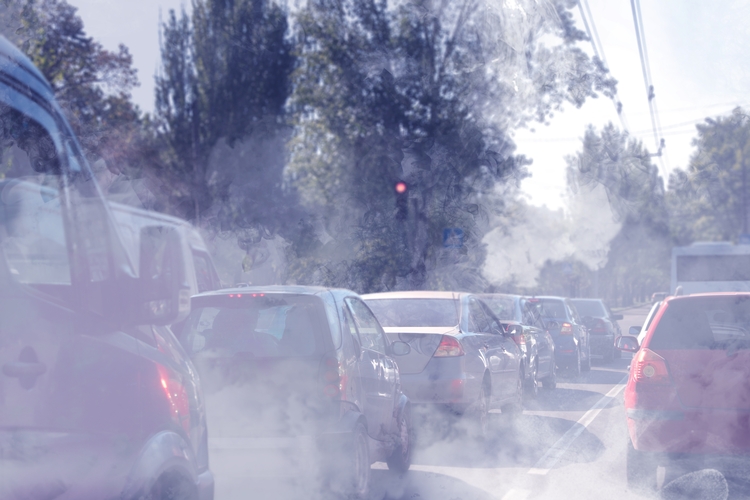
Air contaminated with fumes in city. Cars surrounded by exhaust on road
Diesel cars can release nitrogen dioxide, a harmful gas with detrimental effects to human health. Image: Shutterstock

‘While the effects in individual children are small and unlikely to have immediate clinical consequences, they shouldn’t be dismissed,’ said first author of the study, Dr Katie Eminson.

‘Because lung function tends to track from childhood into adulthood, small differences early in life may have implications for long-term health. This reinforces the importance of reducing exposures and protecting children’s environments.’

The dangers of air pollution

It isn’t just children who are affected by air pollution. In fact, research conducted by the International Agency for Research on Cancer (IARC) found that in the UK, more than 1,100 people per year are diagnosed with the most dominant type of lung cancer due to air pollution.

Cases of adenocarcinoma – now the most common type of lung cancer worldwide – have been rising steadily in the last few years. Back in 2020, the cancer accounted for 39 per cent of global lung cancer cases in men, and 57.1 per cent of cases in women. By 2022, these figures had risen: 45.6 per cent for men, and 57.1 per cent for women.

Air pollution is also linked to lower quality brain health, according to a study involving 7,000 Canadians. Importantly, these changes in brain health are not so severe that people will notice, but scientists say tracking such differences will help to mitigate them before they get worse.

Themes Briefing Carbon emissions Pollution

Protected by Copyscape

Primary Sidebar

SPRING SALE

GEOGRAPHICAL WEEKLY LOGO FREE - Sign up to get context, clarity and perspective in a noisy world, every Friday

Popular Now

On The Ground: The Vet and 100 mysterious deaths

On The Ground: The Vet and 100 mysterious deaths

The Wall Dancers

Review: The Wall Dancers by Yi-Ling Liu

West Bengal is home to around 100 million people – more than the population of Germany.

West Bengal enters the Hindutva era

New York City Times Square

Tourism to the US is dropping

John Kampfner

Travel tips with author John Kampfner

Footer

  • Facebook
  • Instagram
  • LinkedIn
  • Reddit
  • TikTok
  • Twitter
  • YouTube

Geographical print magazine cover

Published in the UK since 1935, Geographical is the official magazine of the Royal Geographical Society (with IBG).

Informative, authoritative and educational, this site’s content covers a wide range of subject areas, including geography, culture, wildlife and exploration, illustrated with superb photography.

Click Here for SUBSCRIPTION details

Want to access Geographical on your tablet or smartphone? Press the Apple, Android or PC/Mac image below to download the app for your device

Footer Apple Footer Android Footer Mac-PC

More from Geographical

  • Subscriptions
  • Get our Newsletter
  • About Us
  • Contact Us
  • Advertise with us
  • Privacy policy
  • Terms & Conditions

Copyright © 2026 · Site by Syon Media