
• Skip to main content
  • Skip to secondary menu
  • Skip to primary sidebar
  • Skip to footer
Geographical

Geographical

Official magazine of the Royal Geographical Society (with IBG)

  • Home
  • Briefing
  • Science & Environment
  • Climate
    • Climatewatch
  • Wildlife
  • Culture
  • Geopolitics
    • Geopolitical hotspots
  • Study Geography
    • University directory
    • Masters courses
    • Course guides
      • Climate change
      • Environmental science
      • Human geography
      • Physical geography
    • University pages
      • Aberystwyth University
      • Brunel University
      • Cardiff University
      • University of Chester
      • Edge Hill University
      • The University of Edinburgh
      • Newcastle University
      • Nottingham Trent University
      • Oxford Brookes University
      • The University of Plymouth
      • Queen Mary University of London
    • Geography careers
      • Charity/non-profit
      • Education & research
      • Environment
      • Finance & consulting
      • Government and Local Government
    • Applications and advice
  • Quizzes
  • Magazine
    • Issue previews
    • Subscribe
    • Manage My Subscription
    • Special Editions
    • Podcasts
    • Geographical Archive
    • Book reviews
    • Crosswords
    • Advertise with us
  • Subscribe
    • Direct Debit Changes

£1m investment in geothermal pilot to unlock heat beneath our feet

9 December 2025
3 minutes

Project team at University of Aberdeen
The pilot team involved in the geothermal grant. Image: University of Aberdeen

Grant secured by University of Aberdeen set to explore the city’s geological potential and pave the way for low-carbon heating solutions


By Victoria Heath

The University of Aberdeen has secured a £1million public grant for a geothermal pilot study to unlock the heat beneath our feet.

The Aberdeen Geothermal Feasibility Pilot (AGFP) is an ambitious city-wide collaboration to explore Aberdeen’s geothermal energy potential and pave the way for low-carbon heating solutions.

Simply put, geothermal energy is the natural heat stored underground. This energy can contribute to clean, reliable warmth for homes, universities, hospitals and other buildings. Crucially, the project is not fracking: it does not split apart rock, inject high-pressure fluids or attempt to find hydrocarbons. Instead, it uses well-regulated scientific drilling techniques to measure temperature, geology and groundwater conditions.


Enjoying this article? Check out our related reads…

  • University of Aberdeen
  • How the UK could heat homes from old coal mines
  • Can the UK catch up in the race to decarbonise home heating?
  • Vanishing Saltmarshes Threaten Climate Progress
  • Do 250-million-year-old rocks contain secrets to net zero?

Funded by UK Research and Innovation and led by the University of Aberdeen, the project will see an instrumented borehole drilled to a depth of more than 500 metres on King’s College campus in Old Aberdeen.

‘Desk studies have previously been carried out on Aberdeen’s geothermal potential. This project will be the first to provide the in-field geological data needed to help bring our initiative and others being considered across the city to reality,’ said project co-lead Professor Clare Bond.

The borehole will be able to provide direct subsurface temperature, geology and hydrology data and give a starting point to test the potential for heat generated by granite at depth to be used to heat homes, the University and other buildings across the city.
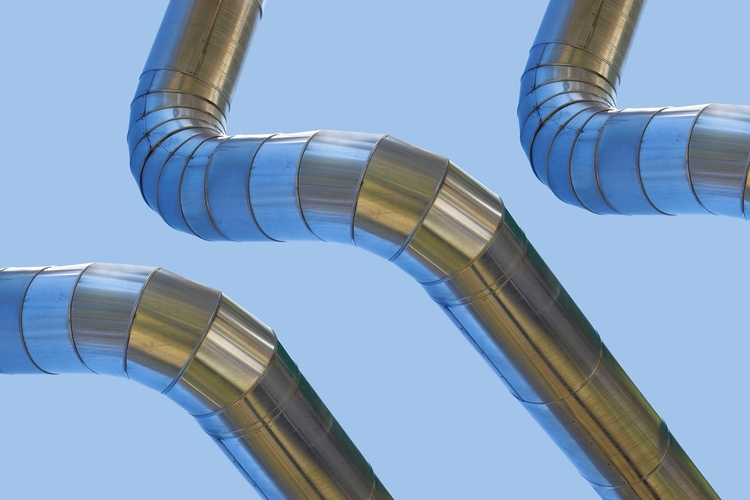
Geothermal stainless steel power pipe structure of a geothermal power station against a sky background
Geothermal energy may be increasingly used in Aberdeen thanks to the geothermal pilot. Image: Shutterstock

Natural and man-made vibrations from waves, wind and traffic will be collected over 1-2 months using over 100 small buried seismic nodes. This ‘seismic noise’ will map out the granite and other subsurface structures and ultimately show where geothermal heating will work best in Aberdeen.

‘Coupling borehole data with the city-wide model will reveal the true potential of geothermal heating in Aberdeen,’ said project co-lead and seismologist Dr David Cornwell. ‘The data we collect will be openly available, not just helping de-risk future geothermal investment and accelerating Aberdeen’s transition to a sustainable energy future but providing data that can be used to predict the geothermal potential of other places across the UK.’

Now, the team are looking to secure funding for subsequent phases of the project which will focus on re-assessing heat poverty information in Aberdeen, to see where geothermal can contribute most effectively. The project will also seek to look at equipping communities to lead on decisions regarding heating and energy in the city, as well as developing skills and understanding of geothermal to support job creation.

‘If the pilot is successful, there is the potential to roll the initiative out across the city and use ground sourced heat for district heating in schools and across the wider community to tackle fuel poverty. In so doing, the University will be true to its foundational purpose of being in the service others,’ said Interdisciplinary Director for Energy Transition at the University, Professor John Underhill.
Themes Briefing Energy

Protected by Copyscape

Primary Sidebar

OUR UK DIRECT DEBITS ARE CHANGING
WINTER SALE

Geographical subscriptions

GEOGRAPHICAL WEEKLY LOGOFREE - Sign up to get global stories, told well, straight to your inbox every Friday

Popular Now

Britain hedgerows

Britain’s hedgerows: the neglected network that holds us together

Out now: March 2026’s Geographical Magazine

Out now: March 2026’s Geographical Magazine

Meet the Winners: Better World Video Awards 2025

Meet the Winners: Better World Video Awards 2025

Scientists reveal our best and worst-case scenarios for a warming Antarctica

Scientists reveal our best and worst-case scenarios for a warming Antarctica

Orangutan

The top ten most endangered animal species on the planet

Footer

  • Facebook
  • Instagram
  • LinkedIn
  • Reddit
  • TikTok
  • Twitter
  • YouTube

Geographical print magazine cover

Published in the UK since 1935, Geographical is the official magazine of the Royal Geographical Society (with IBG).

Informative, authoritative and educational, this site’s content covers a wide range of subject areas, including geography, culture, wildlife and exploration, illustrated with superb photography.

Click Here for SUBSCRIPTION details

Want to access Geographical on your tablet or smartphone? Press the Apple, Android or PC/Mac image below to download the app for your device

Footer Apple Footer Android Footer Mac-PC

More from Geographical

  • Subscriptions
  • Get our Newsletter
  • About Us
  • Contact Us
  • Advertise with us
  • Privacy policy
  • Terms & Conditions

Copyright © 2026 · Site by Syon Media