
For Ukrainian soldiers, the sound of drones has become the soundtrack of war – and a trigger for a new kind of trauma. As veterans return home, the country is only beginning to confront the mental-health emergency left in the wake of Russia’s invasion
By Boštjan Videmšek
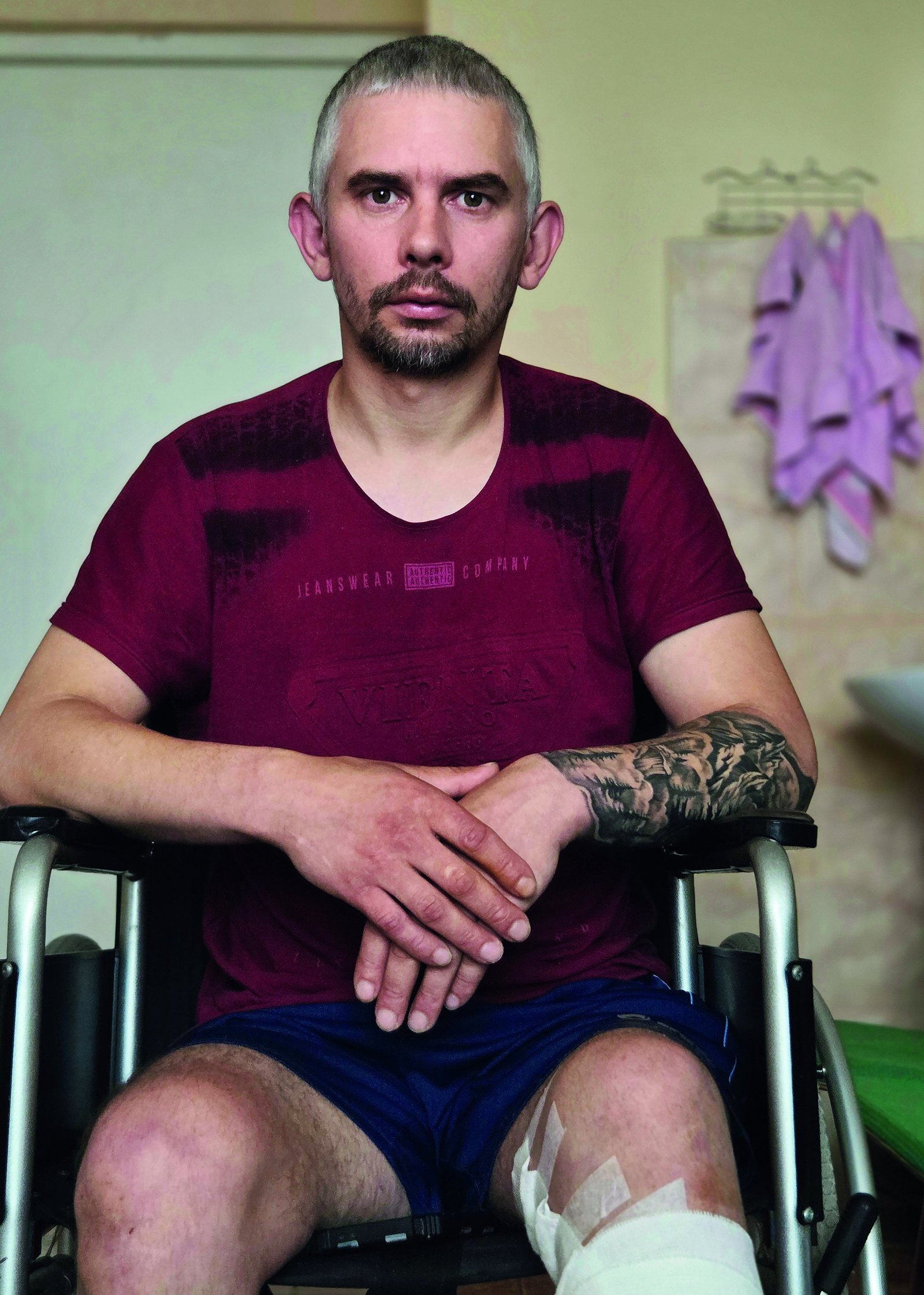
A group of war veterans are sitting in a park beside the Uzh River in downtown Uzhhorod, a city on Ukraine’s border with Slovakia. Many are still recovering from severe wounds. Some are on park benches, others in wheelchairs – the war has cost them their legs.
Combat is the one thing many of them want to talk about: death, injuries and the horrific scenes from the eastern Ukrainian front lines. As they exchange painful battlefield memories, they seem to be trying to keep their fallen comrades alive. Many feel guilty because their wounds forced them to leave the liberation struggle. They feel they’ve let down their country and their fellow fighters – a classic case of survivor’s guilt
Most of the men didn’t seem bothered by my presence as they discussed the war and their personal struggle with their injuries. Several spoke freely of their determination never to return to the front.
All over Ukraine, mobilisation is in full swing. The eastern front, with its incessant Russian offensives, keeps devouring human lives and shows no sign of letting up.
Related reads…
Less than a gunshot from the veterans’ gathering places, Uzhhorod city life burbles on undeterred: packed restaurants and cafés, exuberant teenagers racing scooters, joggers passing at a canter, a young couple kissing on a bridge, children playing on the riverbank, white storks passing overhead. However, on the streets of Uzhhorod, there are at least three times as many women as men.

On 24 June, it was four years and four months since the start of Russia’s full-scale invasion of Ukraine, following seven years of fighting in the east. Since the Second World War, no other country has been forced to send as large a proportion of its population to the front lines as Ukraine.
According to the Ministry for Veterans Affairs, more than 1.7 million Ukrainians have already been granted war-veteran status – almost four per cent of the population. Some 900,000 citizens are currently serving. More than three million have done so since February 2022, many for extended periods. Ukrainian and US estimates warn that, by the end of the conflict, as many as five million veterans could have been created – representing a tenth of the country’s population.
Prominent members of Ukrainian veterans’ associations and international humanitarian organisations predict that between a tenth and a quarter of all veterans will face post-traumatic stress disorder (PTSD) and other serious mental-health problems. Hundreds of thousands are already grappling with these issues.
A recent World Health Organization study determined that the war has already damaged the mental stability of more than half of the Ukrainian population. Anxiety, depression and sleeping disorders are just the tip of the iceberg. The number of Ukrainians suffering from PTSD has doubled since 2024. Yet the full impact of war trauma can only be expected to manifest when all of the fighters have returned home. No-one can tell when that will be, but the simple fact is that two whole generations of Ukrainian men have been affected.
The extent of the conflict is enormous, and the fighting is far from over. All realistic peace initiatives have been put in deep freeze. From the beginning, Donald Trump’s so-called peace plan has seemed to be in step with Vladimir Putin’s war plan.
The new soundtrack of war
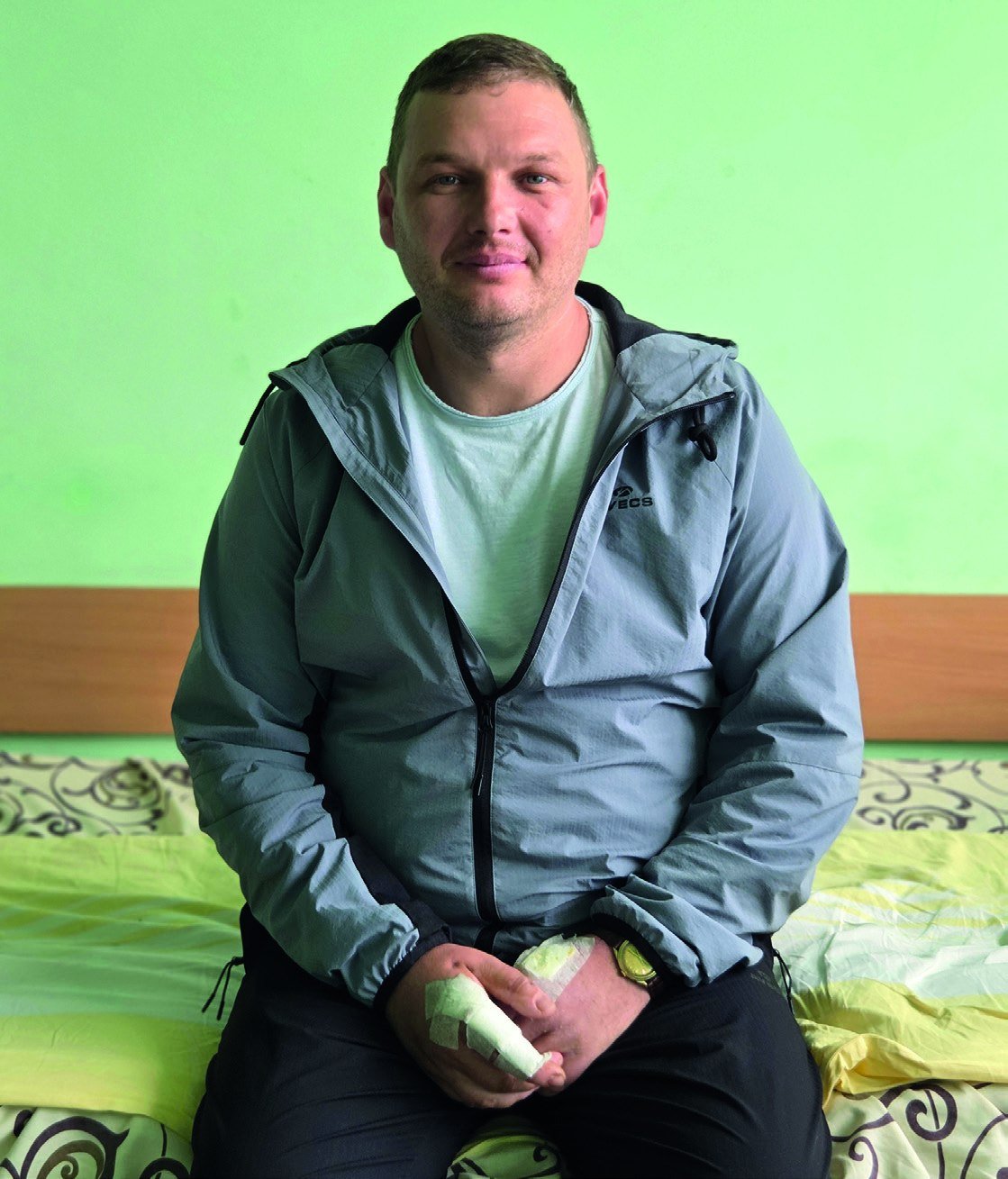
In late April, 36-year-old Mihaylo Sahadiak and eight fellow soldiers set off on a reconnaissance mission near Kramatorsk and Sloviansk. Mihaylo was part of a rear-guard unit following five special-forces scouts. Within minutes, he heard the soul-shredding sound of Russian drones. Filled with dread, he knew what was likely to follow.
‘We were out in the open when we heard the sound. We tried to take cover, but we reacted too late. We were hit. Two soldiers were wounded – one of them very badly. I took some shrapnel. As I was thrown to the ground, I suffered a severe concussion. I was very disoriented, but somehow we managed to evacuate our two wounded comrades. Then the rest of us moved on.’
The unit carefully covered another two kilometres and crossed a stream, following orders received by radio.
‘Then we were spotted,’ Mihaylo recalled at Uzhhorod municipal hospital. ‘The drones were already above us, so we ducked behind some trees. The Russians opened fire with mortars from further out in the field.
‘It was getting dark fast,’ he continued. ‘We had to move on. We found a badly wounded soldier hiding in a high patch of brambles. He was one of ours. We did what we could. We called for evacuation and were told that a robotic stretcher had been sent to our location – basically a remote-controlled robot on wheels carrying a medical bed. It was a long wait. And just a few minutes after we loaded the soldier onto the stretcher, a Russian drone arrived and attacked us again. It killed the soldier and wounded two of my friends.’
In total, Mihaylo spent six months on the battlefield. He fought in the Kharkiv and Zaporizhzhia theatres, as well as on the eastern front. Like thousands of Ukrainians, he had been mobilised; he had no choice but to fight.
Since WWII, no other country has been forced to send as large a proportion of its population to the front lines as Ukraine
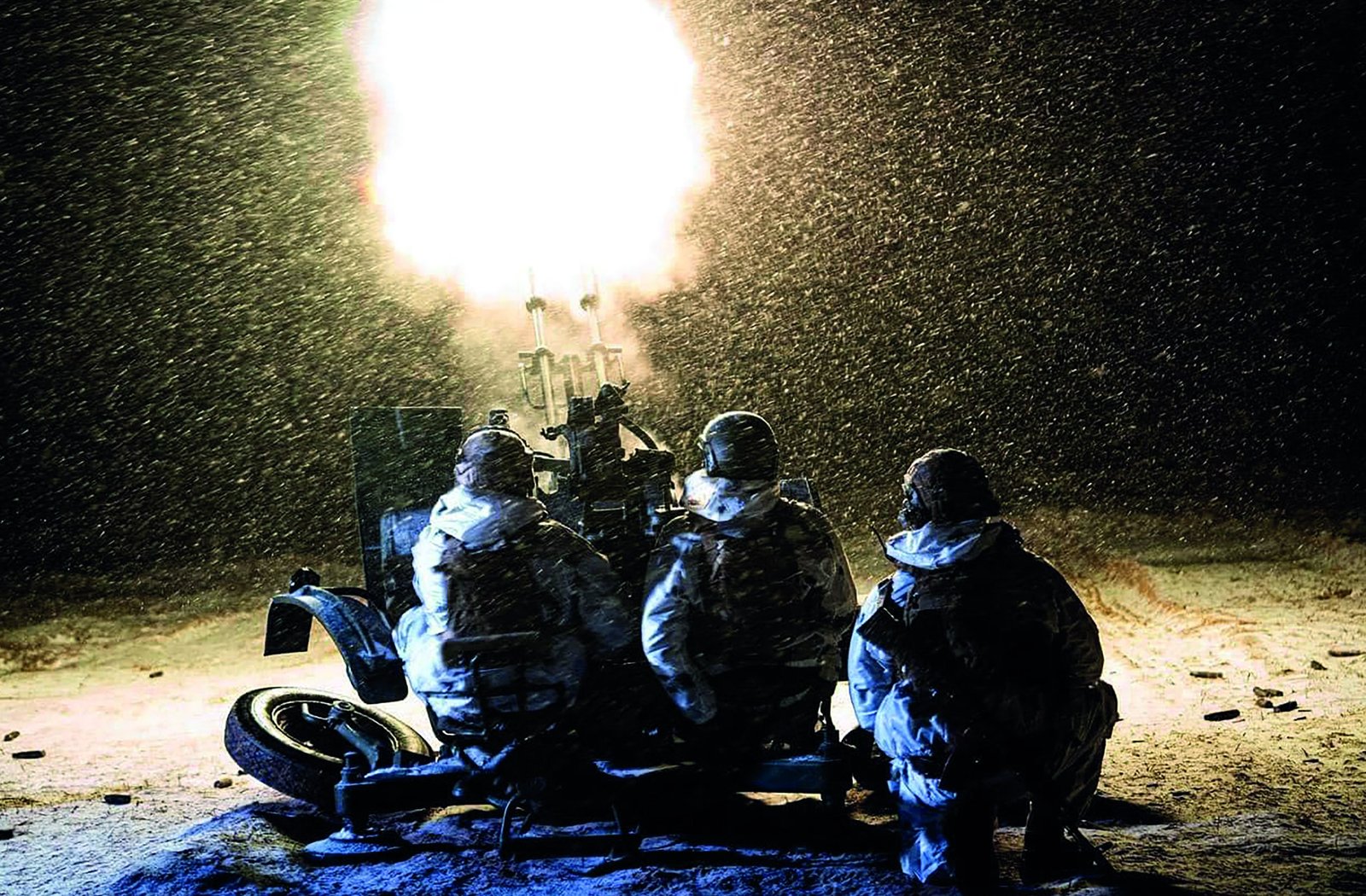
The whirring and screeching of drones, coupled with the incessant sound of artillery, has become the new soundtrack of the Ukrainian war. Over the past 18 months, both sides have learned to rely on cheap, highly effective FPV drones packed with explosives. In Ukraine alone, 160 companies are now producing these vehicles of destruction. During the past 12 months, about eight million have been manufactured.
The situation on the other side is much the same. Russia may have started the war with a strategy and at least some equipment dating from the Cold War, but over the past year it has produced more than seven million drones. On the battlefield, the daily duties of some 100,000 soldiers in the Russian occupation army are focused solely on drone activity.
It’s well established that constant exposure to violence and death significantly increases the risk of PTSD and other mental-health issues. In Ukraine, PTSD is widespread among active soldiers, veterans and prisoners of war returning from Russian prisons. Another heavily affected group consists of the children that have been kidnapped by the Russian army.
A large portion of the civilian population has also been traumatised – especially those near the front lines and those with loved ones deployed in the killing fields. Six million internally displaced people face rising anxiety after losing their homes. A further 5.3 million Ukrainian refugees are still trying to weather the war abroad.
According to a recent study conducted by a leading psychiatry body and published in Acta Psychiatrica Scandinavica, 45.9 per cent of Ukrainian soldiers who had spent an extended period on the battlefield were later diagnosed with PTSD. Another 21.5 per cent were diagnosed with complex PTSD, while 34.4 per cent were also diagnosed with depression. The study estimated that about 70 per cent of the entire population of Ukraine was facing stress-related mental-health issues.
Collective trauma
So far, the Ukrainian army has chosen not to reveal official estimates of how many of its soldiers are dealing with serious mental-health problems or addiction.
War trauma and addiction go hand in hand – so much so that they are often inseparable. The usual narcotics aren’t the only risk. The front lines are also rife with stimulants that enable servicemen to withstand both the pressure and the tedium of a prolonged stint on the front line.
A study by the Ukrainian humanitarian organisation 100% Life examined 1,000 soldiers and found that more than a third used amphetamines at least once a month. Twenty per cent relied on prescription drugs such as pregabalin. About 15 per cent used cheap synthetic cathinones, also known as ‘bath salts’, as well as opioids to relieve pain and help them sleep. Alcohol use on the front lines is now almost a matter of course.
In every Ukrainian town and village, graveyards are riddled with freshly dug graves. In Uzhhorod, a town of 200,000 people, 260 soldiers have been interred since the beginning of the full-scale invasion.

At nine in the morning, when the national anthem invariably erupts from loudspeakers all over Ukraine, I was caught in a heavy squall of rain while walking through the cemetery. I managed to find cover, but a pair of young Roma men tasked with digging new graves could not afford that luxury. They simply kept digging in the downpour, their glances shying away from mine as the soil stuck to their shovels.
‘After the drone attack, we spent the entire night waiting to be evacuated. It was unspeakable!’ grey-haired Mihaylo resumed his grisly tale.
During six months at the front, the young man who had previously worked in a storage facility seemed to age by at least a decade. His blue eyes acquired a hollow, strangely glassy sheen. Every word and gesture – even many of the pauses in our conversation – spoke of trauma.
‘So the robotic stretcher was again deployed to our location. And the Russians again sent in drones. It was as if they were toying with us. All the while, they knew exactly where we were. It was pure sadism. Me and one of my mates were wounded. The shrapnel cut through my veins and face tissue. I was bleeding heavily, but I managed to treat the wound and stop the blood loss. Amid all that chaos, I was separated from the rest of our guys with another wounded comrade. My leg was swelling up. My shoe was soaked in blood. The pain was indescribable. Luckily, our side managed to send over a drone with water, food and medicine.’
Mihaylo made an effort to choke back tears.
‘In the morning, I saw an incoming Russian drone before I could hear it. I managed to shoot it down. My wounded mate and I got moving. We covered about 50 metres at a time. We were in pain – maddened and exhausted, but we knew we had to reach our territory. Command guided us by radio. They directed us to a deserted bunker where we could hide and spend the night.’
The causal link between war and PTSD has been recognised for generations. Over the centuries, the condition has been given many names: combat fatigue, battlefield neurosis, Vietnam syndrome and shell shock. Its key element is a feeling of overwhelming horror and powerlessness, often leading to anxiety, depression, sleeplessness and physical symptoms.
According to experts, we are now witnessing the emergence of a new sub-type of PTSD: so-called dronophobia.
Although military drones have been in use for decades, they have become central weapons during the Ukraine conflict – especially along the 1,500 kilometres of the eastern front. They have injected a new element of horror onto the battlefield. It’s almost impossible to run or hide from these hellish contraptions.
‘Some eight kilometres still separated us from the first Ukrainian positions,’ Mihaylo continued. ‘We were in very rough shape. During the night, my left leg swelled up like you wouldn’t believe. My right leg was also hurting. It had been hit on the first day, but I hadn’t even had time to deal with it.’ By radio, their unit told the two escapees that it was imperative they return via the stream the team had crossed on the way in. ‘We couldn’t do it on foot,’ Mihaylo said, shaking his head. ‘They managed to guide us to a sewer shaft. It took forever to reach the other side. The whole thing just went on and on. But I badly wanted to survive. That was what kept me going. That, and loyalty to my wounded friend from Mykolaiv.’
An ever-present threat
US psychologist Joseph Bonvie, the lead author of a study titled ‘Primary Care Companion for CNS Disorders’, believes that, to the current generation of frontline soldiers, drones are what improvised explosive devices – IEDs – were to soldiers in Iraq and Afghanistan.
According to Bonvie, the use of drones – ‘essentially flying IEDs’, as he told Psychiatric News – has significantly raised the severity of combat trauma. He’s convinced that ‘the persistent aerial threat of drones drives sustained hyper arousal and anxiety due to a continuous sense of being seen and thus targetable’. The ever-present threat of death from above fuels soldiers’ feelings that they are always visible and, sooner or later, due for attack. Such an ominous, near-constant threat is mentally exhausting and spurs burnout, post-traumatic stress, and suicides, Bonvie’s team found.

Another common characteristic of dronophobia is extreme sensitivity to noise. Combat drones make an easily identifiable buzzing and screeching sound, which many soldiers describe as a key trigger of PTSD. In his study, Bonvie pointed out that this creates ‘unique implications for psychological trauma, moral injury and clinical care that we have yet to understand’.
‘The two of us finally made it through to the other side of the shaft,’ Mihaylo recalled. ‘Immediately, we could hear drones again. We took refuge at one of our army’s abandoned positions. The Russians opened fire on us with tanks and mortars. We needed to make a final push towards our territory. The closest point where we could be evacuated was about a kilometre away. Somehow, we made it through the explosions to where our guys could load us into a Jeep and drive us to the military hospital in Sloviansk.’
What was going through Mihaylo’s mind when he reached safety? ‘I could only thank the Lord,’ he replied, tears in his eyes, visibly shaken by talking about his escape.
At the Sloviansk hospital, where several hundred surgical procedures are performed on wounded soldiers on the busiest days, Mihaylo was operated on by the best military surgeons. They sewed up his artery and reconstructed several veins. They managed to save his left foot, but it was close. Six weeks after the incident, he was already able to move with crutches. The doctors decided his recovery would be best served by intentionally leaving a large part of the wound on his left leg open. When I met him, he was still far from ready to leave hospital. Once the main wound had healed sufficiently, he was due to begin the arduous process of rehabilitation.
‘I sleep very poorly. For the first few weeks, I could hear the drones all the time. All that humming, whirring and buzzing in my head. I was absolutely terrified. Wherever I looked, I often saw a drone coming. Thankfully, it has got a little better now. But I can still only sleep with the help of painkillers,’ Mihaylo said with a sigh when I asked about his nights.
His full recovery was expected to take about a year. If all goes to plan, he should eventually be able to walk normally. He won’t return to the front lines; his wounds are simply too severe.
Life after war
PTSD is one of war’s most debilitating consequences, yet it all too often goes neglected. Proper recovery usually involves not only individual treatment, but also long-term support for the sufferer’s family and local community. In Ukraine, where millions of people have experienced violence, loss or displacement, the demand for effective mental-health treatment is dire – and likely to remain so for generations.
Those suffering from PTSD – especially soldiers – often believe they can deal with their problems alone. A heavy stigma is still attached to the condition. This often invisible malaise can drastically affect sufferers’ quality of life, reducing daily routines to a vicious circle of trauma, isolation and exhaustion.
‘Based on my clinical experience and observations, I believe that PTSD and other war-related mental-health problems have become less stigmatised in Ukraine than they were before the full-scale invasion,’ said Dr Olga Osokina, a professor at Donetsk National Medical University and Kyiv Medical University. ‘The reason is quite simple: psychological distress has become extremely common. Symptoms of PTSD, depression, anxiety disorders, adjustment disorders, sleep problems, grief reactions and emotional exhaustion are now experienced not only by military personnel, but also by civilians. Most Ukrainians personally know someone affected by war-related psychological difficulties.’
At the start of Russia’s full-scale invasion, Osokina fled to Poland with her parents and daughter. As a visiting professor at the University of Turku in Finland, she is researching the mental-health consequences of the conflict. She is also involved with the INVEST Flagship project, which is gauging the impact of the invasion on the mental health of Ukrainian teenagers. ‘People increasingly understand that mental-health problems are not signs of weakness, but understandable reactions to extraordinary circumstances,’ she continued. ‘The war has created a social context in which trauma is recognised as a normal human response to abnormal events.’
According to Osokina, none of the world’s health services could be fully prepared for a crisis of such magnitude. ‘Ukraine currently faces an enormous gap between mental-health needs and available services,’ she said. ‘According to estimates from the Ministry of Health, around 14 million Ukrainians require psychological support, while approximately 9.6 million are already experiencing mental-health problems. PTSD, depression, anxiety disorders, grief-related problems and adjustment difficulties have become widespread.’
The crisis is taking its worst toll on the front lines and in the occupied territories. In both cases, help is limited, prompting a steep increase in the use of digital services, including telemedicine, crisis phone lines and online psychological-support programmes.
There is also increasing awareness at governmental level that the psychological consequences of war will continue long after active combat ends
Ukraine is already preparing for the war’s long aftermath. New rehabilitation centres are being founded and mental-health services are being integrated into primary healthcare. Experts are undergoing training in specialised care for PTSD, suicide prevention and psychological-crisis intervention.
‘There is also increasing awareness at governmental level that the psychological consequences of war will continue long after active combat ends,’ Osokina said. ‘This is particularly important because Ukraine will eventually face the return of very large numbers of veterans who will require medical, psychological, social and occupational reintegration support.’
Children and adolescents are particularly vulnerable. ‘In our research conducted during different phases of the war, we observed a cumulative effect of trauma,’ Osokina said. ‘Adolescents who had already been exposed to war-related stress in earlier years showed significantly higher levels of PTSD symptoms, depression and suicidality during the full-scale invasion. The more traumatic experiences accumulated over time, the greater the psychological vulnerability.’
Adequate treatment of profoundly traumatised Ukrainian soldiers and civilians is further hindered by the fact that, during the four and a half years of war, almost half of the country’s mental-health institutions have been destroyed or damaged.
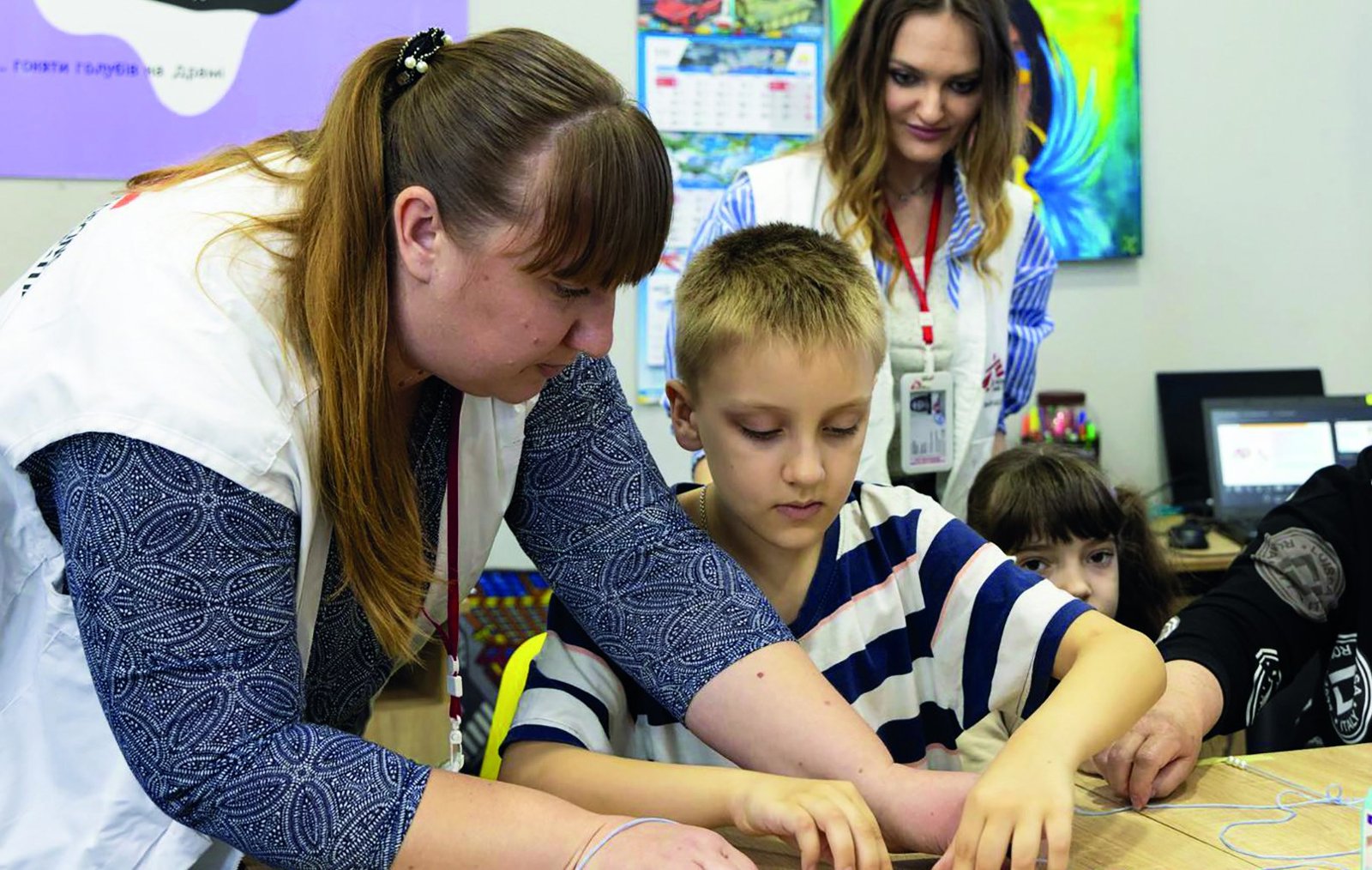
In September 2023, Médecins Sans Frontières (MSF) opened a rehabilitation centre in the town of Vinnytsia in central Ukraine, which has itself been the target of savage Russian attacks. At the Vidnovlennya clinic, MSF provides a pilot programme for specialised treatment of PTSD.
In most of the war-ravaged parts of the country, mental-health support is limited to very basic, short-term interventions. At Vinnytsia, MSF aims to provide long-term care, without patients having to wait years for help or travel abroad to receive treatment.
‘Today, post-traumatic stress is diagnosed in Ukraine much more often than it used to be,’ said Ruslana Lutsyk Andrushko, the psychologist in charge of the Vidnovlennya clinic and a supervisor with MSF. ‘Public attitudes toward PTSD have changed significantly. It is no longer seen as unusual or rare because so many families have been affected by it directly or indirectly through relatives, friends or colleagues.’
MSF’s approach to treating PTSD and complex PTSD consists of three phases. ‘The first phase focuses on stabilisation – helping people build emotional resources, regain a sense of safety and strengthen coping mechanisms,’ Andrushko said. ‘Only when a person is stable and emotionally ready do we move to the second phase, which involves processing traumatic memories, fears, triggers and distressing experiences. The final phase focuses on reintegration, helping patients incorporate their experiences into their lives and move forward with improved functioning and wellbeing.’
She added that the approach is not limited to veterans. ‘It is a standard framework we apply to all patients experiencing PTSD-related symptoms. At the same time, there is no universal template. Every person’s experience is unique, and each psychologist or psychotherapist tailors treatment according to the individual’s needs.’

Like Osokina, Andrushko is deeply concerned by the steep increase in the number of Ukrainian children and teenagers seeking psychological support. Several NGOs that once provided help to young people have had to reduce or discontinue their services because of the war, creating additional shortages. ‘Today, we see many children who were forced to leave their homes because of the war, as well as children from military families,’ Andrushko explained. ‘Some present with symptoms associated with PTSD, while others experience anxiety and emotional distress. As the war continues, the cumulative psychological burden on children and on adults continues to grow.’
According to Andrushko, medical personnel can do a great deal to help stabilise traumatised patients and reduce the symptoms of PTSD. Yet the country is constantly exposed to fresh cycles of suffering. Every air alarm, every rocket or drone attack – and every new day of agonising over a family member serving at the front – can reactivate past trauma.
‘Ti jak?’ – Ukrainian for ‘How are you?’ – I asked Mihaylo in his murky hospital room at the Uzhhorod clinic. For several moments, he stared at the heavy rain battering the windows. He seemed exhausted, and not entirely there.
For too long, Mihaylo kept silent. At least half a minute must have passed before he managed: ‘I don’t know.’
‘Mihaylo, are you able to think about the future?’ I asked, only belatedly realising that the question could be construed as cruel. Again, there was a long silence. ‘It is hard for me to speak.’ Then the wounded soldier’s eyes suddenly sparked into life, their original blue sheen restored. ‘When I get better,’ he smiled, ‘I will find a girl, get married and have children.’
This feature appears in the September 2026 issue of Geographical, on sale from 20 August. Subscribers read every issue in print, in the app and in the digital archive of 1,000+ issues back to 1935.


