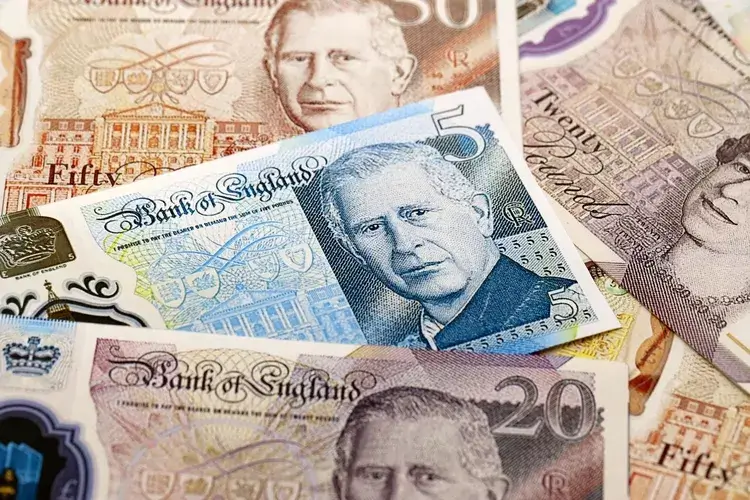
Why is cash circulation soaring in an increasingly cashless society, and how much of it is fuelling criminal activity?
By
The year 2014 saw a significant financial landmark in the UK that appeared to confirm the retreat of a payment system that has existed for thousands of years: cashless payments overtook the use of notes and coins for the first time. It didn’t stop there.
The decline in the use of cash accelerated sharply during the pandemic and today fewer than ten per cent of all payments in the UK are made in cash. One in ten Britons are now exclusively cashless, instead using digital wallets, contactless cards and smartwatches to pay their way. Nearly a quarter of UK retailers no longer accept cash.

According to UK Finance, by 2034 just four per cent of all payments will be made in cash. This phenomenon isn’t exclusive to the UK: the USA, the EU, Australia, Canada, Switzerland and many other countries are using banknotes less. Two-fifths of Americans use no cash at all in an average week, up from a third a decade ago.
Yet reports of the death of cash may have been exaggerated. While the volume of cash being used is declining across the Western world, the value of cash in circulation is going up.
Among 19 central banks studied by Central Banking, an industry analysis and information company, between 2023 and 2024, the value of cash in circulation rose by 8.6 per cent year on year, while volume rose by just two per cent.
In the UK, the Financial Conduct Authority’s Financial Lives 2024 Survey showed that 2.6 million people are heavy cash users, with an increase in the use of large denominations such as £50 notes.
As far back as 2015, the Bank of England, the main issuer of banknotes in the UK, was flagging concern about this paradoxical trend, pointing out that at least half of all UK banknotes in circulation were held overseas or used in the black market.
Only about a quarter of cash in circulation was being used to buy and sell things. The rest, it said enigmatically, ‘was in various places, including being buried in the garden’.
In a speech in May, Victoria Cleland, the then Bank of England’s chief cashier, acknowledged and attempted to rationalise what she called a ‘paradox’. ‘Across many countries, we see the paradox of cash: while cash is used less frequently for transactions, notes in circulation continue to grow,’ she said.
She also stressed the continuing importance of cash and the need for people and businesses to have a choice of payment methods.
At the end of February 2026, Bank of England notes worth £91.5 billion were in circulation, up 6.6 per cent on a year earlier and 63 per cent on 2014.
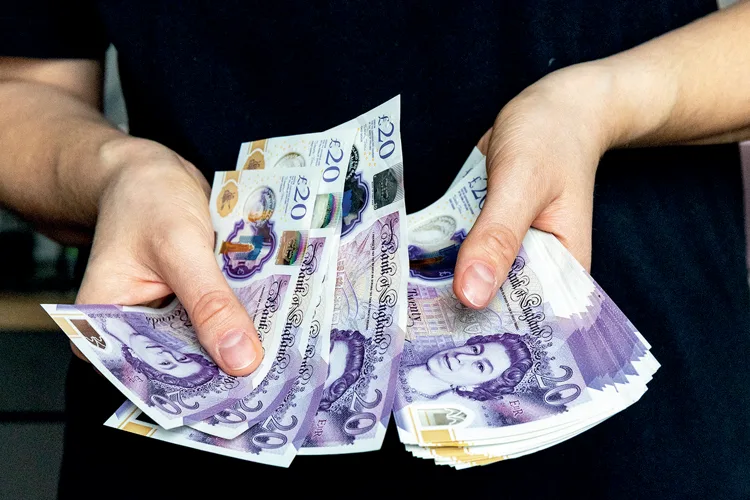
The most popular denomination is the £20 note, according to the Bank of England, with notes worth £58.6billion in circulation, followed by the £50 note, with a total value of nearly £18billion (even though ATMs don’t typically issue them).
The most recent figure for the total value of euro banknotes in circulation is €1.619trillion (£1.4trillion), which is also an all-time high, according to Oliver Bullough, author of Everybody Loves Our Dollars: How Money Laundering Won.
In his book, Bullough noted that ‘the same pattern of remarkable increase is true, if not quite so dramatically, for… Japanese yen, Australian, Canadian, Singaporean and Hong Kong dollars, Swiss francs.’
There are other legitimate reasons why people still use cash. Cash use is highest among groups ‘who are already more vulnerable to exclusion – including digitally excluded adults, those with no qualifications, the unemployed, low-income households and adults aged 85 and over’, according to Cleland.
More widely, 1.3 billion people – 21 per cent of the global adult population – are ‘unbanked’ and frequently use cash; 700 million of them are women, according to the World Bank’s 2025 Global Findex.
‘The proportion of the world that is still unbanked is significant,’ says Dr Claire Healy from the UN Office on Drugs and Crime’s Observatory on the Smuggling of Migrants. ‘People don’t have access to bank accounts, or they “leapfrog” – they’ve never had a bank account and they go straight to using mobile banking, especially in sub-Saharan Africa.’
Yet Healy and other officials working in anti-money-laundering and anti-corruption agencies are clear that it’s naïve to believe that legitimate use amounts to more than a small part of the picture.
Instead, hard cash is far more likely to circulate in criminal activity and then work its way up through society into white-collar crime via illicit financial flows, money laundering and cryptocurrency.
According to Healy, cash is linked to criminal activity that exploits people, wildlife and the environment, ranging from drug smuggling, coercion and sexual exploitation to the arms trade and tax dodging.
The UN takes financial crime seriously enough to include it in its Sustainable Development Goals, specifically Goal 16, which seeks ‘by 2030, [to] significantly reduce illicit financial and arms flows, strengthen the recovery and return of stolen assets and combat all forms of organised crime… substantially reduce corruption and bribery in all their forms… develop effective, accountable and transparent institutions at all levels.’
The illegal nature of cash-based activity explains the large denominations of notes in circulation, according to Bullough.
In his book, he noted that ‘you would expect the banknotes in circulation to skew towards the smallest denominations, the kind of notes that are useful if you’re buying a bus ticket… Being cynical, the most obvious explanation for the popularity of large-denomination banknotes [is that] you need fewer of them to move a lot of money.
A million euros in €50 notes would fill a suitcase, but if you change it into €500 notes you could fit it in a laptop bag, so they can buy things without suspicious compliance officers being able to notice the transaction and report it to the authorities.
Drug smugglers take payment in hard currency, as do people smugglers, wildlife traffickers, kleptocrats and terrorists – anyone who wishes to evade detection.’
Migrant smuggling tends to be a major source of cash-based crime, according to Healy. ‘People pay a fee to actors or gangs to facilitate their irregular entry into a country. It runs into hundreds of millions of pounds and hundreds of thousands of people.’

The most obvious example for a UK audience is the small boats that cross the Channel, but that number, Healy adds, is dwarfed by the volume of people travelling from Africa to southern Europe, around Southeast Asia or from Latin America into the USA.
‘There are a lot of payment options [for smugglers and traffickers], of which cash is a useful one,’ she says.
While criminals use informal money-transfer systems, such as hawala (a system of promissory notes, bills of exchange and passwords) and hundi (involving unconditional written orders), as well as prepayment cards, ‘the main way to get an income is still cash,’ she says. ‘It does not leave a paper trail.
The only risk to the criminal is if you are arrested, or your property is raided and you are storing cash – then you have a problem trying to explain it away.’
Cash is also used at the lower level of people trafficking, according to Healy. ‘It would not be in the trafficker’s interest to leave a paper trail. So payment for sexual services would be in cash, with the handler taking the money and giving a percentage to the [usually] woman.
But further up the hierarchy you will see more elaborate types of payment systems.’ A 2023 UNODC study, Illicit Financial Flows, highlighted cases of sexual exploitation and revealed that some trafficked girls and women were sold for as little as US$36, yet in other cases for as much as US$23,600.
In the majority of such cases, criminal networks use payment and transfer methods that aren’t easily traceable by authorities. ‘High-level organisers of smuggling and trafficking can manage the illicit income, costs and proceeds remotely, through wire or banking-institution transfers, informal money-transfer systems or delivery by cash courier,’ explains Healy.
In the UK, money is also funnelled through entities such as vape and betting shops and even via overseas students (see box opposite). ‘When we talk about UK high streets disappearing, part of that picture is linked to dirty money manifesting in the shape of vape shops,’ says Helen Taylor, deputy director of Spotlight on Corruption.
The National Crime Agency estimates that at least £1billion of criminal cash is laundered through high-street stores in the UK each year, through businesses connected to the sale of fake goods, tax evasion, illegal working and illegal drug supply.
This summer, the government announced that new vape shops would require planning permission and that councils would get more powers to block new betting shops in a move prompted by increasing reports of organised crime on high streets, with shops selling illegal cigarettes, vapes, cannabis and cocaine, and enabling illegal working and suspected money laundering.
Cash is entwined with money laundering and illegal cryptocurrency activity, according to Taylor. ‘Cash still remains very dominant in money laundering in the UK and elsewhere,’ she says. ‘But the rise of crypto interacts with this.
Cash gets converted into crypto and then gets into the main financial systems. High-end money laundering, white-collar crime, tends to be less cash-based and really relies on professional enablers. Organised crime is often brutal but you see a lot less of that as the money moves up the chain.
But there’s a very ugly interface between the cash-based systems often used in organised crime, crypto and gold as both a currency and a commodity.’
Wildlife crime
Wildlife trafficking is estimated to be worth up to US$23billion a year, according to the NGO TRAFFIC, with almost every country in the world playing a role in the illegal trade.
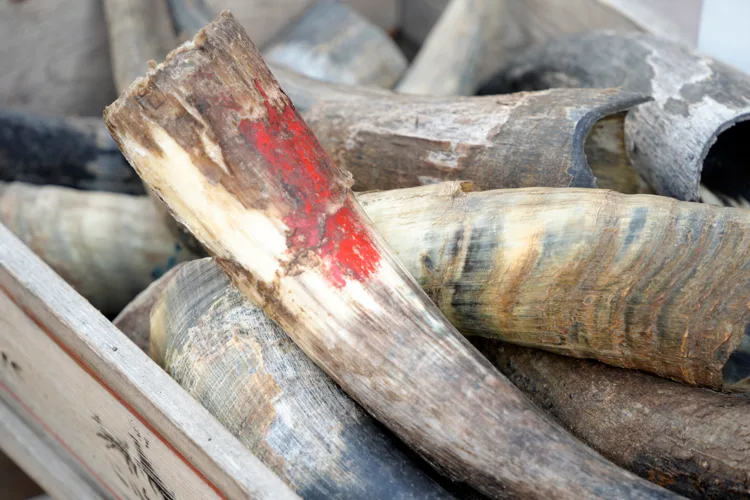
It not only fuels biodiversity loss and environmental degradation but also corruption, and is believed to be one of the most common ways in which hard cash is moved around the world.
Helen Taylor at Spotlight on Corruption explains: ‘Bribing a customs officer to sign some documents – cash is a key part of that, as is paying loggers involved in illegal deforestation. Cash is used in the supply chain, setting up companies, moving funds in activity that is involved with environmental degradation.’
Mining companies are also known to use cash in this way, with multinationals seeking new mining deals prepared to pay ‘success fees’ to middlemen who then bribe officials with cash to secure approval.
In its 2023 report Dirty Money: The Role of Corruption in Enabling Wildlife Crime, the Wildlife Justice Commission described corruption as ‘the air that wildlife crime breathes… and is one of the biggest obstacles to effective law enforcement. It impacts the work of park rangers, authorities issuing permits, customs officials and even reaches courtrooms where justice should be served.’
Corruption, the commission added, ‘can be ad hoc, involving smaller payments and lower-level officials, or systemic, involving politicians and senior officials in key government ministries and the corporate sector.’
Such incidents are commonplace. In 2021, Lin Yunhua, a Chinese national, was sentenced to 14 years in jail in Malawi for links to the illegal trade in wildlife parts, including ivory, rhino horn and pangolin scales. Malawian authorities had arrested Lin, his wife and 12 members of his transnational wildlife-crime syndicate.

He was separately charged with bribing a prison official and a judge to influence his sentencing, but later controversially received a presidential pardon.
Peru’s largest illegal-timber case, in 2016, demonstrated ‘deep and systemic connections’ between illegal timber and fraud, according to the Wildlife Justice Commission, with official documents containing false information used to launder timber that was illegally harvested.

One method involved purchasing timber from areas where logging wasn’t permitted, using false certification documents that identified it as having come from a legal concession.
Following the dirty money
At some point, criminals need their cash-based gains to enter the mainstream economy, where the money can be used to buy cars, houses and other commodities in apparently legitimate transactions. ‘It’s very difficult to work with cash,’ says Claire Healy of the UN Office on Drugs and Crime.
‘It is messy, but the advantage for enforcement agencies is that you have this entire cash economy – for it to be useful to the criminal, at a certain point that money has to enter the regular economy.’
Laundered money is difficult to trace because it’s generally – and deliberately – mixed with legitimate activity. ‘It’s very seldom you see what is simply a thoroughly illegal enterprise,’ says Helen Taylor, deputy director of Spotlight on Corruption. ‘That way you camouflage the ultimate origin of the dirty money, you legitimise it, get it into the mainstream economy.
It can be difficult for banks to tell the difference.’
Measures to counter this include laws targeting large cash flows. In 2026, for example, Nigerian courts reaffirmed restrictions on purchasing real estate with large amounts of cash. Governments also require financial institutions to report suspicious activity, while organisations such as the Financial Action Task Force and the Egmont Group enable international monitoring and information sharing.
Many countries require travellers to declare cash above US$10,000 (£7,400).
Yet countering financial crime remains an uphill battle. According to Taylor, up to £100billion in illicit money passes through UK corporate structures every year; less than one per cent is frozen and less than 0.3 per cent recovered.
‘The UK has one of the strongest anti-money-laundering legislative frameworks; we have the laws, but enforcement, skills and resources are lacking,’ she says. Criminals are often ahead of the authorities technologically, while cross-border investigations can be slow and hampered by poor information sharing.
The British Virgin Islands (BVI) are a key conduit for money entering the UK economy. ‘The BVI lack corporate transparency,’ says Taylor. They don’t have a public register of beneficial owners, which, she explains, makes it difficult to trace the people behind companies.

If money has been made through a scam farm in Southeast Asia, she says, it can be transferred into the BVI and become extremely difficult for law-enforcement agencies to trace. The resulting companies and trusts can obscure who ultimately owns or controls the funds, even as the money is invested in apparently respectable British assets and businesses.
Offshore accounts can create a bridge into the UK, where some banking houses and law firms choose to be ‘wilfully blind’, she adds. ‘They won’t ask the questions they should when setting up these accounts and trusts.’
Healy agrees that not every financial institution is willing to enforce the letter of the law. ‘If you are selling 40 small boats or dinghies to someone near Calais, it is highly implausible you do not know who you are selling to, or why.
But a money-moving crypto account might not want to put too many hurdles in front of clients that might slow down or snag payments.’
The criminal justice system also struggles to reach the people directing these operations. ‘The people we catch tend to be low level – the person piloting the boat or producing fraudulent documents,’ says Healy. ‘These people are often being coerced themselves and they are also replaceable.’
Following the money, she argues, can lead investigators to those running the networks and enable them to disrupt the entire operation.
Criminals respond by using third-party accounts, breaking sums into smaller amounts, moving money through cryptocurrency or obscuring their online location with virtual private networks. The consequences of inadequate monitoring were exposed in 2021, when National Westminster Bank was fined £264.8million for failing to comply with money-laundering regulations.
A commercial customer, Bradford jeweller Fowler Oldfield, deposited £264million in cash with the bank. The court found that, although NatWest wasn’t complicit, its failures had been ‘functionally vital’ to the laundering.
The politicisation of crime can further distort enforcement priorities, Taylor argues. ‘Immigration crime sucks away resources from high-end money laundering that in our opinion is much more harmful to the UK,’ she says. ‘The tendency is to go after the low-hanging fruit, to bust a high-street vape shop.’
Taylor hopes that the Countering Illicit Finance Summit, being held in London this December, will force the government to confront the scale of the problem. ‘There is a political tolerance for a certain amount of dirty money to come into the UK,’ she says.
Lasting progress, she argues, will require recognition of the connection between apparently abstract financial flows and the very concrete human harms they enable.
Student scam
The curious case of Chinese students and suitcases full of cash goes some way towards explaining how banknotes circulating in the UK are linked to organised crime, and why the National Crime Agency has listed China as a ‘priority jurisdiction’ for money laundering in the UK.
China normally allows individuals to buy up to US$50,000 in foreign currency each year without transaction documents; larger purchases require evidence of a permitted purpose.
To bypass the foreign-exchange limit, Chinese criminal groups collect cash from street-level drug dealers and organised immigration crime in the UK and use a network of money mules to deposit it in smaller amounts into bank accounts controlled by the gangs. One way they do this is to sell British pounds (the ‘dirty money’) to Chinese students at British universities.
The students transfer Chinese yuan to the gangs in China at a high rate of commission. The Chinese gangs then pay back the UK criminals, not only laundering their money but, thanks to that higher exchange rate, pocketing a commission too.
The National Crime Agency has observed that this illegal system is ‘widespread among the Chinese diaspora in the UK’. In 2024, seven people were jailed in London for operating a £55million money-laundering ring along these lines.

According to Kathryn Westmore, author of the RUSI paper Flying Money, Hidden Threat: Understanding the Growth of Chinese Money Laundering Organisations, ‘within a relatively short period of time, Chinese money-laundering organisations have become one of the pre-eminent global money-laundering threats … they have grown to dominate the market for laundering the proceeds of transnational organised crime.
They also take advantage of large Chinese diaspora populations both as potential clients and as part of their operations; for example, through the recruitment of “money mules” to deposit criminal proceeds into bank accounts controlled by the money laundering gangs.’
Referring to the students who act as cash mules, Taylor adds: ‘Often they are naïve and may not understand the wider picture of the harms fuelled by these laundering operations… carrying suitcases full of cash that can be used to buy designer handbags, jewellery, even cars.’