
• Skip to main content
  • Skip to secondary menu
  • Skip to primary sidebar
  • Skip to footer
Geographical

Geographical

Official magazine of the Royal Geographical Society (with IBG)

  • Geographical Home
  • News
  • Features
  • Opinion
    • Climatewatch
    • Front Lines
  • Podcast
  • Travel
    • Discovering Britain
    • Passport
  • Culture
    • Book reviews
  • Quizzes
    • Crosswords
  • Choose Geography
    • University directory
    • Masters courses
    • Course guides
      • Climate change
      • Environmental science
      • Human geography
      • Physical geography
    • University pages
      • Aberystwyth University
      • Brunel University
      • Cardiff University
      • University of Chester
      • Edge Hill University
      • The University of Edinburgh
      • Newcastle University
      • Nottingham Trent University
      • Oxford Brookes University
      • The University of Plymouth
      • Queen Mary University of London
    • Geography careers
      • Charity/non-profit
      • Education & research
      • Environment
      • Finance & consulting
      • Government and Local Government
    • Applications and advice
  • Magazine
    • Issue previews
    • Subscribe
    • Manage My Subscription
    • Special Editions
    • Geographical Archive
    • Advertise with us
  • Subscribe
    • Direct Debit Changes

Invasive tropical mosquito species detected in London

4 September 2026
2 minutes

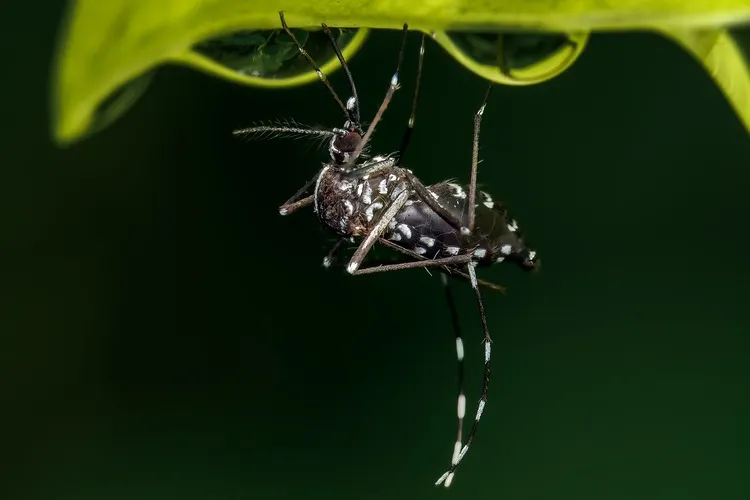
Mosquito close up
Mosquitoes can spread diseases such as Zika virus and dengue. Image: Nitin Chandra/Shutterstock

The tropical mosquito found in East London is able to transmit Zika virus and dengue, according to experts


By Victoria Heath

Invasive mosquitoes and their larvae – able to transmit diseases such as Zika virus, chikungunya and dengue – have been detected in residential properties in East London, the UK Health Security Agency (UKHSA) has reported.

It is the first time that the species, Aedes aegypti, has been identified as breeding in the UK, and the fourth time this species has been detected in the UK in recent years.


Related reads…

  • UK needs to prepare for the disease-carrying Asian tiger mosquito
  • East Africa is fighting back against malaria – here’s how
  • Could a new gene-editing technique be a major breakthrough in the battle against malaria?
  • Is synthetic biology the way forward for a better planet?
  • 2025’s success stories in the fight for a better planet

The UKHSA is undertaking enhanced surveillance, including control measures to destroy larvae, and is monitoring the area to identify any further mosquitoes and larvae. It said that the mosquitoes in east London have caused no infections.

‘We believe these mosquitoes are accidental importations,’ said head of medical entomology and zoonoses ecology at UKHSA, Dr Jolyon Medlock. ‘Invasive mosquitoes can hitchhike in vehicles, baggage and imported plants, and if they find a suitable climate, can survive. Despite evidence of breeding in this local area and the recent heatwaves, the species is not established in the UK and cannot survive long-term in the typical UK climate, which is too cold overall.’
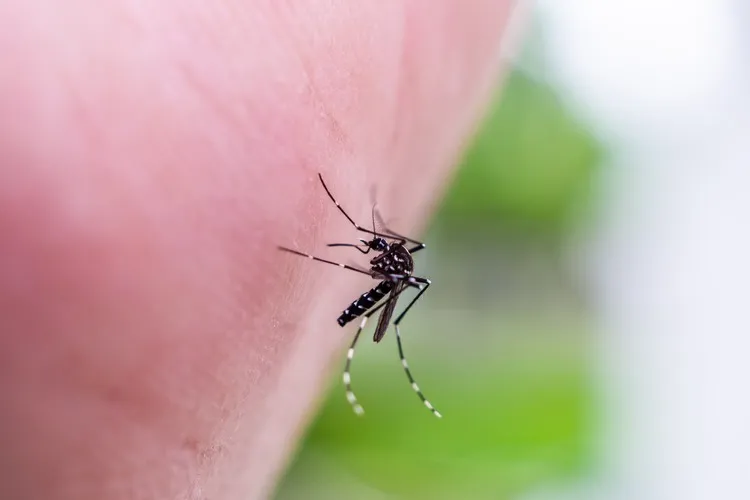
Mosquito on skin
Around the world, mosquitoes cause around one million deaths per year by transmitting diseases such as dengue and malaria. Image: Shutterstock

‘However, it is expected that in a warming climate, we will continue to see incursions of invasive mosquitoes, and increased reports of them being able to survive in the UK.’

Advocacy and social change manager at charity Buglife David Smit said: ‘Recent reports of non-native invertebrates, including mosquito species, highlight the urgent need for the government to strengthen biosecurity, improve surveillance and address pathways such as the movement of potted plants and soils, through which numerous invertebrates can hitchhike undetected.’

The UKHSA has also advised residents to remove standing water from gardens and outdoor spaces, including water that collects in buckets, containers, paddling pools and plant pots.

Members of the public can also support mosquito detection through the organisation’s Mosquito Watch scheme by submitting photographs or, where possible, specimens.

Around the world, mosquitoes cause up to one million human deaths per year. Every year, malaria alone – transmitted by the Anopheles mosquito – kills 600,000 people, mainly children. Mosquitoes can also spread diseases such as dengue, yellow fever, Japanese encephalitis, and Zika virus.

There are more than 2,500 species of mosquito worldwide, and they are found in every region of the world except Antarctica.

Themes News Insects

Protected by Copyscape

Primary Sidebar

AUTUMN SALE

GEOGRAPHICAL WEEKLY LOGO FREE - Sign up to get context, clarity and perspective in a noisy world, every Friday

Popular Now

QUIZ: Karst Landscapes

QUIZ: Karst Landscapes

QUIZ: US State Capitals

QUIZ: US State Capitals

AI data centre

Who owns the AI alarm?

dummy-img

QUIZ: Flags of the World – Asia

Footer

  • Facebook
  • Instagram
  • LinkedIn
  • Reddit
  • TikTok
  • Twitter
  • YouTube

Geographical print magazine cover

Published in the UK since 1935, Geographical is the official magazine of the Royal Geographical Society (with IBG).

Informative, authoritative and educational, this site’s content covers a wide range of subject areas, including geography, culture, wildlife and exploration, illustrated with superb photography.

Click Here for SUBSCRIPTION details

Want to access Geographical on your tablet or smartphone? Press the Apple, Android or PC/Mac image below to download the app for your device

Footer Apple Footer Android Footer Mac-PC

More from Geographical

  • Subscriptions
  • Get our Newsletter
  • About Us
  • Contact Us
  • Advertise with us
  • Privacy policy
  • Terms & Conditions

Copyright © 2026 · Site by Syon Media