
The UK’s relationship with the sea is entangled in politics, trade and tradition – but its fishers and marine ecosystems are losing out on all fronts
By
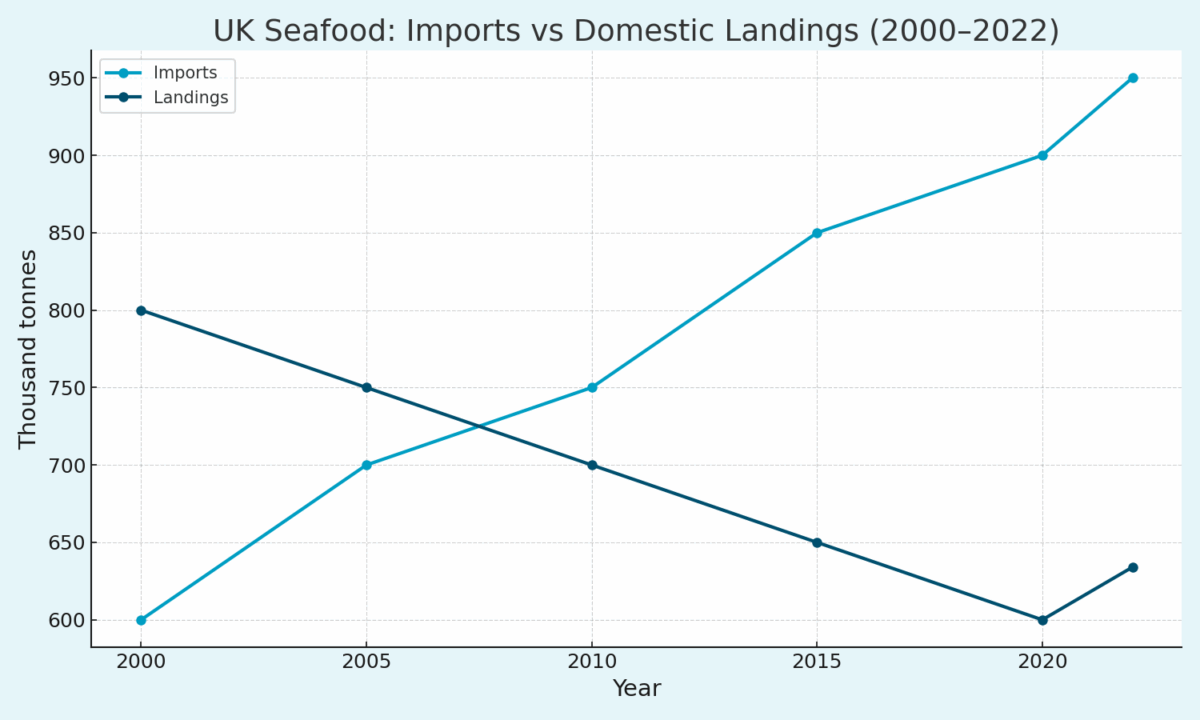
For an island nation, Britain has a curious relationship with the food available on its marine doorstep. It eats relatively little fish compared to its European neighbours, yet is a net importer, with a trade gap of 316,000 tonnes in 2022. Fishing represents just 0.02 per cent of the UK economy (2019), yet overfishing remains a concern – particularly for North Sea cod, herring and mackerel.
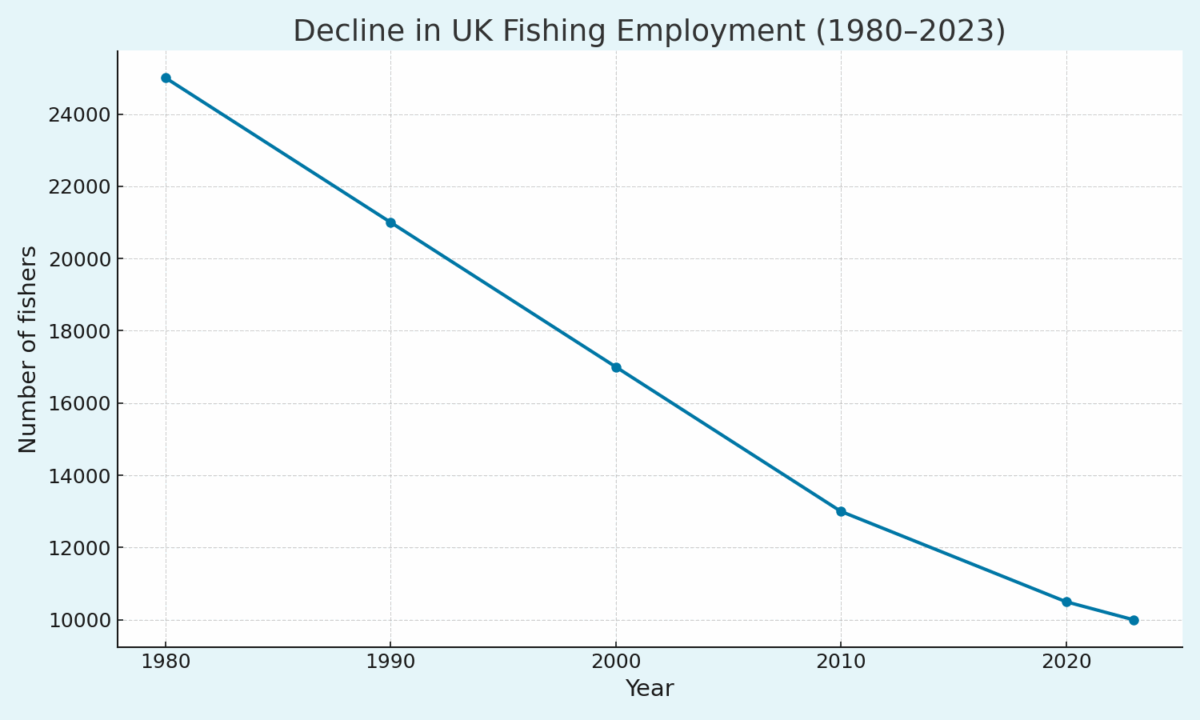
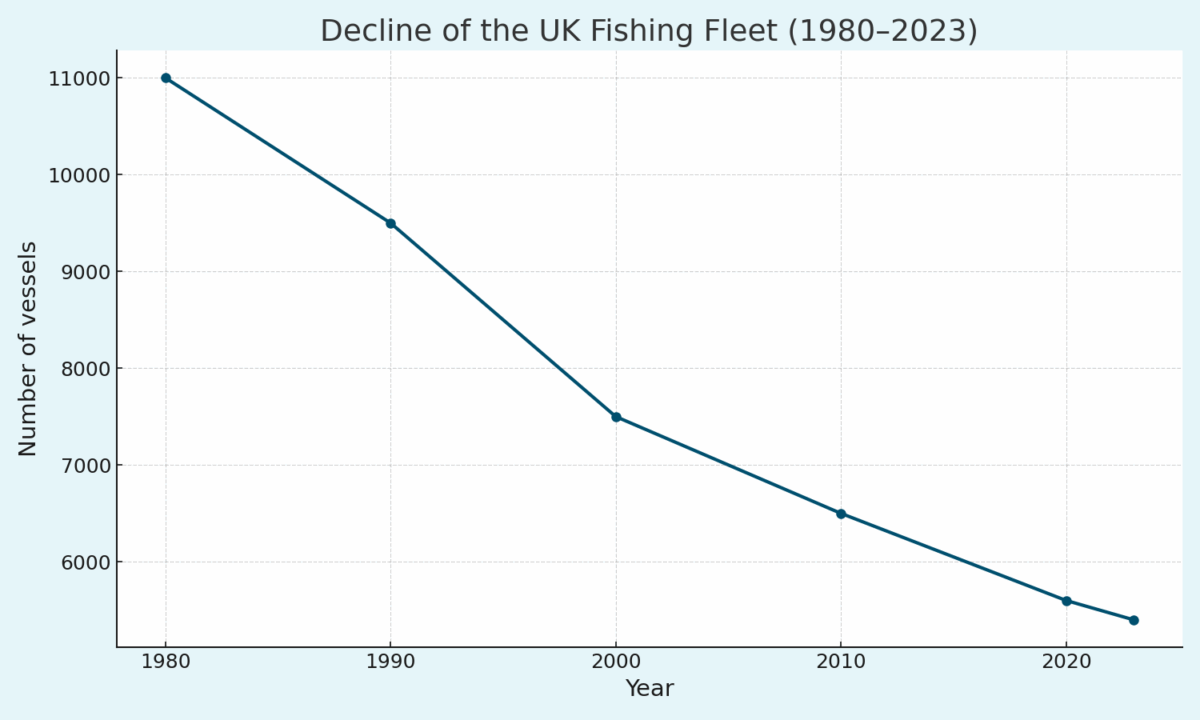
The domestic fishing industry has experienced long-term decline. The number of fishers has plummeted from 25,000 in the 1980s to around 10,000 today, and the fleet has dropped from more than 10,000 vessels to just 5,400. Many UK fishers voted for Brexit in the hope of rebalancing quotas and regaining exclusive access to territorial waters. While UK fishing boats do now have a greater share of some stocks, EU boats are still permitted to fish in UK waters. Post-Brexit export paperwork and checks also disrupted time-critical sectors such as salmon and shellfish.

A trade deal with the EU earlier this year reduced some barriers but extended EU access to UK waters until 2038. Salmon Scotland welcomed the deal as a ‘slashing of red tape’ that would ease access to EU markets. However, the National Federation of Fishermen’s Organisations argued that the deal had given away ‘the best card… that fishing and coastal communities had for growth over the coming decade’.
Around 8–10 per cent of UK waters are currently protected, a figure expected to rise to 12–15 per cent under government commitments, according to the Marine Conservation Society (MCS). An update to the UK Marine Strategy this year found that just two of 11 categories assessing the health of UK waters met the standard of Good Environmental Status. Four partially met the standard, while five – including commercial fish and shellfish, incidental bycatch and marine bird breeding success – failed outright. Beam trawling results in 40 per cent bycatch, says the MCS. According to Chris Graham of the MCS, the UK has lost 95 per cent of its oyster beds and kelp forests. ‘A lot of this can’t come back naturally without our help.’

Bottom trawling also remains common within UK waters. The MCS estimates it takes place in 98 per cent of the UK’s offshore Marine Protected Areas (MPAs) – often due to loopholes in the designation framework. Graham argues this ‘contradicts the objectives of the marine protected areas’. An example lies around the island of Papa Westray in Orkney, where an MPA is designated to protect black guillemots. Bottom trawling continues here because the government claims the activity doesn’t directly affect the birds. This anomaly was identified in 2015 but hasn’t yet been addressed.
In June, the UK government announced plans to extend the ban on bottom trawling from 18,000 square kilometres to 48,000 square kilometres of the UK’s offshore protected areas, covering 41 of England’s 181 MPAs.
‘The fishing GDP figure [0.02 per cent] always gets quoted in relation to fishing,’ says Graham. ‘But the industry is disproportionately important to some coastal communities, both for economic and cultural reasons. There’s understandably a lot of ill feeling and mistrust within the industry. Fishing needs to be taken seriously – rather than being offered on the table as part of trade deals.’
Despite its modest contribution to national GDP, fishing remains a vital pillar in the cultural and economic identity of many coastal towns – particularly in parts of Cornwall, the northeast of England and the Scottish islands. In places such as Brixham, Newlyn and Fraserburgh, generations have depended on the sea for their livelihoods. Small-scale fisheries, which often operate more sustainably and with lower environmental impact, are increasingly advocating for greater recognition in fisheries policy. Projects like the Lyme Bay Reserve in Devon and the St Abbs and Eyemouth Voluntary Marine Reserve in the Scottish Borders aim to protect marine biodiversity while sustaining traditional fishing practices.
At the same time, public demand for seafood continues to shift. Britons eat around 18 kilograms of seafood per person per year – well below the European average of 24kg – and much of it consists of imported species such as cod, tuna and warm-water prawns. Home-caught alternatives such as hake, gurnard and mussels remain underappreciated. According to Seafish, a public body supporting the UK seafood industry, diversifying domestic consumption could reduce pressure on imported stocks and support more sustainable local fisheries.
The post-Brexit landscape has raised questions about governance, too. The Fisheries Act 2020 was heralded as a landmark opportunity to establish ‘world-leading’ environmental standards for British fisheries. Yet implementation has been uneven. Environmental groups argue that enforcement remains patchy, data collection is inconsistent, and foreign access to UK waters continues under opaque rules. The challenge, they say, lies in reconciling economic survival with ecological responsibility – while ensuring that Britain’s coastal communities remain part of the story.