From rowing the Atlantic to protecting tapirs in Honduras, Dr Niall McCann tells Imogen Edmonds how adventure and conservation have shaped his life
Niall’s travel tips
– In conservation work, be ambitious
– Plan thoroughly; seek advice
– Choose personally meaningful challenges
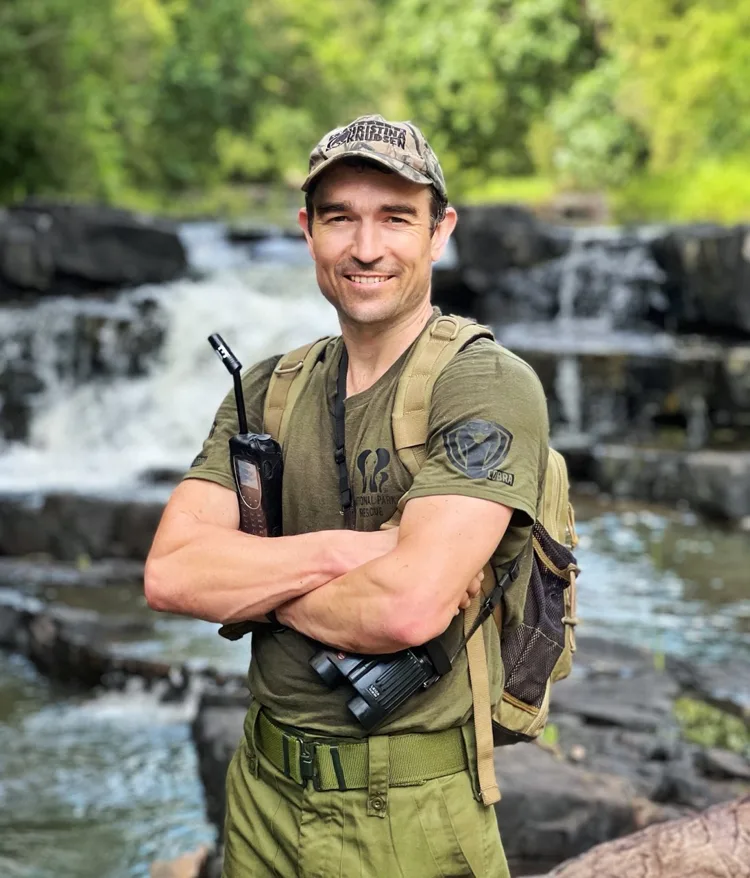
In 2012, Niall McCann – midway through his PhD in conservation biology – arrived in Honduras to speak to the environment minister. He was there to report illegal activity, including cannabis cultivation, in Cusuco National Park, which was threatening tapirs. McCann set up a local ranger team to patrol the park. Back home in the UK, during his PhD viva, he was advised to remove this account from his thesis for lacking analytical depth.
‘But this is the stuff that matters, I thought,’ he recalls. ‘That’s when I knew I wasn’t going to spend my career in academia writing about species going extinct. I was going to spend my career stopping them going extinct.’
Ten years after his trip to Honduras, McCann was sent a photograph of a tapir with its baby and a message: ‘These are only still here because of your help.’
McCann, who grew up in Shropshire, lives in Wales, having stayed on after graduating from Cardiff University. ‘Having nature on your doorstep is just lovely,’ he says. ‘My two brothers and I grew up absolutely steeped in adventure.’
Both McCann’s parents worked in biology and conservation – his mother did extensive fieldwork in East Africa and Central America, while his father was head of seal research at the British Antarctic Survey. McCann’s grandfather, Scottish glaciologist Patrick Baird, received the Royal Geographical Society’s Founder’s Medal in 1952 and named Mount Asgard in the Canadian Arctic in 1953.
Through adolescence, McCann began to take adventure more seriously, and a career in conservation eventually developed. After A-levels, he spent a month cycling over the Himalaya with his father before volunteering for the Mauritian Wildlife Foundation.
As a zoology undergraduate at Bristol University, at the age of 21, he received a Royal Geographical Society grant to lead a study of giant otters in Bolivia.
Outside work, adventurous trips continued into adult life – rowing across the Atlantic Ocean in 2007 and skiing across Greenland in 2009. After completing his PhD, McCann and his brother Finn found a passion for speed flying: descending mountains at high speed beneath a small paraglider wing.
In 2016, McCann flew his speed wing into a mountainside, leaving him with a permanent spinal cord injury. ‘I’ll never fully recover,’ he says. Despite this, he was able to start running, cycling and climbing again, volunteer for Brecon Mountain Rescue Team and take part in a 2023 expedition to ski across an ice cap in eastern Iceland.
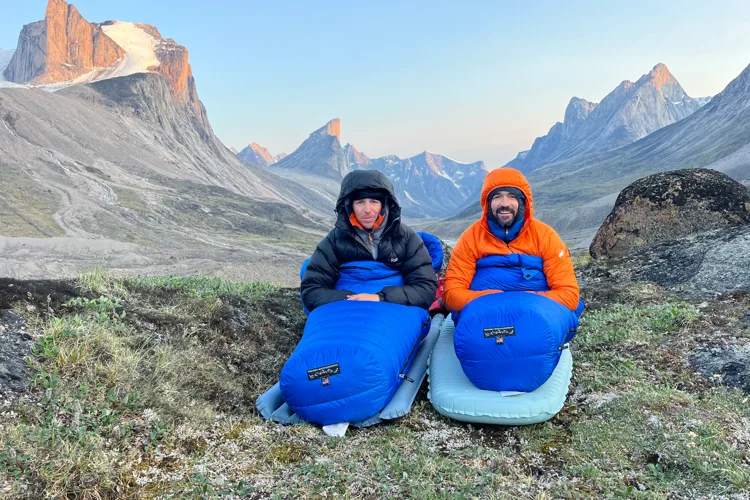
Last year, to honour their grandfather’s legacy, he and Finn climbed Mount Asgard, ticking off number two on his list of 20 lifetime ambitions.
In recent years, he has set up two NGOs, including Edge Group Conservation, of which he is chief executive. McCann attributes his success to having the confidence to knock on doors and to aiming high: ‘You go as high up as you can – the issue is that most people don’t have the chutzpah to do it.’ He stresses that in conservation, this is critical – ‘otherwise, it’s the business people who win’.
Organising your travels independently can build confidence for adventure, conservation or research, McCann advises, reflecting on his student days. Even so, joining an established expedition company is a great way to start your career, and seeking advice when planning an expedition is always a good idea, however experienced you are.
He recommends the annual RGS Explore Weekend: ‘There’s always an amazing buzz. You just know that expeditions are being born in the conversations – and we need more students from different places going along.’ • The Explore Weekend runs 6–8 November 2026. Email [email protected] for discounted student tickets using your university or college email address. Find out more on rgs.org/explore.