Discover which countries are responsible for the most plastic waste that ends up on beaches and coasts around the world
By
Take a walk along any beach in the world and you’re likely to find some sort of washed-up plastic or litter – but have you ever stopped to think about where that plastic came from? Plastic is durable and usually light, making it the perfect material for getting caught in the wind and swept along with an ocean current, travelling long distances.
Some plastics have been recorded travelling thousands of miles from their source. High-density polyethylene (HDPE) are the plastic products most likely to travel long distances. Examples of products made with HDPE include fishing equipment, bottle caps, toothbrushes, shampoo, conditioner, shower gel bottles, pieces of buckets and toys. Their density is lower than water, allowing them to stay afloat and move in the oceans for longer.
Enjoying this article? Check out our related reads…
In 1992, a shipping container carrying 28,000 plastic toy ducks fell overboard in the middle of the Pacific Ocean. Over the next 20 years, the ducks were seen washing ashore in Hawaii, Australia, Scotland, Newfoundland, Maine, Washington state, Chile and even the Arctic. However, according to research by The Ocean Cleanup, about 80 per cent of floating plastic will beach on a coastline within a month of leaking into the ocean.
Each year, approximately 11 million tonnes of plastic enter our oceans. That’s the equivalent of dumping 2000 garbage trucks full of plastic every day into the world’s lakes, rivers and oceans. This has had a detrimental effect on marine life, coastal cities and ecosystems.
Below are the top five countries where the world’s ocean plastic waste comes from, according to plastic waste that escaped and washed up on other countries’ beaches from 2010 to 2019, in reverse order:
5) Indonesia – 599,020 tonnes

With a population of 285 million, Indonesia was responsible for almost 600 tonnes of plastic waste ending up on foreign beaches. Producing about 7.8 million tons of plastic waste per year, more than 60 per cent of this waste is mismanaged. The plastic waste is dumped in the waterways, flowing into the rivers and finally into the sea.
Indonesia’s rainy season flushes out the polluted rivers, pushing plastic waste into the oceans, which then washes up on the beaches. Up to 1.29 million metric tons of Indonesian plastic waste ends up in the ocean each year.
4) Brazil – 639,665 tonnes
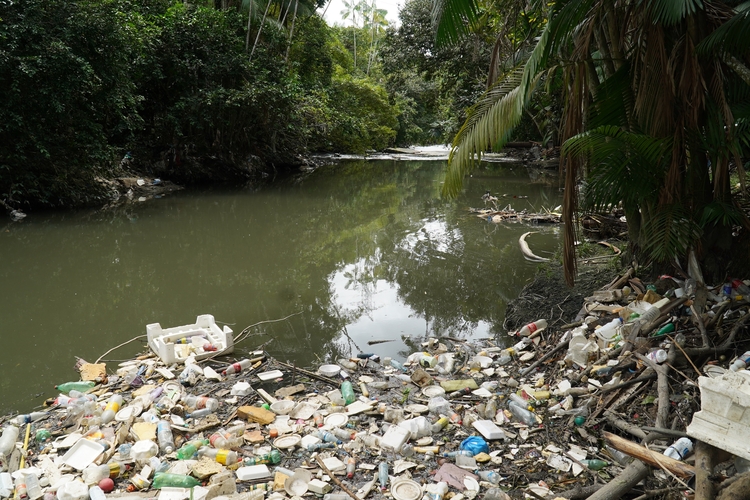
Brazil is another major contributor to the ocean’s plastic pollution, ranking fourth on the list. Discarding 3.4 million tonnes of plastic every year, a third of this reaches the coast, dumping 1.3 million tonnes into the ocean. Microplastics have even been found in Brazil’s most highly protected marine areas.
However, there is hope. In October 2025, 15 countries across Africa, Asia, and Latin America gathered in Brazil for the first Annual Plastic Reboot Conference, aimed at tackling plastic pollution in our oceans. The conference served as a hub for alignment, sharing of ideas on regulations and policies, innovation, best practice and connecting governments – all of which are essential in tackling ocean plastic pollution.
3) India – 966,447 tonnes

India faces a severe marine plastic pollution problem, ranking third in the world. India generates approximately 9.3 million tonnes of plastic waste a year. Of this, 3.4 million tonnes is mismanaged and is left to leak into the environment. It is estimated that 80 per cent of marine litter along India’s coastlines is plastic, often being ingested by animals who mistake it for food.
Studies have also found that microplastics are present in 83 per cent of tap water samples, posing a threat to public health. An estimated 60 per cent of India’s plastic waste ends up in rivers and coastal waters, contributing to the global crisis of marine debris. Over eight per cent of coral reefs in the Gulf of Mannar are under threat due to suffocation and sunlight deprivation caused by plastic waste.
2) Philippines – 1,695,260 tonnes

The Philippines contributes to around 36 per cent of the world’s ocean plastic waste. With 2.7 million tonnes of plastic being discarded annually, 20 per cent of this will enter our oceans. Rivers are the main arteries that carry waste to the ocean, and seven of the world’s top ten plastic-polluting rivers are in the Philippines. 466 rivers in the country alone emit 356,371 metric tons of plastic waste annually, with a high chance of ending up in the ocean.
Coastal communities in the Philippines have been affected by this, as their livelihoods depend on fishing. Plastic waste on beaches and in the water can lead to a decline in marine life, which is a main source of income for these communities.
1) China – 2,683,631 tonnes
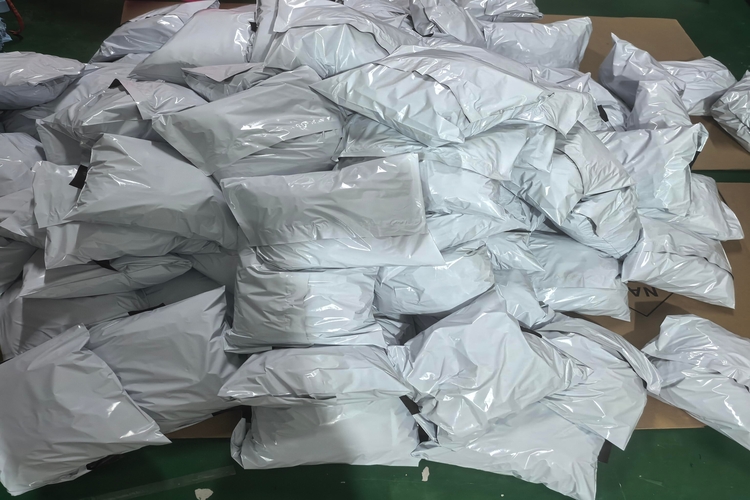
China is the largest contributor, responsible for over 2.6 million tonnes of plastic waste that ended up on foreign beaches. China is a global leader in plastic production, as well as a major contributor to plastic pollution, releasing millions of tonnes annually.
As well as consuming one-fifth of the world’s plastics, China also produces and exports the largest amount of single-use plastics and has the largest source of mismanaged waste. In 2020, China produced an estimated 60 million tonnes, while only 16 million tonnes were recycled.