
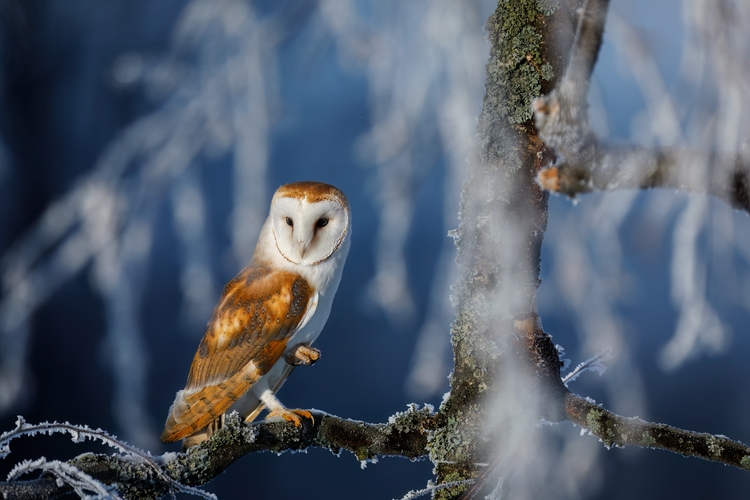
A fresh fall transforms the Italian mountains into a blank canvas – one that reveals chamois tracks, hidden ptarmigan and the quiet rhythms of wildlife that never fled south
By
The snow came early this winter. After two blustery weeks during which the temperatures plummeted and the last leaves of autumn blew off the trees, I woke up one morning towards the end of November in the middle of a thick cloud.
It was as if someone had put the small Italian village where I live inside a snowglobe overnight and given it a vigorous shake. The flakes were falling thick and fast, quickly painting the pavement a uniform shade of emulsion white before moving onto the grass, which slowly disappeared over the course of the morning, and then the hedges.
Enjoying this article? Check out our related reads…
There was a pleasing crunch beneath my boots as I walked my son to nursery, and a gentle swish from passing cars as they drove through the slush. But the most noticeable sound was the silence. Fresh snow acts like a muffler, a natural version of the sound-absorption panels you see on the walls of recording studios. With a fluffy structure that traps air in countless tiny pockets, it stops sound waves from bouncing back off hard surfaces and reduces noise by up to 30 decibels – the difference between talking and whispering.
In part because of this dampening effect, it often feels like the natural world shuts down when the snow starts falling. There’s no birdsong, for starters. Even if winter arrives early, like this year, by November, any self-respecting migratory species will have long since flown their summer nests for warmer climes down south. Insects, too, are noticeable in their absence.
The summer soundtrack in this part of Italy includes the constant background chatter of cicadas, and we often get visits from beautiful creatures such as the hummingbird hawk-moth and the giant peacock moth, but these two are long gone.
The lizards that my cats like to chase in summer go into brumation, the state of suspended animation that keeps them alive until warmer temperatures return, and the bushy-tailed ghiri (European edible dormice in English) that they occasionally catch are safely tucked up in their nests, hibernating.

Despite the lack of obvious abundance, however, winter is actually one of my favourite times to go wildlife spotting. Snow makes it easy to follow animal tracks. Leafless trees mean that the birds that remain are easier to see. And the white background makes larger species stand out, too.
Excited by the early-season snow, two friends and I took the opportunity to head up into the mountains with touring skis as soon as the weather cleared. On the trail heading upwards, we could clearly make out the cloven-hoofed footprints of a camoscio, or chamois, that had passed through earlier.
It wasn’t long before my friend Elia saw him, standing off to one side of the trail. He eyed us warily, keeping a particular eye on Elia’s Siberian husky (leashed and impressively well trained) before trotting off down an impossibly steep-looking cliff.
Further up, I spotted the tracks of a mountain hare – although sadly not the animal itself – criss-crossing our path. And near the top of our climb, as our legs were starting to burn from breaking trail through the fresh snow, my friend Marco startled a rock ptarmigan, which would have remained completely invisible against the white background were it not for the whirring of wings.
Later, as we drove down the switchbacks of the mountain road home, we spotted a solitary roe deer picking its way across a forest clearing on the hillside opposite. It was at least half a kilometre away, but against the white wintry backdrop its usually camouflaged brown coat made it stick out like a sore thumb – neatly proving my point about animals being easier to see against the snow.
Of course, wildlife spotting in winter requires a bit more gear than in summer – at least, if you want to do it comfortably. You don’t necessarily need the touring skis and associated clobber that Marco, Elia and I were carrying on our early- winter excursion.
But if you’re out in the snow, you’ll want a decent pair of waterproof walking boots over a pair of thick, breathable socks. (Wellies aren’t recommended as a rule because they’re not supportive enough for long hikes and don’t grip particularly well on ice.) You’ll also need thermal baselayers and a mid-layer thick enough for the weather. Fleece is ideal, as it offers an excellent warmth-to-weight ratio. Finally, you’ll want a down jacket over the top of it all.
Binoculars are obviously an essential, as is a decent pair of gloves. And a flask of something hot is a really great idea. My personal preference is lemon and ginger herb tea with a dollop of honey stirred in. Wildlife spotting often means watching and waiting for prolonged periods of time. In winter, when there are fewer creatures out and about, you may have to be more patient than normal.
But just because you’re standing still, doesn’t mean you have to feel the cold. As a language, Italian is not rich in idioms celebrating the joys of winter weather. But there’s a Norwegian saying that I like. ‘Det finnes ikke dårlig vær, bare dårlig klær’ Which means, ‘there’s no such thing as bad weather. Only bad clothing.’
Wishlist – Three items that will make winter wildlife watching better
The Surprisingly Useful – Stanley Legendary Classic Bottle, £56

American brand Stanley has been enjoying what fashionistas refer to as ‘a moment’ of late. Since 2020, various limited-edition versions of its insulated cups have gone viral on social media, selling out days or even hours after they’re released.
With all this fluff and nonsense, it’s easy to forget that the brand behind them started out making highly functional Thermos flasks for fishermen – not tea cups for TikTokkers – and still sells most to outdoor enthusiasts.
As the name suggests, this bottle is one of its longest-running models. It’s built to ‘withstand anything, dents and drops included’, the brand says, and to keep your drink warm for up to 24 hours. The insulated lid doubles as a cup, and the whole thing is stainless steel, making it entirely dishwasher safe. It’s a perfect Thermos for winter wildlife walks. stanley1913.com
The Essential – Leica Ultravid 10×25 BR Binoulars, £730

When it comes to manufacturing lenses and optical devices, few companies in the world have a pedigree that matches Leica.
Founded in 1869, the German brand has been making high-quality cameras for more than 150 years, and binoculars since 1907. The Ultravid 10×25 binoculars are among its most lightweight, compact models, making them ideal for winter wildlife watching, when extra layers and your Thermos mean that space in your backpack is at a premium.
The binoculars measure just 11.1 x 11.2 x 3.9 centimetres, meaning they fit in the palm of one hand and pack down small into their Cordura bag. They have a 90-metre field of vision and rubber armouring that makes them robust. And of course, they offer the kind of crisp, clear, high-contrast images for which Leica is justifiably famous. leica.com
The Luxury – Bridgedale Midweight Merino Performance Socks – £24

Warm hiking socks suitable for walking in winter don’t come much more luxurious than these. They’re made in Northern Ireland by Bridgedale, a firm based in Newtownards that started out knitting socks for soldiers in the First World War.
The Merino Performance model is an updated version of their popular Trekker socks, and an impressive amount of thinking – and tech – has gone into improving them.
They’re made of a blend of new wool, merino, nylon and synthetic fibres with excellent moisture-wicking properties to stop your feet from sweating. They have a ‘zonal padding system’ with extra fabric in areas that need cushioning, and they have a flat toe seam and a ‘performance fit’ that prevents bunching, helping to stop any potential rubbing in your hiking boots. Not bad for £24 a pair. bridgedale.com


