
Often, our planet benefits from slower, more measured thinking. Discover the major problems that require patience, not speed
By
Patience is a virtue. It’s an adage that can be applied to most aspects of life – taking time to slow down and avoid rushing is a sure-fire recipe to success. Often, rushed solutions can lead to difficult roads ahead, especially when talking in terms of our planet.
Take the example of the Aral Sea. When the Soviet Union rapidly diverted rivers in the 1960s to boost cotton production, the sea shrank by a staggering 90 per cent. Fisheries collapsed. Toxic dust storms spread chemicals across the region. Even today, much of the sea remains dried into a desert-like state – a reminder of how short-term economic gain can ignore long-term environmental consequences.
Enjoying this article? Check out our related reads…
Still, impatience has persisted. Rapid palm oil expansion in Indonesia and Malaysia in recent years has decimated huge areas of rainforest for oil plantations, leading to mass deforestation and loss of vital biodiversity in these habitats – all for quick economic gain.
Entire ecosystems have also been permanently altered thanks to speedy, supposed ‘ecological fixes’. In Australia, the introduction of cane toads to control pests in sugarcane fields led to the poisoning of native predators as the toads spread uncontrollably and became an invasive species.
Clearly, it largely benefits the planet to take more measured approaches. Careful consideration and detailed planning will likely lead to some of the best ideas and solutions for a sustainable future.
Here we present four key problems on our planet that require careful consideration to achieve the best outcomes…
Climate change

Climate change is perhaps one of the most pressing issues facing our planet today. With 2024 the hottest year on record, it has never been more important to curb the effects of a warming planet.
But, while climate change is an urgent matter to mitigate, it’s also crucial to respond to it with careful, measured thinking. The Earth’s climate is an intricate and complex web of processes – from those in the atmosphere to the ocean – and without sufficient understanding, there is a risk of triggering unintended consequences far and wide.
For example, carbon offsetting schemes have recently come under fire for their lack of understanding of environmental systems. In parts of Africa and Southeast Asia, fast-tracked afforestation projects have replaced biodiverse ecosystems with monoculture plantations, reducing ecological resilience and limiting long-term carbon storage. Studies have shown that converting natural forests into plantations can lead to significant losses in soil carbon and disrupt nutrient cycles.
Geoengineering, too – the process of implementing large-scale interventions designed to counteract climate change – must be approached with caution. Solutions have been proposed, such as injecting aerosols into the stratosphere to reflect sunlight, but scientists warn that they could disrupt global systems, including precipitation patterns and monsoon cycles. As such, without careful governance and long-term study, these interventions could worsen the very crises they’re attempting to halt.
Conversely, there are examples of how climate change has been tackled with ideas that unfold more slowly and thoughtfully. In Bangladesh, long-term community-based adaptation has created early warning systems and cyclone shelters to help reduce deaths from extreme weather events. Elsewhere, in the Netherlands, the‘Room for the River’ programme restored natural floodplains and improved ecological quality, reflecting a long-term shift toward working with natural processes rather than resisting them.
As well as these examples, cities from Copenhagen to Singapore have invested in climate-resilient infrastructure, such as green roofs and urban wetlands. These measures take considerable time to implement, mature, and yield their benefits, but they deliver lasting benefits for both residents and systems alike. In short, the pace of these mitigation measures shows that climate adaptation is best when it is most carefully considered, and with that comes a slower pace of implementing strategies.
Disease prevention
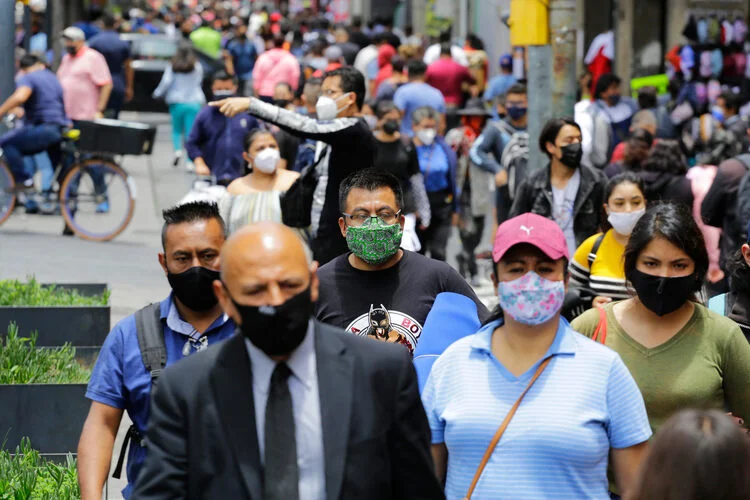
In global health, speed can save lives – but can also undermine long-term resilience if applied without care. Ultimately, healthcare illustrates the importance of balancing speed with careful consideration.
Acting quickly was essential during the COVID-19 pandemic, where vaccines were developed in record time by companies including Oxford–AstraZeneca and Pfizer. Normally, this process can take years because of delays caused by applying for funding, negotiating with manufacturers and scaling up production. Speed was also critical in the response to the Ebola virus outbreak back in 2014, with a vaccine being developed and deployed in five years, half the time it would usually take.
However, slower approaches to disease prevention have also yielded successful results. The long-term decline in HIV transmission in several countries has been driven by years of education, behaviour change and community engagement.
Malaria also offers a similar lesson. While tools such as bed nets offer protection, their success ultimately depends on consistent use that only comes with long-term education and sustained distribution systems.
Poverty gap
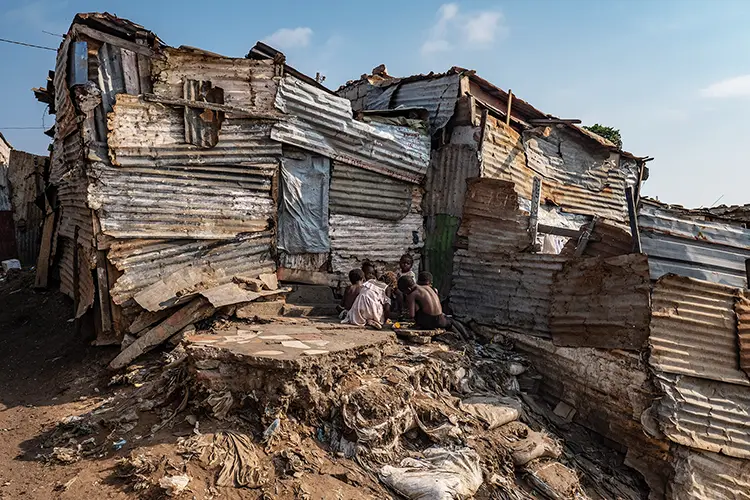
In 2025, an estimated 808 million people lived in extreme poverty – approximately one in ten people worldwide. Such a humanitarian crisis requires a well-developed plan of action to solve, but this type of strategy hasn’t always been the case in eradicating the poverty gap.
Historically, rapid attempts to reduce the poverty gap have failed – or had unintended consequences – on populations around the globe. For example, Structural Adjustment Programmes (SAPs) in sub-Saharan Africa and Latin America in the 1980s and 1990s were a ‘quick fix’ by the IMF and World Bank, requiring governments to rapidly implement reforms, such as cutting public services, privatising state assets and removing labour protections. Economists thought that by fixing the economy quickly, growth would follow and poverty would subsequently fall.
Ultimately, SAPs were a significant failure. Governments cut spending on health, education and welfare, while subsidies and food and fuel were also removed. As such, the cost of living rose quickly, and basic services became unaffordable, with the poorest hardest hit. In many countries, poverty actually increased in the years following SAPs – they imposed a recession in Africa that lasted for more than two decades.
Today, poverty reduction programmes are increasingly country-led and community-driven, recognising poverty as a complex, multidimensional issue that cannot be solved through speed alone. For example, in Brazil, long-term cash transfers – payments to poor families if children attend school and have healthcare – have helped alleviate extreme poverty since 2003. In addition, Ethiopia have a long-term food security programme where cash and/or food is given in exchanged for public works. The programme operates for six months every year, and provides support to seven to eight million rural Ethiopians.
Long-term reforms have also succeeded in Vietnam, where policies such as opening trade to global markets and expanding domestic investment have led to a significant reduction in poverty. According to a 2022 World Bank report, Vietnam’s poverty rate plummeted from 16.8 per cent to 5 per cent between 2010 and 2020.
Urban development

By 2050, the UN predicts that 68 per cent of the global population will live in urban areas. But when urban development happens too quickly, inequality can increase and create long-term problems that are difficult to reverse. For example, slum clearance programmes in India, Brazil and South Africa – intended to quickly demolish informal settlements and relocate residents to formal housing.
These programmes inadvertently led to the destruction of informal economies, such as street trading and home-based work, disrupting income generation. As well as this, many relocated residents abandon formal housing and move back closer to work, or form new informal settlements.
Rapidly-built infrastructure can also lead to its own risks. In some cities, poorly planned expansion has increased vulnerability to flooding, as natural drainage systems are replaced with impermeable surfaces.
Global urban policy has since shifted away from demolition to in-situ upgrading, in a way that honours slower, community-led approaches. In Medellín, Colombia, long-term investment in public transport, education and public space has reduced inequality and integrated previously marginalised communities. To do this, projects such as cable cars linking informal hillside neighbourhoods to the city centre have been created and developed across years.
Barcelona is also transforming its city by grouping housing blocks into single ‘superblocks’ in a 15-minute city model –an urban planning model where residents can access essential daily needs within a 15-minute walk from their homes. Inside these blocks, traffic is restricted so street space can be reclaimed by pedestrians and cyclists. This reduces air pollution, decreases the urban heat island effect and improves local biodiversity. In total, Barcelona aims to create more than 500 superblocks by 2030, with several already functioning.