A warming Pacific exposes the fragile fault lines of a divided world, Doug Specht argues
Early forecasts suggest 2026 could see the strongest El Niño in at least a decade, with a 25 per cent chance of a ‘very strong’ event and a 50 per cent chance of a strong one as Pacific sea surface temperatures climb more than 1.5°C above average. What happens in that warm strip of ocean won’t just change the weather this year, it will echo through harvests, energy systems, migration routes and geopolitics.
When climate hits an unequal world
El Niño is a natural climate pattern, but it does not land on a blank slate. It arrives in a world already divided by wealth, governance and geography. These divisions and the inequity they create are documented in depth through theINFORM Risk Index, an EU-backed tool that compares crisis risk worldwide.
The index combines three elements: the hazards a country faces, the vulnerability of its people, and its lack of coping capacity, in other words, how strong or weak its institutions and infrastructure are.
Some of the highest scores (so most vulnerable) are found in countries that are already struggling with conflict and poverty. In parts of the Sahel, the Horn of Africa and Central Africa, high exposure to droughts and floods overlaps with weak states and limited public services. INFORM Climate Change, a companion index, projects that climate change will push these risks higher still, as hazards intensify and populations grow. When a super El Niño arrives in this context, it does not simply bring bad weather; it tests whether political systems can still function when the climate turns hostile.
Food, fertiliser and fragile states
The timing of this El Niño matters couldn’t be worse. It is expected to peak into a global food system already under stress. The World Bank estimates that around 266 million people in 59 countries were already acutely food insecure at the start of 2026, with conflict, economic shocks and climate extremes all playing a part. At the same time, war around the Strait of Hormuz, through which more than a quarter of the world’s seaborne oil passes, has disrupted energy and fertiliser supplies.
Fertiliser is a particularly sharp vulnerability. Modern agriculture runs on nitrogen, potash and phosphate; when gas prices and transport costs spike, fertiliser becomes scarce or unaffordable. An El Niño that reduces harvests at the same moment as fertiliser remains expensive could be especially damaging.
Southern Africa is a case in point. During the strong 2015–16 El Niño, several countries in the region endured their worst droughts in 35 years, with millions pushed into food insecurity. Today, parts of Mozambique, Zimbabwe and Zambia again sit in the overlap between likely El Niño drought and very high INFORM risk scores, due to conflict, poverty and limited state capacity.
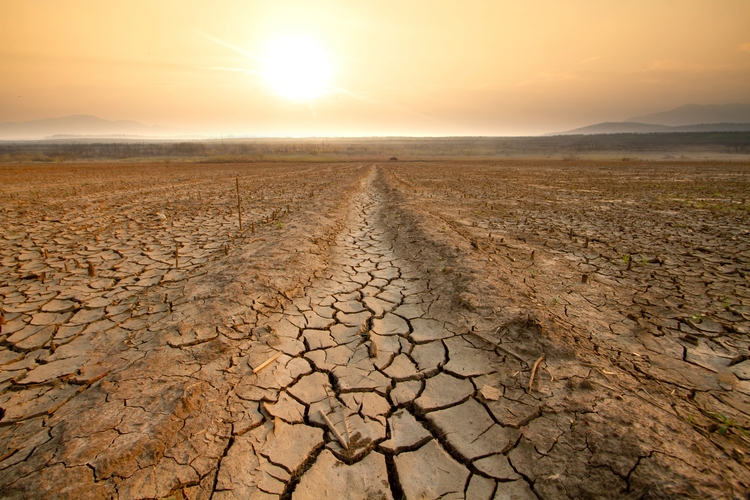
The question then is not only how much rain will fall, but whether governments and international agencies can move quickly enough to prevent hunger from spilling into unrest.
Forecasts also suggest the South Asian monsoon is likely to weaken under a strong event. India’s agriculture, water supplies and power systems all depend heavily on predictable monsoon rains. A poor monsoon in a single year can be managed; a poor monsoon layered on top of record heat, rapid groundwater depletion and uneven development is more dangerous.
Central America’s ‘Dry Corridor’, stretching from southern Mexico through Guatemala, Honduras, El Salvador and Nicaragua, is one of the regions most consistently hit by El Niño-related drought. Smallholder maize and bean farmers see their crops fail in lockstep with Pacific warming. For many, the only response is to move. When crops fail for several seasons in a row, migration ceases to be a choice and becomes a survival strategy. The politics of migration at the US–Mexico border are therefore intimately linked to the state of the Pacific Ocean, and super El Niño in 2026–27 is likely to bring a fresh wave of climate-linked movement northwards.
Not ‘climate wars’, but exposed fault lines
Talk of climate and geopolitics often defaults to a simple story: climate change as a ‘threat multiplier’ that will trigger wars over water and land. The reality is more complex. Climate hazards are rarely sufficient on their own to cause violence; instead, they interact with existing grievances, governance failures and economic shocks in ways that are highly context-specific.
The Indonesian experience during the 1997–98 El Niño illustrates this. That event brought severe drought and helped spark the forest fires that shrouded Southeast Asia in smoke. At the same time, Indonesia was hit by the Asian financial crisis and long-standing discontent with the Suharto regime. The result was economic collapse, mass protests and, ultimately, political transition. El Niño did not cause Indonesia’s upheaval, but it exposed and amplified underlying fractures.
This is a more useful way to think about the coming super El Niño. Climate extremes act like a stress test, they reveal where institutions are brittle, where inequalities run deepest and where political settlements are already fraying. In countries with strong, inclusive institutions and robust safety nets, El Niño can still be disruptive, but it is unlikely to topple regimes. In places that score high on INFORM for vulnerability and lack of coping capacity, the same climatic shock can be far more destabilising.
The super El Niño now forming in the Pacific will not redraw the political map overnight. But it will help reveal which states have invested in resilience, and which have not. In the decades ahead, the geography of power is likely to track, ever more closely, the geography of adaptation.
Those countries that can keep food on the table, lights on and tempers cool when the climate turns extreme will retain agency in the international system. Those that cannot will find their politics increasingly shaped by forces that begin far out at sea.