Discover the best equipment to bring on your next winter trail, to make sure those chilly runs go as smoothly as possible
By
Winter trail running is a tough sport. Just ask Elsey Whyman-Davis, who recently ran around the perimeter of Cornwall in a record-setting six days and eight minutes.
The 620-kilometre route – essentially the entire South West Coast Path, plus an extra 100 or so kilometres to close the loop between Welcombe and Rame Head – included 26,000 metres of elevation gain: the equivalent of running to the summit of Mount Everest three times from sea level. ‘I have never felt more broken,’ Whyman-Davis posted on Instagram as she finished. And this was a run that had largely gone to plan.
Enjoying this article? Check out our related reads:
In 2023, Whyman-Davis cemented her status as trail running’s rising star by tackling the Bob Graham Round – a legendary Lake District fell-running challenge – in winter. But an incident during training meant she very nearly didn’t make it to the start line, let alone the finish. ‘
My headtorch ran out of battery and my spare was no good,’ she told me in an interview last year. ‘I was near Wasdale, which is really remote. It was, like, minus five on top, and blowing a gale, and I had to navigate off the mountain quicker than I’d planned, because if I’d lost my phone, I would have had no light whatsoever.’
She found a small blip of signal and messaged her wife. ‘But as soon as I dropped down into the valley, I lost signal again, so then my wife panicked. She saw from my GPS that I had just gone off the side of a mountain and called Mountain Rescue.’ Thankfully, Whyman-Davis made it down and found a pub with a phone so she could call her wife. ‘But it took me an hour and a half,’ by which point Mountain Rescue volunteers were already out looking
for her. ‘Obviously they stood down, because I was down.’
On another occasion, she was halfway up Blencathra – one of the Lake District’s highest tops – when she suffered a hypoglycaemic attack. Her blood sugar plummeted to dangerously low levels, leaving her dizzy and confused. ‘I was just lying down on the side of the mountain, like, “Oh my God”,’ she remembered. ‘I didn’t know what was happening to me because I’d never had one of those before.’
Having come from road running, Whyman-Davis says she misjudged the impact that altitude gain would have on her normal refuelling regime. ‘The descent off Blencathra is quite frightening as well,’ she said. It’s Hall’s Fell Ridge, and going down that without glucose isn’t much fun because it’s got sheer drops on either side.’
Again, Whyman-Davis made it, and when she eventually set off to run the whole of the Bob Graham Round for real, she set a new women’s winter record. First completed in 1932 by Bob Graham, a local hotelier, the challenge involves scaling 42 Lake District peaks and covering a distance of more than 100 kilometres in under 24 hours.
Whyman-Davis reached the finish line – the wooden door of Moot Hall in Keswick – in 20 hours, 21 minutes and 42 seconds. Thankfully, as with her recent circumnavigation of Cornwall, the run itself went to plan. But even when it goes well, winter trail running is gruelling. So why do it?
One of the main attractions is that the sport doesn’t require much in the way of kit. As Whyman-Davis found out, to her cost, you need to have a fully charged headtorch and remember to pack a spare. You need to make sure you’ve got enough water and food to stave off hypoglycaemia, and it helps to have a running vest that you can stash these supplies in. A GPS-enabled running watch is also useful – not just for navigation, but as an important extra layer of safety. Apart from that, however, the only things you really need to get started are suitable clothes – including a waterproof jacket in case the weather closes in – and a decent pair of running shoes.
But the main reason to get out there and pound the trails at this time of year is the feeling of accomplishment. The famed ‘runner’s high’ that marathon lovers have been raving about since the 1960s becomes even more potent on a crisp winter morning, when you’re surrounded by nature. ‘I find I’m really drawn to it,’ Whyman-Davis told me, when describing the joys of the Lake District in winter. ‘Up on the fells, it’s very quiet,’ she said, unlike in summer, when popular paths get crowded. ‘On my winter round, we saw one or two people in the whole 20 hours.’
Perhaps best of all, you don’t need to be operating at Whyman-Davis’ level to
enjoy all of this. Winter trail running is a tough sport if you’re at the top, but whether you’re running five kilometres through local fields, or 620 kilometres around the whole of Cornwall, the basics are the same.
For most people, the hardest part is the motivation. It takes willpower to get yourself up off the couch in cold weather. But you don’t need any special training. It’s just a question of putting one foot in front of the other.
Wishlist – Three items that will make trail running more comfortable
The Aku Omnia V-Light GTX Shoes – £160
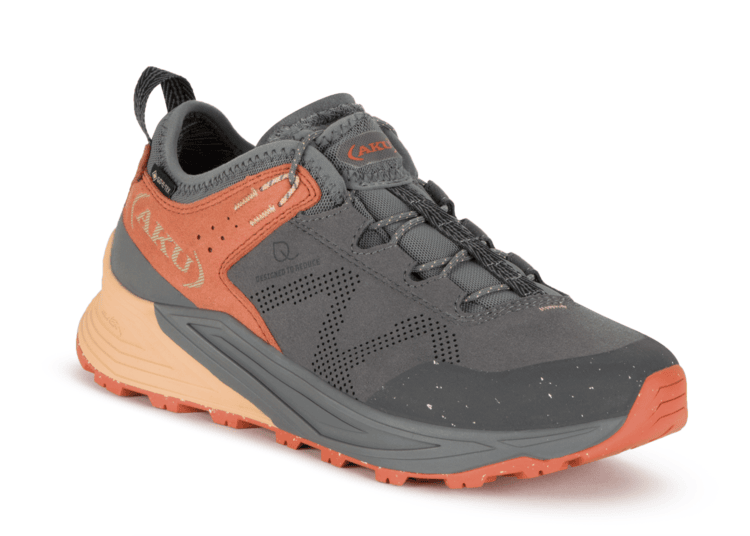
When you’re hitting the trails in winter, your shoes can make or break your day. The Aku Omnia V-Light GTX were originally designed for ‘fast hiking’, but they’re light enough and flexible enough for most runners to use too – and more versatile than many high-performance trail running shoes.
The GTX in the name stands for Gore-Tex, referring to the breathable waterproof membrane that will keep your feet dry, even as you work up a sweat and splash
through icy puddles.
The Vibram Cruise outsole offers sure-footed traction on wet rocks and roots, and even on compacted snow. Meanwhile, the eco-friendly upper (made partly from recycled fibres) keeps your feet snugly laced in place. These shoes are true workhorses and feel as natural jogging through pine needles as they do crunching over frost.
The Luxury – Páramo Velez Windproof Jacket – £125

On icy ridgelines or windblown moor paths, a reliable outer layer is your best ally – and the Paramo Velez Windproof takes that role seriously. Made from Paramo’s highly breathable Nikwax Windproof fabric, it’s designed to be worn solo on milder winter days or combined with the brand’s directional fleece layers for full waterproof performance.
The cut is generous enough for movement but tailored enough to avoid the dreaded sail effect in high winds. Two huge chest pockets swallow gloves, gels, or even a folded map, and the adjustable hood offers serious storm protection.
Ethically produced and fully PFC-free, it’s the kind of jacket you’ll reach for year-round – but in winter, it truly shines.
The Surprisingly Useful – The North Face Summit Series Run Vest 10L – £145
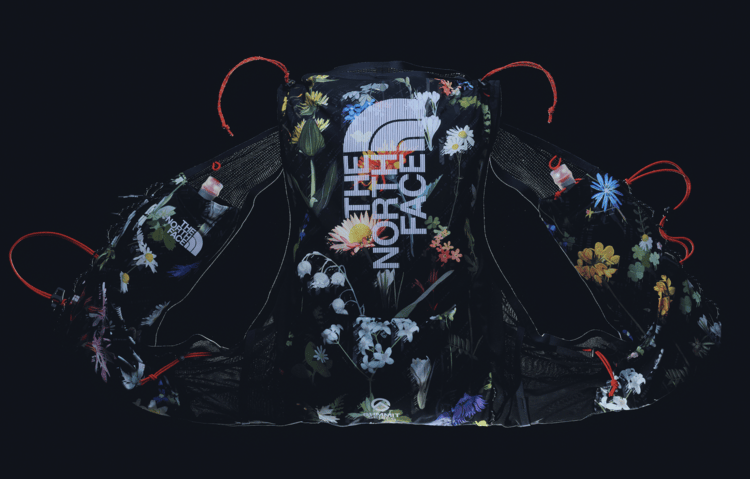
This might have been designed for elite mountain runners like Elsey Whyman-Davis, but it’s surprisingly useful for everyday Joes and Janes too. It’s a featherlight backpack that hugs your torso so you can carry your kit without it bouncing around uncomfortably on your back.
You can fit a deceptively large amount into its 10-litre carry capacity—stretch mesh panels swallow bulky extra layers with ease, while dedicated pockets keep essentials like your phone or gels within reach. The vest comes with two, removable 500ml soft flasks for your water. While it’s available in white or black, we prefer this
version from the company’s Flora Alpina collection—with a print inspired by the mountain flowers