
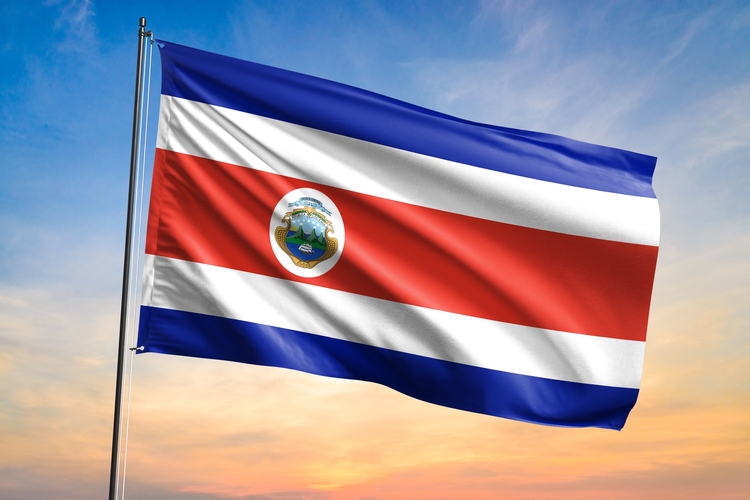

Doug Specht unpacks Costa Rica’s latest election and how it could unravel Latin America’s oldest democracy
On 15 January, just 17 days before Costa Rica’s presidential election, El Salvador’s Nayib Bukele arrived in the country to lay the first stone for a mega-prison modelled on his notorious CECOT facility, a facility documented by Human Rights Watch as a site of systematic torture. Three weeks later, voters elected Laura Fernández, Bukele’s explicit admirer, promising to replicate his security model. Costa Rica held a free, fair, and transparent election monitored by 100+ international observers. The electoral process was democratic. Yet the outcome may not be.
Fernández and her governing party won with 48.3 per cent of the vote and 31 legislative seats, enough to govern, but not enough to alter the constitution. Costa Rica has been Latin America’s democratic exemplar for 75 years. However, as this democracy elects an authoritarian, it is pertinent to ask if is possible to prevent what happened in El Salvador, the complete dismantling of checks on executive power? And if Costa Rica falls to authoritarianism, the regional implications could be profound.
The security crisis that changed everything
Across Costa Rica, homicide rates jumped from 11.5 per 100,000 in 2021 to a record 17.2 in 2023, 865 killings in a single year, the most violent in the country’s history. Gang violence has increasingly transformed what was called the ‘Switzerland of Central America’ into a country dominated by cartel logistics and territorial warfare. Responding to this, seventy per cent of voters prioritised security in exit polls. Three-quarters of citizens no longer align with any political party, and only 25 per cent remain satisfied with democracy. When institutions fail to deliver basic security, democratic norms can become expendable, at least in the minds of voters.
Fernández promised a hard line: a $35 million mega-prison modelled on Bukele’s CECOT, states of emergency suspending constitutional guarantees in gang-affected areas, fast-track justice procedures, and ‘lifting of guarantees’ for security operations. Voters, terrified, embraced it. She didn’t just promise to copy Bukele, she positioned herself as his apprentice. Bukele’s January visit, her immediate post-victory call with him, and her explicit commitment to mirror his tactics made the model transfer explicit.
How it begins: the Chaves precedent
Before Fernández, President Rodrigo Chaves (2022-2026), her mentor and political godfather, spent four years testing how far Costa Rica’s institutions would bend. He dismissed legislative censure votes as irrelevant, called the Electoral Court a ‘coup d’état,’ labelled the press ‘scumbag press,’ and accused the Comptroller General of sabotage. Chaves openly campaigned for Fernández despite constitutional prohibitions on presidential electoral activity. The Legislature attempted to strip his immunity twice, once for corruption allegations, once for electoral law violations, but failed to achieve the required 38-vote supermajority.
His four-year assault on institutions, the delegitimising rhetoric, the institutional pressure, and the electoral violations laid the groundwork for what could follow. He showed Costa Rica’s institutions could be attacked without collapsing. Now Fernández, even stronger in the legislature, has clearer opportunity to push further.
Bukele’s blueprint: what happened in El Salvador
In El Salvador, Bukele’s consolidation of power followed a clear timeline. In February 2020, Bukele entered the legislature with armed soldiers to pressure lawmakers. In May 2021, he removed Constitutional Court justices and the Attorney General after gaining a supermajority, installing loyalists. In March 2022, he declared a state of exception for ‘war on gangs.’ By July 2025, constitutional reforms eliminated presidential term limits, extended terms to six years, and allowed indefinite rule.
The human cost has been staggering. Multiple agencies have documented systematic torture in Bukele’s mega prison, CECOT. Every former detainee interviewed reported ‘serious physical and psychological abuse on a near-daily basis.’ Overcrowding is extreme, with less than 2 feet per prisoner, food withheld, medical care denied. Mass arbitrary arrests created 110,000 prisoners, three times pre-2022 levels, with thousands of innocents arrested on tenuous grounds.
El Salvador’s Supreme Electoral Court, once independent, now validates Bukele’s decisions. Judges who disagreed were removed. Press freedom deteriorated. Civil society operates under threat. Bukele now controls the presidency, legislature, judiciary, and elections machinery, exactly as intended. His supporters note that homicides dropped and that security improved, but this came at the cost of democracy itself, systematic torture, mass incarceration, constitutional dismantling, and there is no indication this security can last should the harsh measures be recinded.
Why the 31 seats matter more than the presidency
Fernández’s 31 seats give her genuine governing power: control over regular legislation, budgets, and appointments. But constitutional amendments require 38 votes, a two-thirds supermajority she lacks. She cannot unilaterally rewrite the constitution or eliminate presidential term limits as Bukele has done.
The National Liberation Party holds 17 seats, the Broad Front holds seven, and others hold two. PLN leader Álvaro Ramos pledged to collaborate on shared priorities but oppose on contentious issues, particularly constitutional reforms. If the security crisis worsens, if gangs escalate violence, and if the opposition appears obstructionist, Fernández could leverage these dynamics to build coalitional support for constitutional changes. Alternatively, states of emergency could be invoked to govern by decree. The question is whether the opposition can hold the line.
Free, or not?
The EU sent its first-ever observer mission to Costa Rica; the OAS deployed 27 representatives from 15 countries. Voter turnout hit 69 per cent, strong for the region. No protests, no fraud claims. Ramos conceded on election night.
Yet the election itself may have been undermined by Chávez’s campaigning for Fernández despite legal prohibitions, Bukele’s strategically timed 15 January prison visit, 17 days before voting, and reports of an alleged assassination plot against Chávez, purportedly intended to justify strengthening the security apparatus. A free election may produce an unfree government.
Costa Rica’s electorate, through legitimate democratic means, is potentially voting to dismantle democratic institutions. This isn’t fraud, it’s the internal contradiction of democracy: voters using democratic rights to eliminate democracy itself.
Costa Rica faces a decisive moment. Unlike El Salvador in 2019, Costa Rican institutions are stronger, democratic traditions deeper, and the opposition has legislative veto power. But Bukele’s example shows that authoritarianism can consolidate within a single presidential term.
The question isn’t whether Costa Rica held its 1 February election fairly, it did. The question is whether it will prevent February 2030 from looking like El Salvador today: a country where electoral legitimacy has been hollowed out, constitutional constraints eliminated, and the security apparatus turned into a tool of executive control.


