
• Skip to main content
  • Skip to secondary menu
  • Skip to primary sidebar
  • Skip to footer
Geographical

Geographical

Official magazine of the Royal Geographical Society (with IBG)

  • Home
  • Briefing
  • Science & Environment
  • Climate
    • Climatewatch
  • Wildlife
  • Culture
  • Geopolitics
    • Geopolitical hotspots
  • Study Geography
    • University directory
    • Masters courses
    • Course guides
      • Climate change
      • Environmental science
      • Human geography
      • Physical geography
    • University pages
      • Aberystwyth University
      • Brunel University
      • Cardiff University
      • University of Chester
      • Edge Hill University
      • The University of Edinburgh
      • Newcastle University
      • Nottingham Trent University
      • Oxford Brookes University
      • The University of Plymouth
      • Queen Mary University of London
    • Geography careers
      • Charity/non-profit
      • Education & research
      • Environment
      • Finance & consulting
      • Government and Local Government
    • Applications and advice
  • Quizzes
  • Magazine
    • Issue previews
    • Subscribe
    • Manage My Subscription
    • Special Editions
    • Podcasts
    • Geographical Archive
    • Book reviews
    • Crosswords
    • Advertise with us
  • Subscribe
    • Direct Debit Changes

Urban light pollution alters nighttime hormones in sharks, study shows

10 March 2026
3 minutes

Blacktip shark
A blacktip shark. Image: Shutterstock

First-ever measurements of melatonin in wild sharks shows artificial light can disrupt nighttime hormone levels


By Victoria Heath

Artificial light from major coastal cities can disrupt the nighttime biology of sharks, according to new research.

The study, published in Science of the Total Environment, found that sharks living in brightly lit coastal waters near large urban areas had altered melatonin levels at night compared to sharks living in darker, less developed environments. The findings reveal artificial light at night – an often-overlooked form of pollution – can influence marine predators and may have broader implications for ocean ecosystems.

Artificial light at night – also known as ALAN – is one of the most pervasive environmental effects of urbanisation. While previous studies have shown that ALAN can suppress melatonin in bony fish, its effects on sharks had not yet been examined until now.


Enjoying this article? Check out our related reads…

  • How do trees wake up in the spring?
  • Sharks’ slow evolution explains low cancer rates
  • Anti-finning laws have failed, demand for shark meat is on the rise
  • Better World Video Awards 2025 – Living with Sharks in the Bahamas
  • New study finds overfishing has halved shark and ray populations since 1970

To address this gap, researchers at the Shark Research and Conservation Program at the University of Miami Rosenstiel School of Marine, Atmospheric and Earth Science conducted nighttime fieldwork off Miami, Florida – one of the most brightly lit coastal metropolitan regions in the United States – and compared sharks sampled in urban waters with individuals from nearby, darker coastal areas.

The team studied two shark species: nurse sharks, which are less mobile and remain in the same areas for long periods, and blacktip sharks, which are highly mobile and move regularly across broad coastal regions.

Results showed a clear species-specific response. Nurse sharks exposed to higher levels of artificial light at night had significantly lower melatonin concentrations than nurse sharks sampled in darker environments. In contrast, melatonin levels in blacktip sharks did not differ between brightly lit and darker areas.
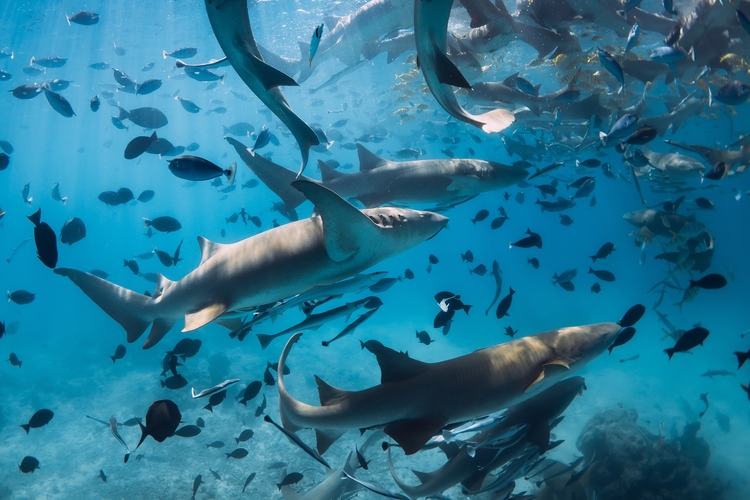
A group of nurse sharks
A group of nurse sharks, one of the species observed in the latest study. Image: Shutterstock

‘These findings suggest that exposure to artificial light at night can suppress melatonin levels in wild sharks, but vulnerability depends on behaviour,’ said Abigail Tinari, the lead author of the study, who conducted the research for her master’s thesis at the Rosenstiel School. ‘Species that are highly resident in light-polluted areas appear more susceptible than species that regularly move between illuminated and darker habitats.’

Melatonin plays an important role in regulating daily biological rhythms and is linked to overall health and physiological functioning across many animals. Disruptions to this hormone have been associated with sleep and metabolic disturbances in humans and terrestrial wildlife, but its role in sharks has remained largely unexplored.

‘Sharks play a key role in maintaining balanced marine ecosystems, and physiological changes in top predators could have cascading effects throughout the food web,’ added Neil Hammerschlag, senior author of the study.

‘Our findings highlight light pollution as a meaningful environmental stressor that warrants consideration alongside more widely recognised threats such as habitat loss and chemical pollution.’
Themes Wildlife Marine wildlife

Protected by Copyscape

Primary Sidebar

OUR UK DIRECT DEBITS ARE CHANGING
WINTER SALE

Geographical subscriptions

GEOGRAPHICAL WEEKLY LOGOFREE - Sign up to get global stories, told well, straight to your inbox every Friday

Popular Now

Human activity is pushing red pandas towards extinction

Human activity is pushing red pandas towards extinction

Kharg Island

Kharg Island: the small but vitally important piece of land powering Iran’s…

Pangolin

Wildlife Justice Commission reflects on a decade of impact with multimedia report

Normany dairy cattle. Ruminants are the most methane-intense livestock

Five unusual climate solutions you probably haven’t heard of

Satellite in space

Space is cooling down – here’s why it matters to the planet

Footer

  • Facebook
  • Instagram
  • LinkedIn
  • Reddit
  • TikTok
  • Twitter
  • YouTube

Geographical print magazine cover

Published in the UK since 1935, Geographical is the official magazine of the Royal Geographical Society (with IBG).

Informative, authoritative and educational, this site’s content covers a wide range of subject areas, including geography, culture, wildlife and exploration, illustrated with superb photography.

Click Here for SUBSCRIPTION details

Want to access Geographical on your tablet or smartphone? Press the Apple, Android or PC/Mac image below to download the app for your device

Footer Apple Footer Android Footer Mac-PC

More from Geographical

  • Subscriptions
  • Get our Newsletter
  • About Us
  • Contact Us
  • Advertise with us
  • Privacy policy
  • Terms & Conditions

Copyright © 2026 · Site by Syon Media