

The top five platforms account for nearly 60 per cent of total e-commerce traffic across the globe. Find out what they are…
By
Across the world, around $17.6billion is spent on e-commerce each day – $6.42 trillion in a single year. From buying the latest trending clothing item to ordering a spare part for your washing machine, millions of products are shipped out every day.
But where exactly are consumers turning to for their needs? Here we reveal the five major e-commerce websites that power the world’s shopping…
5) Ozon

A major Russian online marketplace, Ozon is often coined as the ‘Amazon of Russia‘. It is used by around 2.5 million customers per year, offering more than four million items across categories including electronics and food.
Enjoying this article? Check out out related reads…
4) eBay

eBay, the global online auctions company, began back in 1995. It was one of the first companies to create and market a website matching buyers and sellers of goods and services.
Despite being known for its auctions, eBay also has a significant number of transactions that are fixed-price sales.
The best-selling items on eBay include electronics – such as smartphone accessories or refurbished gadgets – as well as lifestyle products such as fashion, health and beauty items and home decor.
3) AliExpress

Launched in 2010, AliExpress functions by connecting primarily Chinese sellers with international buyers, rather than holding any inventory itself. Its reach is worldwide, serving buyers in more than 200 countries and territories.
One major selling point for AliExpress – and a significant factor in its popularity – is the plethora of items available at low price points (under $15). AliExpress also offer products with novel or viral appeal, making them a popular choice for consumers wishing to keep up with trends.
However, their business model has long been critique for its environmental footprint. Many items purchased through the website are individually packaged, often with materials that aren’t recyclable. As well as this, the numerous low-cost products are often quickly turned over, encouraging the consumption of goods with short lifespans. As such, this generates large volumes of waste.
2) TEMU

Despite launching just three years ago, TEMU has rocketed to become one of the most-used e-commerce platforms in the world. Similar to AliExpress, it connects third-party suppliers (many based in China) directly with consumers.
The site boasts more than 400 million users each month, and operates in more than 70 countries and markets across the Americas, Europe and Asia.
Its product range is broad, ranging from electronics and home goods to fashion, beauty and novelty items, and is priced ultra-low, with heavy promotions and incentives to purchase a common occurrence.
Similar to AliExpress, TEMU has come under fire for its environmental impact. As a cross-border e-commerce platform, it faces many issues, such as the impact of long-distance logistics and high shipping emissions. Packaging waste, combined with returns and the huge volume of individual shipments, contributes to waste.
Organisations like Greenpeace have encouraged TEMU to disclose climate-impact data, noting that the company is ‘silent’ on its footprint.
1) Amazon
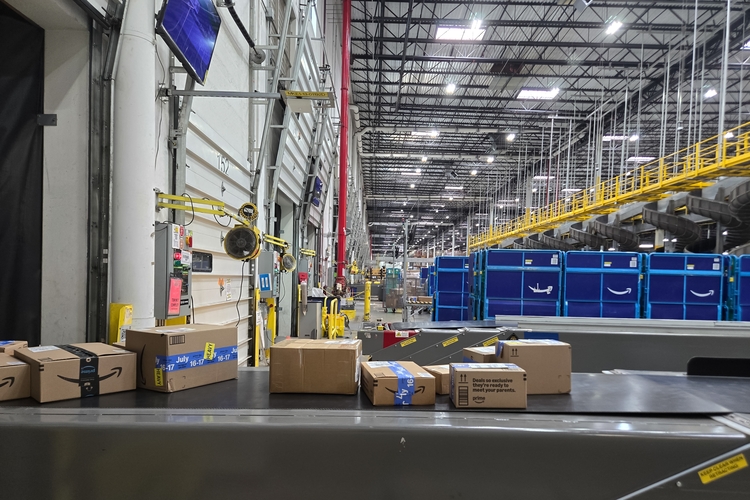
At number one is Amazon, which is estimated to have more than 310 million active users globally as of 2025. Worldwide, around 9.7 million sellers form Amazon’s marketplace.
Each day, the company ships around 1.6 million packages – around 66,000 per hour.
Despite its public pledges, Amazon’s emissions in key categories – such as shipping and delivery – continue to rise. For example, one report found shipping-related CO2e emissions rose by around 75 per cent from 2019 to 2022 (3.3 million to 5.8 million tons).


