From its small population to limited roads and public transport, discover more about the icy island of Greenland
By
The world’s largest island, Greenland, has been making headlines in recent months following President Trump’s repeated comments about buying the territory.
For Trump, owning Greenland would bring about greater ‘national security’ for the US, with the president claiming the island’s waters are ‘full of Russian and Chinese ships’. Another reason beyond national security may also factor into the US’s interest in Greenland, and that is its high volume of rare earth element deposits such as graphite and lithium. Although Greenland’s topography – covered by an ice sheet up to one mile thick in some places – could make it difficult to extract, but rising temperatures are causing ice sheets to melt and making resources more readily available.
So, what exactly does Greenland offer – and what does it not?
It has a small population
Despite its size – almost three times the size of the state of Texas – Greenland is home to just 56,000 residents. Around 19,000 live in the territory’s capital, Nuuk.
The first humans to arrive in Greenland came around 4,000 to 5,000 years ago via Canada, after the sea froze in the narrow strait at Thule in Northern Greenland. In total, six different Inuit cultures have migrated to the territory. Today, Greenland’s population is descended from the last migration, the Thule culture, who began to arrive in the 1200s.
Because of its cold Arctic climate, the residents of Greenland mostly live on the coast in settlements and cities. To make a living, fishing and hunting are popular. Farming is almost impossible in Greenland, except for in the deep south of the country, where sheep farming is popular.
It hasn’t got many roads

Greenland is home to more than fifty settlements, but has no roads connecting any of them together. There are 93 miles of roads in Greenland within these communities, but only about 56 of those miles are paved. The only traffic lights on the entire ice-covered island are in the capital, Nuuk, and even then there are just two in total.
Challenging weather conditions make it difficult to build roads in the territory, with ice and heavy snow preventing the use of materials such as asphalt and concrete, which must reach temperatures of above 50°F to set correctly.
Instead of roads, Greenlanders utilise a variety of other transportation methods – from dog sleds to passenger boats and dinghys and airplanes.
The lack of roads in Greenland also has an added benefit of protecting the planet: Greenland has some of the cleanest air anywhere in the world.
It has an abundance of rare earth elements
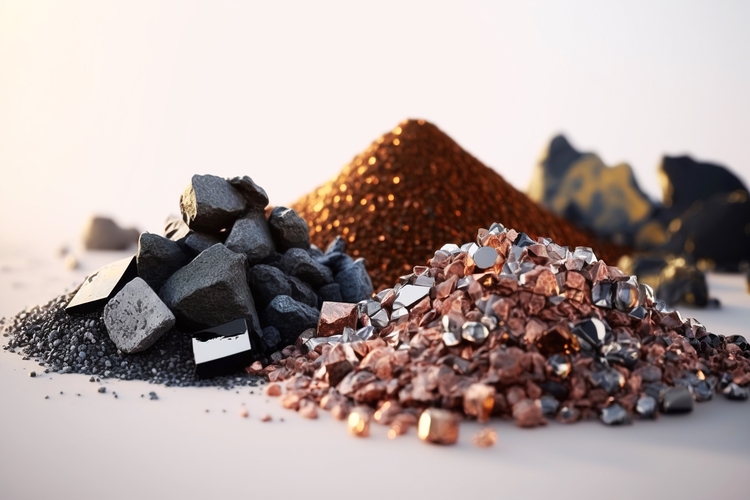
The demand for rare earth elements (REE) is greater than ever, particularly as countries shift towards using electric vehicles that rely heavily on various critical and rare metals for their batteries.
Greenland contains some of the largest deposits of rare earth elements on Earth, such as neodymium and dysprosium. Because of this, foreign companies have taken an interest in the territory’s mining infrastructure by building refineries near existing rare earth element sites.
Greenland also announced plans to create a ‘green energy corridor’ across its northern regions, powered by renewable energy sources like hydroelectricity. The energy will come from glaciers melting into rivers along the territory’s coastlines.
If a mining site were to open at Kvanefjeld – the area with the highest abundance of rare earth elements – its estimated worth would sit at $7.5bn (£6bn).
It hasn’t got political independence
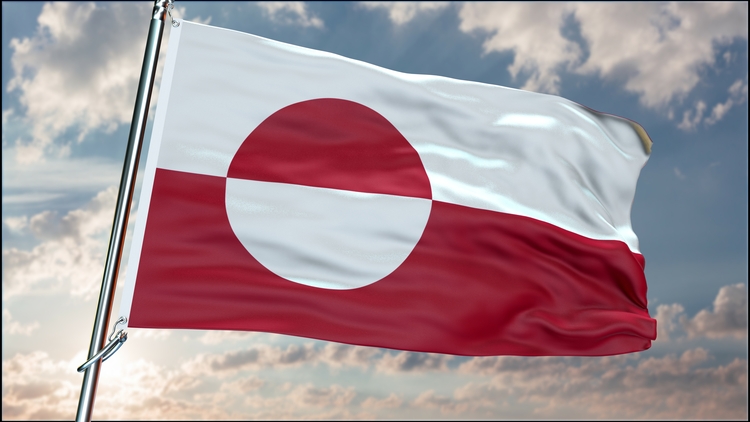
Greenland first had its own parliament and government in 1979. In 2009, a landmark act spelled out the territory’s right to self-determination and laid out a pathway toward potential independence.
Today, Greenland lacks full political independence as it remains an autonomous territory within Denmark. However, many Greenlanders have expressed their longing for a future in which the territory has independence. Some agree that to become independent, Greenland will need to strengthen its economy – a genuine possibility considering its extensive supply of valuable rare earth elements.
It has an American military base
Within Greenland lies Pituffik Space Base, formerly known as Thule Air Base – an American military base. The base exists due to agreements between the US and Denmark, specifically addressing mutual defence, and is the northernmost military base that the US has. Year around, approximately 150 US air force and space force personnel are stationed at Pituffik, alongside Danes and Greenlanders
For nine months of the year, the base is locked in by ice and is only accessible via plane. For three months, there is no sunlight.
It is home to an early warning radar weapon system able to detect ballistic missiles. As well as this, the base can monitor space for debris from decommissioned satellites and has the world’s most northerly deep-water port.
The US has had a military presence on Greenland since the Second World War, when the island was left undefended.
It hasn’t got much room to adapt to rapid environmental change

Greenland is warming faster than almost anywhere else on Earth. It is experiencing ongoing ice loss for its 29th consecutive year, with a significant increase in melting rates compared to the early 1990s.
Soon, the Greenland ice sheet is set to reach a critical tipping point. Once crossed, this means the ice sheet will never be able to fully recover. Future melting from that point onwards could trigger irreversible global sea-level rise of more than seven metres, raising oceans and altering the world’s coastlines.
A melting ice sheet has also made Greenland’s plethora of valuable rare earth elements more accessible to mine.