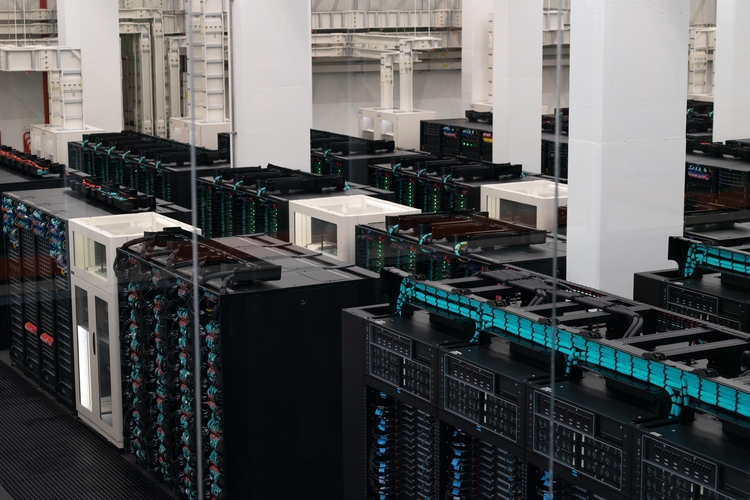
New data centre will cover more than 40,000 acres and require more power than the entire state of Utah currently consumes
By
A project to build one of the world’s largest data centres in Utah – covering an area more than twice the size of Manhattan – has faced public backlash after concerns were raised about its energy use and water consumption.
The development has been proposed by Kevin O’Leary, who has outlined that the 40,000-acre centre will be spread across three sites in Box Elder County in north-western Utah, and will require about 9GW of power – more than the entire state of Utah currently uses. The county has estimated that 2,000 permanent jobs will be created as a result of the centre’s construction.
Enjoying this article? Check out our related reads…
As well as its sizeable energy consumption, the facility will produce another seven to eight gigawatts of energy in the form of waste heat. With its location set to be in the Hansel Valley – an area that already acts as a bowl for trapping air – such a project could spike local temperatures dramatically. Projections suggest they could rise by 15C during the day and 2C during the night.
‘That’s the difference between Utah’s semi-arid climate and the Sahara Desert,’ said ecology professor at Brigham Young University Ben Abbott. ‘This would absolutely change the landscape.’
The project was first approved by Utah’s commissioners last week, even though nearly 4,000 members of the public had opposed it. One of the main concerns of those against the new data center is that it will impact the Great Salt Lake ecosystem, which is already under significant stress. Already, the lake is shrinking due to agricultural use and the impact of climate change.

Currently, Utah is also facing a water emergency after low winter snowfall left the entire state suffering from drought conditions.
In response to backlash about the project, developer O’Leary has launched a ‘media offensive’ against those protesting. In multiple posts on social media, he claimed ‘over 90 per cent of the protesters are actually not people that live in Utah or Box Elder County.’ On Fox News, O’Leary also claimed protesters were funded by the Chinese government.
Across the US, more than 1,500 data centres are in various stages of development, with the majority of these plants being proposed in rural communities. According to research from the Pew Research Center, 39 per cent of US adults say data centres are ‘mostly bad’ for home energy costs, while 30 per cent say they’re ‘mostly bad’ for the quality of life of people who live nearby.
However, a Politico poll found that 37 per cent of respondents would support the creation of a new data centre in their area, while 28 per cent would oppose it. For those already living in areas where data centres have been proposed, the picture is a little different. In Virginia – the state with the most data centres in the country – a poll found that just 35 per cent of residents are comfortable with creating data centres in their area, a drop of 34 percentage points since 2023.