A single pair of jeans can use up to 9,000 litres of water in its production, a cotton t-shirt 2,750. Here’s the shocking reality of water usage in the fashion industry
By
Around the world, 2.2 billion people – almost a quarter of the population – lack access to safe drinking water. Despite this, the fashion industry continues to consume vast swathes of the liquid across cotton cultivation, dyeing and finishing.
To put the numbers into perspective, the industry uses enough water to fill 37 million Olympic-sized swimming pools each year.
Enjoying this article? Check out our related reads…
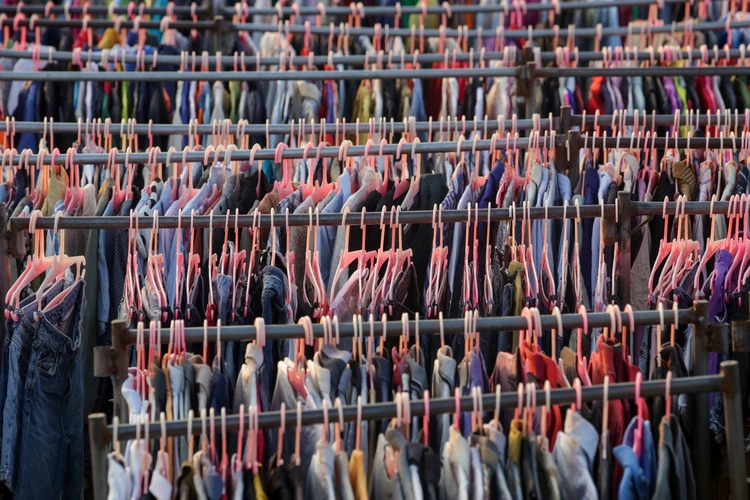
A single pair of jeans can require up to 9,000 litres of water to produce – an amount that could meet the daily drinking needs of 4,750 people. A cotton t-shirt requires 2,700 litres of fresh water, equivalent to meeting one person’s drinking needs for 2.5 years.
For the UK’s clothing alone, the water used annually to produce these products is 8 billion cubic metres. This volume could meet the entire UK population’s water needs for two years or fill Loch Ness, Scotland’s largest lake by volume.
Each year, the average Briton buys 26.7kg of garments. The water needed to produce this amount could supply a typical UK household for more than 18 months. Simple swaps can help alleviate such water usage: if every person in the UK bought one pair of second-hand jeans instead of new ones, water savings would be considerable – one trillion bottles of H2O.

Yet despite these numbers, the main water impact of clothing extends beyond UK sources. As we consume ‘affordable’ fast fashion, water depletion and pollution disproportionately impact Global South communities and contribute to water scarcity there.
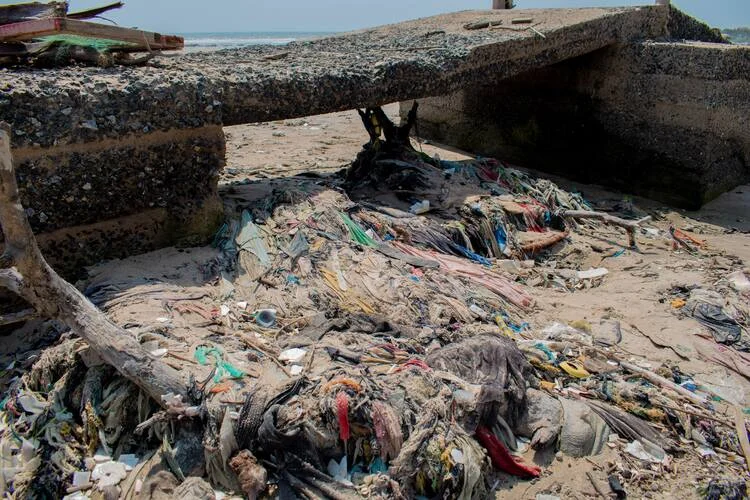
In the process of fabric dyeing and treatment, wastewater is generated. In Bangladesh alone, 1.5 trillion litres of water are used annually in garment factories and mills, depleting the region’s already dwindling groundwater resources. At the same time, such processes transport harmful contaminants to nearby water sources, such as oil, phenols, pesticides, and heavy metals.
It isn’t just water that ends up becoming polluted, though. Polluted water makes its way to nearby streams and, in turn, could be used to irrigate crops, thereby contaminating food sources.
Who are fashion’s biggest water polluters?
It is difficult to ascertain who the world’s largest water polluters are, primarily because most companies do not monitor their contributions to the industry-wide issue.
Recent studies have shown that just one in 10 fashion companies is conscious of its water pollution levels, while less than 25 per cent of companies have set goals to reduce water pollution across the supply chain.
In the past, world-leading retailers such as Zara, Calvin Klein, Marks & Spencer, Puma and Armani have been linked to water pollution scandals in China. Companies such as Gap Inc. and H&M have implemented measures to reduce water use and contamination across their manufacturing processes, but it remains to be seen whether these are empty gestures of greenwashing or tangible changes.
How can I help alleviate fashion’s water footprint?
Of course, the largest changes to curb fashion’s water use come from the companies themselves. But there are solutions you can use when shopping to help the planet.
Firstly, shop from retailers that source their cotton from certified organic cotton vendors. This can help promote sustainable farming by reducing vendors’ environmental impact.
Secondly, choose garments made of natural fibres that require less water in the manufacturing process, such as linen and organic cotton. Reduce your purchases of synthetic fibres that release microfibres, such as nylon and polyester.
As well as this, switch from fast fashion – affordable clothes that hook onto trends and fashion must-haves – to purchasing second-hand clothing. This will help reduce water usage, as you’ll be buying clothes that have already been made. If any of your items begin to snag or have a hole in them, consider repairing them instead of throwing them out and buying new ones.