
• Skip to main content
  • Skip to secondary menu
  • Skip to primary sidebar
  • Skip to footer
Geographical

Geographical

Official magazine of the Royal Geographical Society (with IBG)

  • Home
  • Briefing
  • Science & Environment
  • Climate
    • Climatewatch
  • Wildlife
  • Culture
  • Geopolitics
    • Geopolitical hotspots
  • Study Geography
    • University directory
    • Masters courses
    • Course guides
      • Climate change
      • Environmental science
      • Human geography
      • Physical geography
    • University pages
      • Aberystwyth University
      • Brunel University
      • Cardiff University
      • University of Chester
      • Edge Hill University
      • The University of Edinburgh
      • Newcastle University
      • Nottingham Trent University
      • Oxford Brookes University
      • The University of Plymouth
      • Queen Mary University of London
    • Geography careers
      • Charity/non-profit
      • Education & research
      • Environment
      • Finance & consulting
      • Government and Local Government
    • Applications and advice
  • Quizzes
  • Magazine
    • Issue previews
    • Subscribe
    • Manage My Subscription
    • Special Editions
    • Podcasts
    • Geographical Archive
    • Book reviews
    • Crosswords
    • Advertise with us
  • Subscribe
    • Direct Debit Changes

Geographical August 2024

17 July 2024
< 1 minute

August 2024


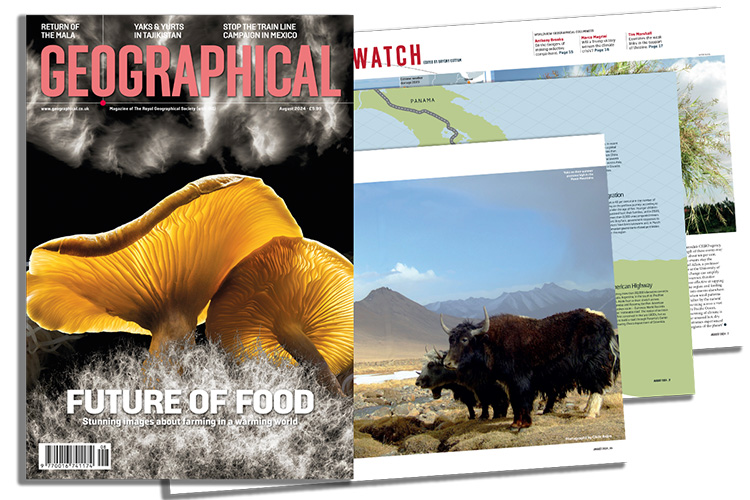
On the Yucatán Peninsula, Mexico, a giant infrastructure project is picking up speed, to the despair of conservationists. The 1,554-kilometre Tren Maya – the Maya Train – loops around the peninsula from the tourist resort of Cancún in the northwest to Palenque city in the south, through jungles and above Yucatán’s famous cenotes – natural sinkholes popular with divers and which form Mexico’s largest freshwater aquifer. In the August issue, Mark Russell reports on the ecological damage caused so far, and the latest attempt to stop the train.

Also in the August issue: a tiny kangaroo-like marsupial, once declared extinct, has returned to Australia’s Great Sandy Desert; writer Chris Aslan tells the story of his scheme to help Tajikistan’s herders sell their – previously discarded – yak down; and scientists find evidence of giant viruses that might be living on Greenland’s algae-covered ice cap – could their discovery help to slow the melting ice?
SUBSCRIBE TO READ

Themes Magazine previews Instagram

Protected by Copyscape

Primary Sidebar

OUR UK DIRECT DEBITS ARE CHANGING
WINTER SALE

Geographical subscriptions

GEOGRAPHICAL WEEKLY LOGOFREE - Sign up to get global stories, told well, straight to your inbox every Friday

Popular Now

Abstract financial diagram

A planet trillions of dollars in debt – but the bond market’s…

Parakeet on branch

Phenomena: the parakeets of urban Britain

Harbin festival in China

What do people do when their world freezes over?

QUIZ: Country Spotlight – Greenland

QUIZ: Country Spotlight – Greenland

Penguins on rocky outcrop in Antarctic

The world’s five-fastest warming regions

Footer

  • Facebook
  • Instagram
  • LinkedIn
  • Reddit
  • TikTok
  • Twitter
  • YouTube

Geographical print magazine cover

Published in the UK since 1935, Geographical is the official magazine of the Royal Geographical Society (with IBG).

Informative, authoritative and educational, this site’s content covers a wide range of subject areas, including geography, culture, wildlife and exploration, illustrated with superb photography.

Click Here for SUBSCRIPTION details

Want to access Geographical on your tablet or smartphone? Press the Apple, Android or PC/Mac image below to download the app for your device

Footer Apple Footer Android Footer Mac-PC

More from Geographical

  • Subscriptions
  • Get our Newsletter
  • About Us
  • Contact Us
  • Advertise with us
  • Privacy policy
  • Terms & Conditions

Copyright © 2026 · Site by Syon Media