Award-winning film out in cinemas exposes the high-stakes surveillance war around WikiLeaks
By
When filmmaker Eugene Jarecki set out to make The Six Billion Dollar Man, he knew he was walking into one of the most polarising stories of our time. What he didn’t expect was that the project would span continents, force his team into near-cloak-and-dagger working conditions, and culminate in a race to update the film in the wake of Julian Assange’s dramatic release earlier this year.
The result is a sprawling political thriller grounded not in fiction, but in a decade and a half of real events that Jarecki argues have reshaped global debates about surveillance, justice and the meaning of a free press.
Jarecki began working on the film five years ago, although his connection to the story reaches back much further. ‘We came into possession of absolutely shattering evidence of crimes committed by US officials against Mr Assange,’ he says. That cache, he explains, documented efforts to halt WikiLeaks’ publication of material that revealed misconduct by the US, including evidence of war crimes. The testimony was compelling enough to push him into a project that rapidly expanded in scope – and danger.
To protect their sources and themselves, the filmmaking team relocated to Berlin. Working in the US or UK, Jarecki says, would have put sensitive material at risk of seizure. The production went fully analogue for large parts of the process, air-gapping its editing suites and keeping the project physically isolated from the internet. ‘Efforts were made to infiltrate us, which we recorded,’ he says – though, fortunately, none was successful. Not all threats stayed in the shadows: the law offices of members of Assange’s legal team were also burglarised, and that incident now forms part of an ongoing espionage case in the Spanish courts.
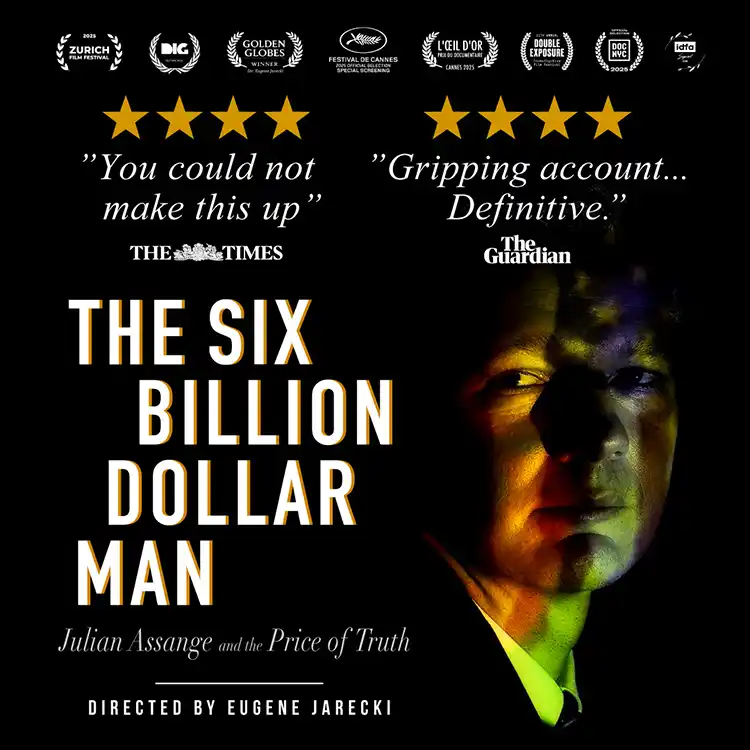
The film ultimately sprawls across more than twenty countries and features an eclectic mix of characters who have, at one point or another, orbited the Assange story. Viewers will recognise figures such as Edward Snowden, activist Pamela Anderson and even ‘Siggi the hacker’, a man Jarecki describes as ‘seemingly sociopathic’. The two Swedish women whose allegations led to Assange’s long-running legal battles also appear, although their faces are obscured. ‘We felt it was very important that they be able to tell their own side of the story,’ Jarecki says.
But not everyone agreed to participate. Some preferred, he suggests, to criticise Assange from behind the scenes rather than on camera. For Jarecki, that reticence highlights one of the film’s central tensions: who gets to define the story, and who refuses to speak when the lights switch on.
The filmmaker’s family connection to these themes is notable. His brother Andrew Jarecki – alongside co-director Charlotte Kaufman – recently released The Alabama Solution, another documentary interrogating justice and incarceration in the US. The brothers compare notes, Eugene says, and share a commitment to probing the darker edges of American systems. ‘When we see this darkness, we want to shed light on it,’ he explains, quoting Martin Luther King: ‘Darkness cannot drive out darkness. Only light can do that.’
If the making of The Six Billion Dollar Man was turbulent, the release proved no smoother. The film was originally slated to premiere at the Sundance film festival, but was withdrawn due to what Jarecki described as ‘unexpected developments’. Chief among them was Assange’s sudden release and return to Australia – a moment that reshaped the final act of the film. ‘We were working as fast as we could to incorporate this development and all its implications,’ he says. But the rush risked compromising editorial ethics and the safety of people still involved in active legal proceedings. Pulling from Sundance, he says, was ‘quite sad’, particularly given his long relationship with the festival.
By the time the film reached Cannes four months later, it had stabilised into a version Jarecki felt comfortable sharing, with the updated context integrated carefully and securely.
For all its narrative twists, The Six Billion Dollar Man ultimately raises enduring questions about state power, accountability and the cost of truth-telling. It is as much a geopolitical story as a legal one, weaving together the movements of people, information and governments across borders. It explores surveillance, migration, diplomacy and the elasticity of justice – all themes that sit squarely in the terrain of Geographical readers.
As Assange’s long saga enters a new chapter, Jarecki’s film arrives as a reminder that the political, cultural and territorial forces shaping our world rarely operate cleanly. Some unfold in daylight; others, as his team discovered, happen in rooms where electronics are switched firmly off.