From plastic to wood, metal to food waste – what exactly does the world throw away?
By
Each year, the world generates more than two billion tonnes of solid waste – equivalent to 1,993 Olympic-sized pools every single day. According to the World Bank, the trend is only set to grow. Global waste is increasing at more than twice the rate of population.
But what exactly constitutes our garbage? Read on to take a look at what the world throws away…
Food and green waste – 44 per cent

A staggering 44 per cent of the world’s total trash is either food or green waste. For richer countries, food waste happens in the kitchen – think preparing foods that go uneaten, or leaving food to spoil in fridges and kitchen cabinets.
For developing countries, food waste occurs at harvest time. That’s because improper storage facilities in farms lead to pest infestations and mould ruining crops.
Enjoying this article? Check out our related reads:
Food waste is also damaging to the environment. It generates up to 10 per cent of global greenhouse emissions – almost five times the total emissions produced by the entire aviation industry.
Typically, the fraction of organic or green waste of a nation increases as economic development levels decrease.
Paper and cardboard – 17 per cent

Each year, 72 million tonnes of cardboard are produced worldwide. An industry worth £3 billion, vast swathes of cardboard end up as waste across the globe. The UK is the biggest source of carbon waste in Europe, followed by Germany and France.
Mainly used for packaging products – such as food, furniture or toilet and kitchen paper rolls – cardboard waste has seen an increase in recent years, thanks to the rise in e-commerce and online shopping. More products bought online means a greater need for cardboard packaging. Around 90 per cent of products are shipped with these materials.
Creating cardboard waste is often unavoidable, but luckily, along with paper, it is completely recyclable – taking around two months to fully decompose – so long as it isn’t contaminated.
Plastic – 12 per cent

400 million tonnes of plastic are produced annually, yet just nine per cent of all plastic ever made has been recycled.
Single-use plastics make up a significant proportion of this waste, with more than 40 per cent of plastic products used only once before being discarded.
Approximately 11 million tonnes of plastic enter ocean waters each year, equivalent to dumping 2,000 garbage trucks full of plastic into the world’s waterways every single day. And by 2050, there could be more plastic than fish in the sea.
In the UK, it’s estimated that households throw away 1.7 billion pieces of plastic a week. Every year, that equates to throwing out around 100 billion pieces of plastic – the same number of stars in the galaxy.
Glass – 5 per cent
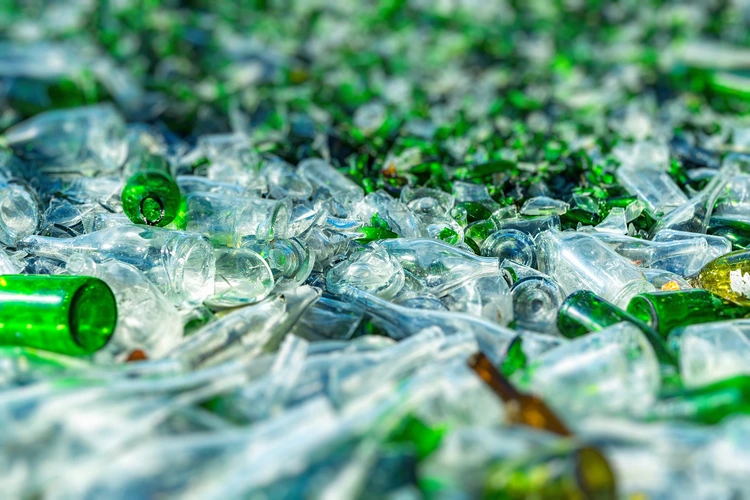
One of the most used materials in the world, glass, spells good news for the planet: it’s completely recyclable and can be recycled infinitely.
Most glass waste is simply a type of used product, such as an empty honey or coffee jar. Another kind of glass waste is broken items, such as a cracked mirror or broken vase.
The best glass recycling rates are in Sweden (95 per cent), Belgium (95 per cent), Switzerland (94 per cent), Germany (85.2 per cent) and the UK (76.5 per cent). Annually, the glass industry recycles around 27 million metric tons worldwide.
In a single year, the average UK home uses 500 glass bottles and jars.
Metal – 4 per cent
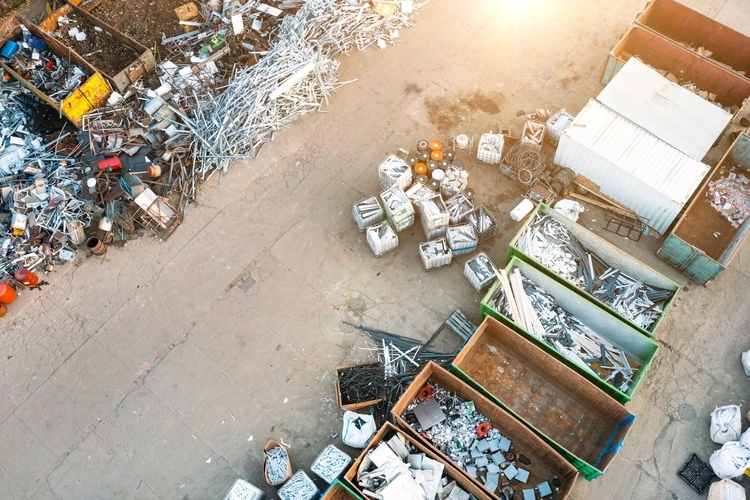
Around the world, 400 million tonnes of scrap metal are recycled each year. This figure is composed of everything from steel food tins and copper wiring to aluminium drink cans.
Food packaging is one of the main causes of metal waste, alongside factories, manufacturing and construction.
Every year, the UK produces 10 million tonnes of scrap metal, and only half of all metal waste is recycled in the nation.
Wood – 2 per cent

Despite wood being a natural and sustainable material, lots of waste wood ends up in landfills. For example, sawdust, shavings and wood chippings, or wooden pallets can end up going to waste.
Around the world, just 15 per cent of wood is recycled.
The main sources of waste wood is through packaging and shipping. Wooden pallets are used to transport goods, an item that is then no longer needed once the goods reach their final destination. Large wooden boxes also become waste once delivered.
The construction industry also causes a significant proportion of wood waste, either through extra material not needed for a project, or measuring mistakes resulting in waste.
Rubber – 2 per cent

Waste rubber can cause significant environmental harm in the landfill sites where it is placed. Worldwide, millions of tyres are wasted annually, the main source of rubber waste.
In the UK alone, an estimated 37 million car and truck tyres are discarded annually, a number expected to rise due to increased road traffic.