Bryony Cottam visits the Caribbean, discovering how its islands are showing what climate adaptation really means on the front line
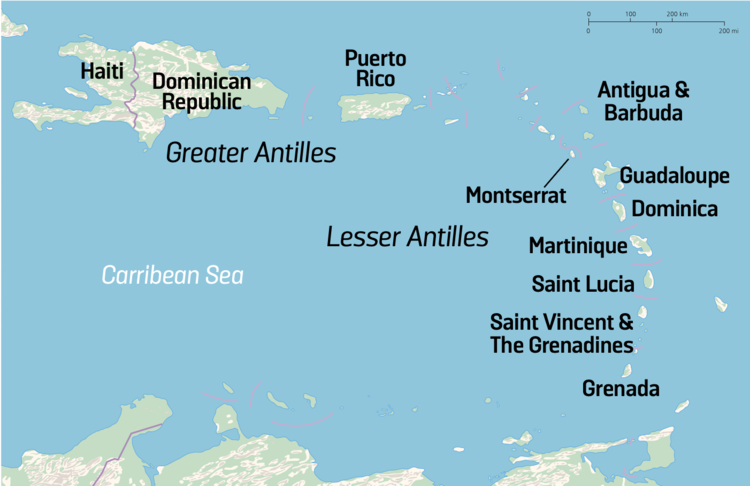
Strung along the eastern edge of the Caribbean, the Lesser Antilles is a chain of small islands facing the open Atlantic. Storms moving west from the ocean often meet these islands first. Beneath them, tectonic plates collide, feeding the volcanic arc that has shaped their mountains, soils and, at times, their disasters.
That geography has made the region both beautiful and precarious. Coastlines bring tourists, but also storm surges. Volcanoes bring danger, but also the promise of geothermal energy and valuable minerals. Rainforest, reefs and beaches sustain livelihoods, but drought, extreme rain and warming seas are beginning to test the limits of island life.
In Dominica, a geothermal plant is being built in a bid to become the world’s first climate-resilient nation. In Montserrat, scientists are asking whether the volcano that devastated the island could one day help power its recovery. In Antigua and Barbuda, water shortages are colliding with the tourist trade.
Together, these islands show what climate adaptation really means on the front line. It isn’t simply a matter of rebuilding but of rethinking energy, food, water, land and tourism before the next disaster arrives.
Breaking ground
The Caribbean island of Dominica is betting its future on the vast energy potential beneath its surface
The warm drizzle gives way to a steady downpour and we take shelter in the partially constructed building – soon to be the administration office, Dalton Eloi tells me – that faces the twin generators of Dominica’s new geothermal power plant. It’s January, the start of the dry season, but brief showers and the odd deluge have been an almost daily occurrence this past week. Eloi, the site’s mechanical engineer, explains that the plant has been built to withstand much, much worse.
Dominica is the wettest island in the eastern Caribbean, and by a wide margin. Annual rainfall in the mountainous interior consistently ranges from 7,500 to 10,000 millimetres, sometimes more; by comparison, the UK’s Lake District averages around 3,500 millimetres per year. All this rain creates a year-round cover of dense, tropical vegetation – a focal selling point for the local tourism market, which has dubbed Dominica the ‘Nature Island’. It was in the heart of these mist-shrouded highlands, in 2012, that exploratory drilling confirmed that a vast reservoir of volcanic heat lay just over a kilometre below ground.
On the drive to Laudat, a winding journey through Dominica’s Roseau Valley, we had passed industrial metal pipes that descended down the steep, jungle-clad mountainsides – carrying water to the island’s three hydroelectric plants, Eloi told me. With a combined capacity of around 7.6 megawatts, these plants produce between 15 and 30 per cent of the island’s electricity – when conditions permit. Even with its high levels of precipitation, Dominica’s dry seasons are lasting longer and the rain, when it comes, is increasingly erratic. When Hurricane Maria hit, its intensity caused landslides that washed away pipelines, diverted rivers and clogged powerhouses with metres of mud and debris.
As the sun begins to pierce the clouds, we step back out into air as thick as a sauna’s. Mehmet Pay, construction manager at Ormat, the US-Israeli firm leading the development of the project, points out the massive, over-engineered and extremely costly concrete foundations that anchor the generators to the bedrock.
Geothermal energy requires heavy upfront investment – a major barrier to wider adoption – and at US$68.3 million, the price tag for Dominica’s project has been particularly steep. ‘It’s not just a matter of putting poles in the ground,’ Fred John, managing director of the Dominica Geothermal Development Company, tells me later at the project’s air-conditioned offices in the capital, Roseau. ‘It has to withstand the reality of where we are located, and that means being able to withstand a category five hurricane.’ That includes the newly constructed transmission line that carries electricity from the plant to the national grid, which has been buried below ground to prevent the total grid collapse that left the island in darkness for months after Hurricane Maria. ‘Everything about this project is meant to deliver on the government’s post-Hurricane Maria commitment to build back better, and to be a climate-resilient country,’ says John.
While the project has needed considerable external funding in the form of grants and loans from foreign governments and development banks, it’s hoped that it will yield savings in the long run. Dominica, like many other Caribbean nations, depends on oil for the majority of its electricity supply. ‘Environmentally and financially, that’s a bad idea,’ says John. ‘There’s no stability; every time there’s an international struggle, everything changes. Our first objective is to just get rid of diesel.’
Until the early 2000s, the Caribbean relied on major international oil corporations – such as Exxon, Shell, BP and Chevron – for its fuel. This left the region fully exposed to global markets, where sudden price spikes delivered immediate, painful economic hits. Jamaica had been enjoying a decade of growth – driven by energy-intensive bauxite mining and a booming tourism sector – until the 1973 oil embargo tripled global prices almost overnight. As a global recession hit and demand for bauxite plunged, the government borrowed heavily from international lenders, accepting restrictive conditions such as deep cuts to public spending, wage freezes and tax hikes.
In 2005, under the leadership of Hugo Chávez, Venezuela launched PetroCaribe, an energy initiative supplying discounted oil to Caribbean and Central American nations on preferential financing terms. ‘It was an absolutely great deal at the time,’ says Kalim Shah, an expert on environmental and energy policy from Trinidad and Tobago. ‘It was deferred payments, and it was very low pricing.’
By the late 2010s, however, the Maduro regime’s oil sector had begun a rapid decline. ‘It became really quite dilapidated; the infrastructure was old and there was a lot of inefficiency.’ It was at this point, Shah says, that some Caribbean countries first began to look for alternatives.
While Dominica isn’t the first nation in the region to tap into geothermal energy – that distinction belongs to Guadeloupe, where the Bouillante plant has been operational for three decades – the project remains a landmark development for Dominica, an independent sovereign nation without the financial support of the EU, and for the wider Caribbean. With a capacity of ten megawatts, the plant should generate enough power to meet half of Dominica’s peak electricity demand, but John says that the island’s resources can do ‘many, many more times that’.
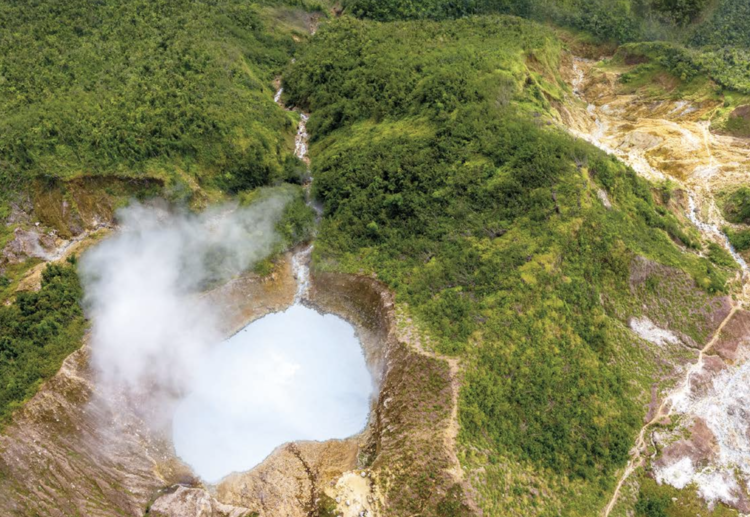
Eloi calls Dominica a ‘geological sweet spot’. Located within the Lesser Antilles Volcanic Arc, it sits directly atop a tectonic subduction zone where colliding plates force magma up from the Earth’s mantle towards the surface. Evidence of this intense volcanic activity can be seen – and smelt – across the landscape, from the back-garden spas that welcome tourists to their natural hot springs, to the great Boiling Lake and steaming fumaroles in the Valley of Desolation, a popular hiking spot in Morne Trois Pitons National Park.
Ideal temperatures for efficient geothermal energy production start at 150°C. Dominica’s geothermal fluid sits at around 260°C. This renewable resource, which naturally recharges as rainwater seeps deep into the cracks in the Earth’s crust, will be drawn up through the wells. At this point, the sudden drop in pressure causes the fluid to flash into steam, driving the turbines to generate electricity, before being reinjected deep into the Earth for the process to restart.
‘We’ll have to see how the reservoir responds,’ says Eloi. ‘There will be a lot to monitor – how temperature changes, how the fluids flow – before we can better understand the reservoir.’ But there are already plans to expand the existing plant to 20 megawatts if all goes well, and there are more geothermal sources as yet untapped on the island. If the technology can be scaled, John says, the surplus electricity could be exported to neighbouring islands, such as Martinique, or used to develop local industry. ‘That’s the next step.’
For Dominica, however, the geothermal project is about more than cheaper or cleaner electricity. It’s part of a much larger attempt to harden the island against a future in which disasters are expected to arrive with increasing force.

When Simon Brissett first arrived in Dominica, the island was a heartbreaking sight. ‘You couldn’t see the road,’ he says, gesturing to the roofless shell of a building that still stands between a stack of colourful kayaks and the freshly painted church in the small seaside town of Soufrière. ‘It was filled with debris – trees, rocks and boats – as high as the buildings.’
It was late 2017; Hurricane Maria had just made landfall. Over two days, the category five tropical cyclone tore through the length of Dominica from south to north, damaging or completely destroying almost every house in the small nation.
‘The first thing I did was join the Red Cross,’ says Brissett, a construction worker from Jamaica who, alongside islanders from across the Caribbean, got to work clearing beaches and roads, repairing roofs and helping communities to rebuild. ‘A lot of people did not think Dominica would come back from it,’ he adds.
According to the Climate Risk Index 2026, published in November 2025, Dominica was the country most affected by extreme weather events between 1995 and 2024 – a ranking determined by the number of fatalities, people affected and economic losses. Three other Caribbean islands – Haiti, Grenada and the Bahamas – made the top ten.
In the Caribbean, one of the most disaster-prone regions of the world, the frequency of extreme weather events has more than doubled, from an average of 5.2 a year between 1963 and 1999 to 10.7 between 2000 and 2023. These storms batter an already fragile region, weighed down by high debt and a heavy dependence on imports, making the economic toll far harder to absorb. The Assessment Capacities Project, a non-profit that tracks humanitarian crises, estimates that Hurricane Maria caused Dominica EC$3.69 billion (£1.03 billion) in losses – more than double the size of its entire economy in 2016.
Five days after Hurricane Maria struck, Dominica’s prime minister, Roosevelt Skerrit, urged the UN General Assembly to take action. ‘I come to you straight from the front line of the war on climate change,’ he told delegates. It was a turning point; Dominica would become the ‘world’s first climate-resilient nation’, Skerrit declared. It was less a choice than a matter of survival.
Testing the waters
Could the volcano that once devastated Montserrat now hold the key to its sustainable future?
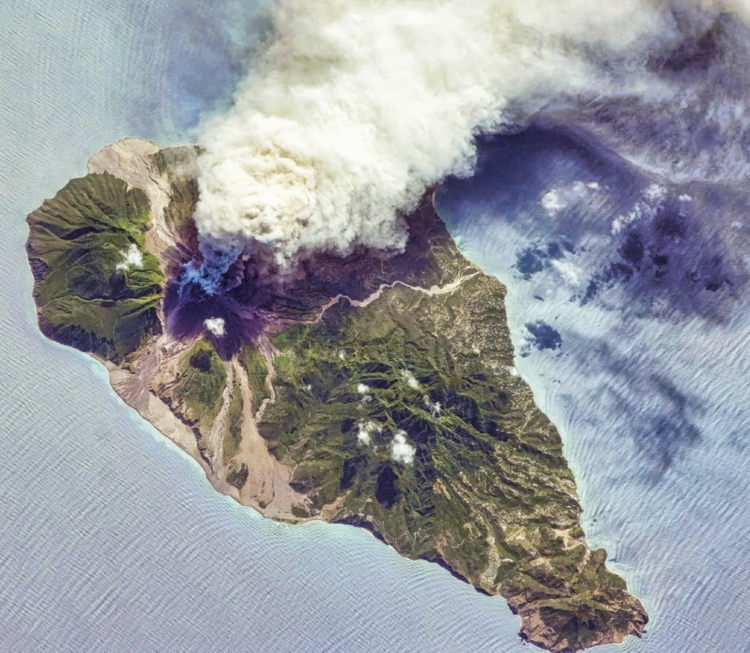
In July 1995, the Soufrière Hills stratovolcano reawakened after centuries of dormancy. Steam vented from the Earth and ash fell across villages in the south of the island. Two years later, the dome of the volcano collapsed catastrophically, sending an enormous pyroclastic flow down through the Belham Valley to Plymouth. The capital was completely destroyed.
Repeated eruptions over the following 15 years forced a mass exodus, shrinking the island’s population from roughly 12,000 to just over 4,000 and leaving it as one of the world’s least populous inhabited territories. Today, two-thirds of the island is designated an exclusion zone, where access is strictly controlled. Martinez, a geologist at the University of Oxford, was escorted through the abandoned region by guides from the Montserrat Volcano Observatory. ‘We were walking between houses three or four floors tall, and all you could see was the roof.’ Nonetheless, she says, the island has ‘a lot of potential’.
Volcanic eruptions are a regular part of life in the Caribbean, even if they don’t make the news as frequently as the region’s hurricane season. The entire chain of islands known as the Lesser Antilles – which includes Montserrat – sits on a subduction zone where tectonic plates are actively colliding. Most of the islands in this volcanic arc have at least one active volcano that scientists monitor closely. The island of Saint Vincent experienced a major explosive eruption of its La Soufrière volcano as recently as 2021, an event that led to mass evacuations and significant disruption across the island.

Montserrat’s Soufrière Hills is a particularly hazardous volcano, characterised by andesitic lava rich in silica, which makes it extremely thick and sticky. This lava collects in domes at the surface of the crater, where it can collapse – releasing a speeding avalanche of rock, ash and gas – or, when the pressure of trapped gas becomes too great, explode. Yet, paradoxically, this intense volcanic system could serve as a vital resource for the island’s recovery – potentially powering a sustainable future for Montserrat.
Volcanic gases released from magma are known to contain trace amounts of metals such as lithium, copper and gold. Previous research from the University of Oxford suggests that the volcanic brine that sits beneath volcanoes could contain several million tonnes of copper – a more environmentally friendly source than traditional mining methods, which often involve extensive surface excavation, produce massive amounts of waste rock and require energy-intensive processing to extract minerals from solid ore.
Beyond the environmental benefits, these metals could solve a major economic hurdle in regions with the potential for geothermal energy development: if developers can harvest valuable minerals alongside electricity, that secondary revenue stream could help offset the initial development costs.
‘Most existing geothermal operations are designed strictly for power generation, so they are rarely configured or optimised to extract minerals and metals at the same time,’ explains Jonathan Blundy, director of the Oxford Martin School programme on Rethinking Natural Resources. ‘By picking somewhere with huge geothermal potential, but no existing infrastructure, we can start from scratch and design something that would simultaneously reap the benefits of both.’
Blundy frames this as a spectrum of possibilities. At one end, the priority is electricity generation, with metal extraction serving primarily to lower energy tariffs. At the other, the priority might be harvesting minerals, with geothermal energy serving as the power source for the operation, or for direct applications such as heating and cooling. ‘There is a sort of continuum, and we do not quite know where we would position Montserrat on that continuum,’ he notes.
For now, further research is needed to better understand that position. Fluid samples are being collected from the island’s existing geothermal wells and analysed to better understand their temperature, composition and metal content. However, previous analysis, Martinez says, suggests the potential presence of copper and zinc – essential for the production of electric vehicles, solar panels and battery storage.
If the results prove to be positive, Montserrat could become a model for other volcanic islands, proving that a transition to renewable energy can also serve as an engine for economic growth – spurring new industries, creating jobs and providing a sustainable source of local income.
‘It could be a significant benefit for the country,’ says Blundy. ‘The people of Montserrat are just now emerging from 30 years of environmental catastrophe. It’s time that the volcano gave something back.’
Paradise on the brink
Faced with climate threats and deepening water shortages, Antigua and Barbuda remains locked into a tourism-dependent economy that leaves islands exposed
Joycie Francis steps into the goat pen and sets down a tub of feed. There’s a stampede of hooves. She points out which kids belong to which nanny, and the two feral goats – recognisable by their distinct horns – that came from Redonda, an uninhabited Caribbean island once ravaged by invasive species that has now been restored as a haven for native wildlife.
Francis is a vet who runs a low-cost clinic in St John’s, capital of the twin-island nation of Antigua and Barbuda. The goats, she explains, are part of a plan to develop a new, hardy breed that can withstand the drought-prone climate and the disease-spreading ticks that proliferate once the rain finally comes.
Antigua and Barbuda ranks as one of the most water-stressed countries in the Caribbean, and is becoming drier. The population has drastically increased its reliance on desalination, with daily production surging from 13 million litres in 2014 to a record 42 million litres by late 2025. Any time the desalination plants require maintenance, as they did in February this year, the island experiences immediate and often severe rationing.

Standing at the edge of the farm’s catchment pond, Francis’s father, Lennox, points to the damage caused by sudden, torrential rain. Water had burst through the retaining wall, causing it to collapse, and the pond was only half as full as it should have been. Local authorities were expected to arrive soon to repair the wall and replenish the supply, which is needed for both livestock and irrigation, but the island’s resources are under constant pressure from a growing population and a tourism industry that demands high usage.
The Caribbean is the world’s most tourism-dependent region. In 2025, the sector contributed 14 per cent to regional GDP, significantly higher than the global average of 9.8 per cent. For some islands – including Saint Lucia, Grenada, and Antigua and Barbuda – tourism effectively accounts for half of the entire economy. When hurricanes strike – as Irma did in 2017 – tourism infrastructure is often the first to suffer, leading to severe socioeconomic losses. Following the storm, Antigua and Barbuda faced recovery costs of US$222 million, with tourism alone accounting for 44 per cent of the total damage. The focus on a single industry may also have locked the nation into a future pathway that will be difficult to shift away from.
While Antigua sustained significant damage from Hurricane Irma, Barbuda was completely flattened, and the entire population evacuated to its sister island. Not long after, the central government moved to dismantle the centuries-old communal land system that had defined the island’s identity since the abolition of slavery in 1834. Machinery arrived to clear land for a new international airport, and plans were fast-tracked for high-end residential complexes and luxury resorts on previously protected land.
In February 2024, the Judicial Committee of the Privy Council ruled in favour of the central government, effectively upholding the repeal of the Barbuda Land Act. It was a major blow to the Barbuda Council and local activists who had been fighting the central government’s move to privatise land since the aftermath of Hurricane Irma in 2017. In the time since, the granting of long-term leases to foreign interests has accelerated, and local resistance has intensified.
In April, as the government announced its ambitious new agenda for growth, tourism minister Charles Fernandez emphasised the sector’s role in the nation’s future:
‘Tourism is not merely an industry. It is the lifeblood of our economy. It is the engine of growth, the foundation of thousands of livelihoods, and one of the strongest pillars supporting our national development.’
Charting new futures
Across the Caribbean, small island states are moving beyond disaster recovery and investing in new forms of resilience – from climate-smart farming to stronger hospitals and alternative sources of development finance.
Exposed, isolated and with a high coast-to-land ratio, small island developing states such as Dominica are disproportionately affected by climate change. ‘The Caribbean islands are essentially a microcosm of the challenges we’re all facing,’ says Stephen Flynn, director of Northeastern University’s Global Resilience Institute. ‘They also face the most extreme vulnerability. If you’re on a small island like Dominica and a volcano goes off or a major hurricane strikes, you’re stuck.’
With scientists warning that parts of the Caribbean could become nearly uninhabitable without immediate action, some islands are shifting their strategy from merely rebuilding lost infrastructure to proactively reducing future risks through a range of new measures.
Planting resilience
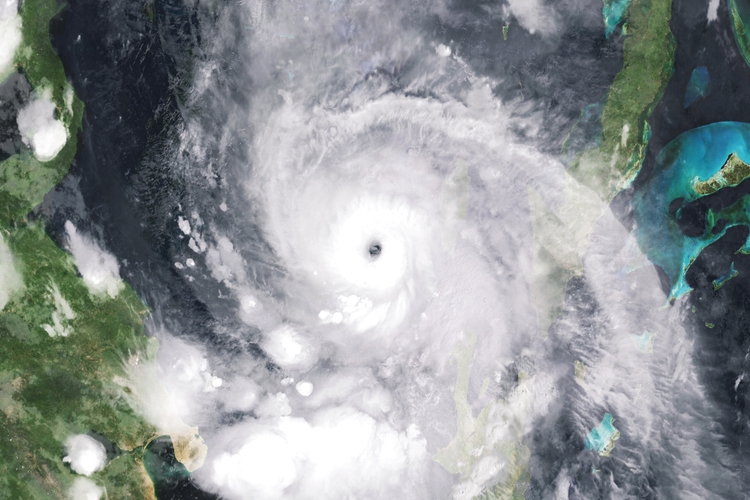
Last October, Hurricane Melissa became the first category five hurricane to make direct landfall in Jamaica. The storm inflicted more than US$6 billion in damage and affected more than 100,000 structures across key agricultural parishes.

In October 2025, Hurricane Melissa became one of the strongest on record to hit the Caribbean. Image: NASA
Food insecurity is a growing concern in the Caribbean, where hotter temperatures, droughts, flooding and more frequent storms are damaging crop yields and harming livestock. In April, the Green Climate Fund granted US$50 million to ADAPT Jamaica, an ambitious project that aims to strengthen the island’s agricultural sector, particularly across its most vulnerable parishes.
Through ‘farmer field schools’, more than 7,000 farmers will receive hands-on training in climate-smart agricultural technologies such as solar-powered irrigation, cold storage and improved crop varieties. Demonstration sites will showcase the benefits of agroforestry, hurricane-resistant greenhouses and efficient irrigation systems, with the goal of stabilising farmer incomes, reducing post-harvest losses and ensuring greater food security.
Stronger health system
For years, staff at Anguilla’s Princess Alexandra Hospital spent hours each day manually filling and transporting heavy oxygen canisters, a labour-intensive process that often failed to keep up with patient demand. With local facilities unable to generate sufficient oxygen, the hospital depended on shipments from neighbouring islands – a logistical lifeline that quickly failed when Hurricane Irma battered the region in 2017.
Healthcare infrastructure has been designated a high priority by the Organisation of Eastern Caribbean States’ Climate and Disaster Resilience Unit, which recently partnered with the charity Direct Relief to increase disaster preparedness across the region. A new centralised medical oxygen system, which pipes oxygen directly to each of the hospital’s beds, is one of ten major new projects funded by a US$3 million grant.
‘This for us is a great success story,’ says Malcolm Webster, the hospital’s health services coordinator. ‘We’ve spent a lot of time working on our resilience and making sure our hospital is as self-sufficient as possible.’
Filling the void
Since early 2025, the withdrawal of US funding – specifically following the dismantling of USAID – has created a critical resource gap. For years, these programmes had been the backbone of essential services and climate-adaptation efforts, from specialised HIV/AIDS clinics in St Lucia and Grenada to early-warning systems and hydrological monitoring stations.
But as Western donations decrease and Caribbean nations seek alternative funding, China has emerged as the primary alternative. Unlike the previous focus on humanitarian grants and technical assistance, Chinese engagement – often via the Belt and Road Initiative – centres on large-scale physical infrastructure, from hospitals and stadiums to transportation networks and energy grids.
This transition marks a shift from flexible humanitarian support to capital-intensive development, leaving islands to navigate a future where resilience is increasingly built on concrete and government-to-government loans rather than traditional aid.