
• Skip to main content
  • Skip to secondary menu
  • Skip to primary sidebar
  • Skip to footer
Geographical

Geographical

Official magazine of the Royal Geographical Society (with IBG)

  • Geographical Home
  • News
  • Features
  • Opinion
    • Climatewatch
    • Front Lines
  • Podcast
  • Travel
    • Discovering Britain
    • Passport
  • Culture
    • Book reviews
  • Quizzes
    • Crosswords
  • Choose Geography
    • University directory
    • Masters courses
    • Course guides
      • Climate change
      • Environmental science
      • Human geography
      • Physical geography
    • University pages
      • Aberystwyth University
      • Brunel University
      • Cardiff University
      • University of Chester
      • Edge Hill University
      • The University of Edinburgh
      • Newcastle University
      • Nottingham Trent University
      • Oxford Brookes University
      • The University of Plymouth
      • Queen Mary University of London
    • Geography careers
      • Charity/non-profit
      • Education & research
      • Environment
      • Finance & consulting
      • Government and Local Government
    • Applications and advice
  • Magazine
    • Issue previews
    • Subscribe
    • Manage My Subscription
    • Special Editions
    • Geographical Archive
    • Advertise with us
  • Subscribe
    • Direct Debit Changes

Pakistan floods were a disaster, but not a natural one

29 October 2022
2 minutes

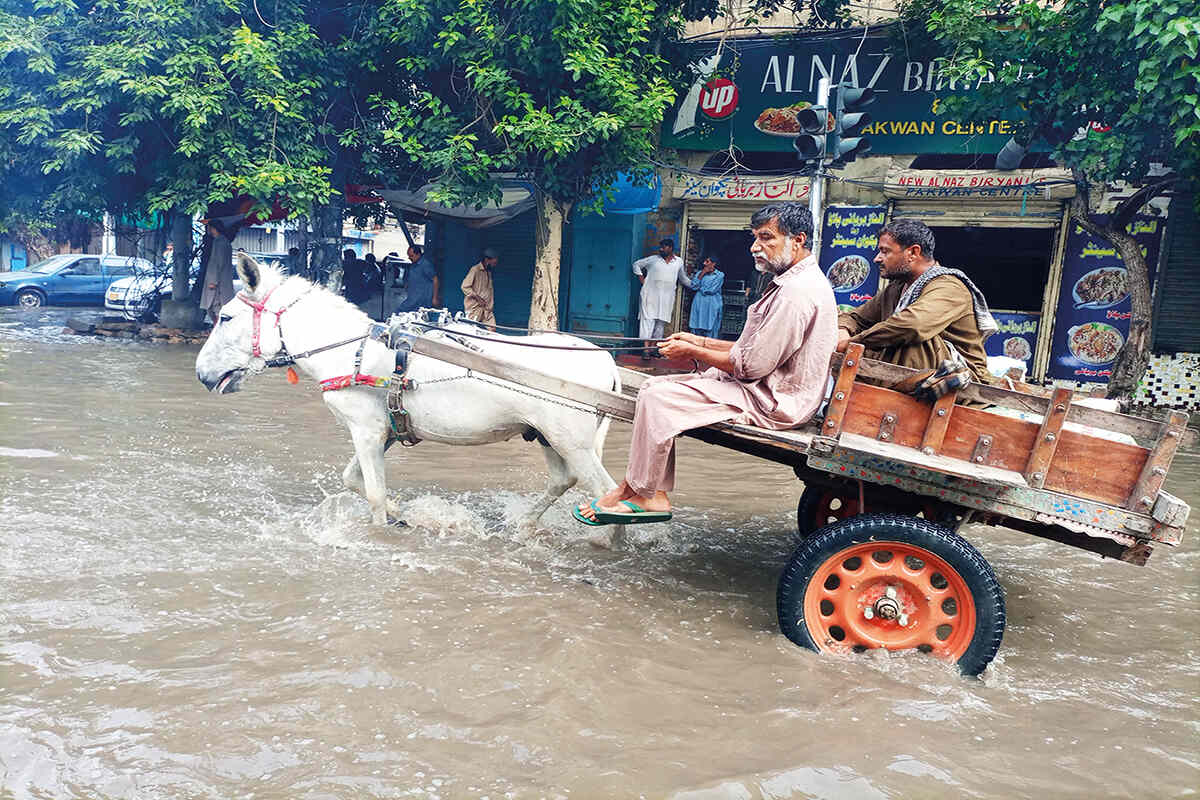
A man on a horse and cart moving through a flooded street in Karachi, Pakistan
Flooding in Karachi, Pakistan, this summer

Summer 2022 saw devastating floods in Pakistan, but climate change is only one of a number of factors causing these disasters


This summer’s devastating floods in Pakistan, caused by a tripling of the country’s usual rainfall for August, were likely intensified by human-caused climate change. However, analysis of the flooding, conducted by researchers at the World Weather Attribution initiative, suggests that climate change is one of a number of factors; high rates of poverty and political instability also contributed to the amount of damage caused.

Scientists from Pakistan, India, the Netherlands, France, Denmark, South Africa, New Zealand, the US and the UK analysed whether, and to what extent, human-caused climate change altered the likelihood and intensity of this extreme rainfall. They found that the 5-day maximum rainfall over the provinces Sindh and Balochistan is now about 75 per cent more intense than it would have been had the climate not warmed by 1.2°C. However, they also found that the devastating impacts of the Pakistan floods were driven by the close proximity of human settlements and infrastructure to floodplains, as well as an outdated river management system, political and economic instability, and underlying vulnerabilities driven by levels of income and education.

The term ‘Natural disaster’ is widely used to report on the impact that natural hazards such as earthquakes, typhoons and volcanoes have on society or communities, including the damage and loss of life caused by the floods in Pakistan this year. But a growing number of scientists and aid workers are arguing that this terminology is misleading and turns the focus away from the human decisions that turn a natural event into a disaster. ‘This study illustrates very well what scholars in disaster studies have long argued: namely, that there’s no such thing as a natural disaster,’ says Leslie Mabon, lecturer in environmental systems at the Open University. Mabon adds that while climate change makes weather extremes more likely, political decisions influence who and where are worst affected by extreme events, and the extent to which people are able to adapt.
Themes Climate Change Floods November 22 Worldwatch

Protected by Copyscape

Primary Sidebar

SUBSCRIBE

GEOGRAPHICAL WEEKLY LOGO FREE - Sign up to get context, clarity and perspective in a noisy world, every Friday
GIVE A GIFT

Give a year of Geographical - order a gift subscription

Popular Now

Underwater background with water bubbles and undersea light rays shine. Dark blue ocean surface seen from underwater. Sunbeams and Sea deep or ocean underwater a Abstract

Unprecedented volcanic activity discovered in Mariana Trench by robot submarine

Glacial melt

COP31 fails to reach deal, but latest report underscores how vital climate…

Admiralty Bay Antarctica Epic Vista Over Floating Icy Bits, Snow Covered Mountains and Glacier Frozen Landscape Wide Natural Beauty Remote Travel

Evidence of Himalayan-scale supermountains found beneath Antarctica

Ocean waves from above, aerial shot

After COP31, what will it take to turn ocean ambition into action?

An offshore platform silhouetted against an orange and purple sunset over the sea

Can we bury our way out of the climate crisis?

Footer

  • Facebook
  • Instagram
  • LinkedIn
  • Reddit
  • TikTok
  • Twitter
  • YouTube

Geographical print magazine cover

Published in the UK since 1935, Geographical is the official magazine of the Royal Geographical Society (with IBG).

Informative, authoritative and educational, this site’s content covers a wide range of subject areas, including geography, culture, wildlife and exploration, illustrated with superb photography.

Click Here for SUBSCRIPTION details

Want to access Geographical on your tablet or smartphone? Press the Apple, Android or PC/Mac image below to download the app for your device

Footer Apple Footer Android Footer Mac-PC

More from Geographical

  • Subscriptions
  • Get our Newsletter
  • About Us
  • Contact Us
  • Advertise with us
  • Privacy policy
  • Terms & Conditions

Copyright © 2026 · Site by Syon Media