From ancient settlements to caves inside gorges, discover some of the places that could become the next UNESCO World Heritage Sites
By
Around the world, there are more than 1,2000 UNESCO World Heritage Sites – sites chosen for having ‘outstanding universal value’ and meeting at least one out of ten selection criteria outlined by UNESCO.
These include representing a ‘masterpiece of human creative genius’; ‘bearing a unique or at least exceptional testimony to a cultural tradition or to a civilisation which is living or which has disappeared ‘; and ‘containing the most important and significant natural habitats for in-situ conservation of biological diversity’.
Enjoying this article? Check out our related reads…
But a UNESCO World Heritage Site is not just a name: World Heritage status commits a home nation to protect the designated location. And if a site begins to lose its value – for example, through war, disaster, or a lack of funds – nations that have signed a treaty must assist, where possible, with emergency aid campaigns.
Below, we reveal ten sites that may soon gain UNESCO World Heritage status, having appeared on the organisation’s ‘tentative list’ either in 2025 or 2026:
1) Areni-1 Cave, Armenia
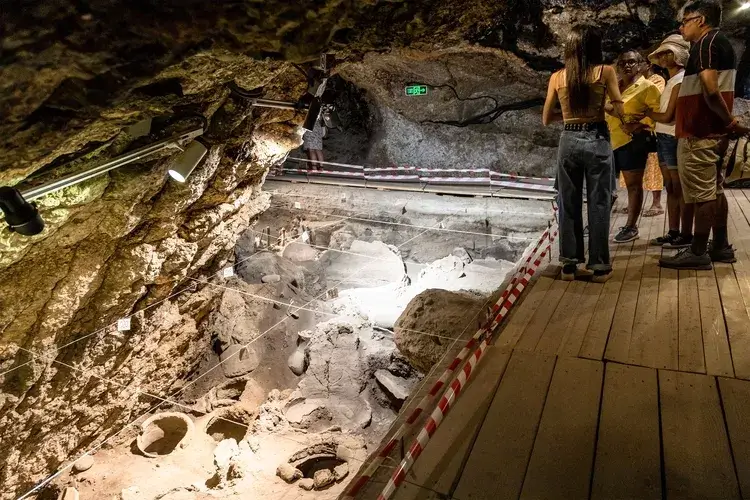
Known locally as Birds’ Cave, this cave lies in the limestone cliffs of the Arpa River Gorge in southern Armenia. The cave’s stable, dry microclimate has preserved materials which normally disappear from prehistoric archaeological sites, such as wood, rope, basketry, leather, seeds and food remains.
The cave is also home to the earliest archaeologically documented integrated winemaking installation, dating back to 4000BCE. Inside the cave, there is a complete leather shoe – dated to around 3627–3377 BCE, as well as storage pits and tools.
2) The Geode of Pulpí, Spain
This geode sits inside a former mine at Pilar de Jaravía in Almería in southeastern Spain. Enormous prismatic crystals on its floor reach almost two metres long, with the surrounding geology containing minerals from gypsum to celestine, pyrite and barite.
3) Karst Landscape Maros Pangkep Prehistoric Cave Area, Indonesia
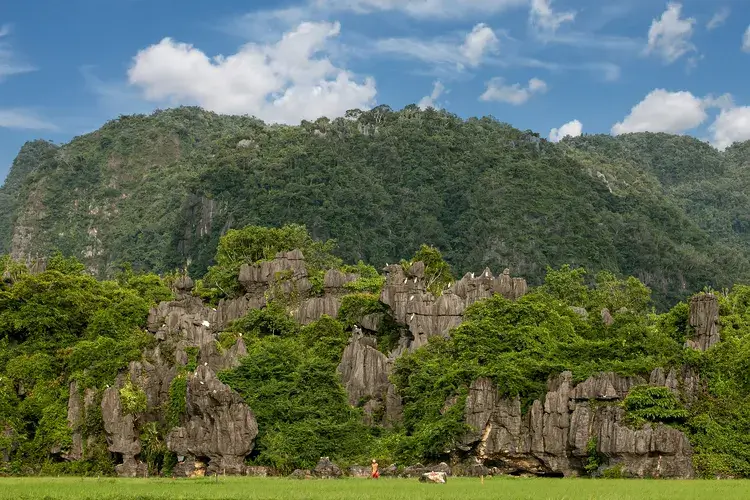
Set inside limestone formations is the Maros Pangkep Prehistoric Cave Area, where hundreds of caves preserve evidence of prehistoric occupation. Thousands of paintings – including hand stencils and depictions of animals – date back at least 39,900 years, and the caves also contain evidence of pigment use and stone-tool technology.
The limestone system in which the caves are set is a major aquifer supplying water to hundreds of thousands of people, while the caves and surrounding ecosystems offer respite for a wealth of biodiversity.
4) Coastal Fortified Network of South Eastern Arabia, UAE
This network links Dibba Al-Hisn, Khor Fakkan and Khor Kalba, three settlements along Sharjah’s eastern coast. Together, they preserve evidence of an organised maritime corridor.
In particular, Khor Fakkan’s West Fort comprises three phases of fortification, with archaeologists uncovering houses dating to the 15th and early 16th centuries.
5) Painted Haveli Towns of Shekhawati, India
Located in India, these 14 historic settlements spread across Jhunjhunu, Churu and Sikar districts of Rajasthan, including Mandawa, Nawalgarh, Fatehpur, Churu and Sikar, are notable for their concentration of painted merchant mansions, known as havelis.
These were constructed during the 18th, 19th and early 20th centuries, with exterior and interior walls extensively decorated with frescoes.
6) Écosystème terrestre et paysage culturel de Mohéli, Comoros
Mohéli is one of the islands of the Comoros archipelago in the Indian Ocean. There, natural ecosystems combine with a living cultural landscape. This includes the Mzé Koukoulé ridge forest, where a tropical rainforest and cloud forest lie against Mohéli’s mountainscape – providing a habitat for fruit bats and rare birds.
A crater lake known as Dziani Boudouni is also found in this web of ecosystems. As the Comoros’ only large body of fresh water, it is vital for migratory birds travelling between Madagascar and East Africa.
In Mohéli, traditional agriculture, agroforestry, forest management and community practices still continue, with interactions between people and island ecosystems making the site significant.
7) Karst, Canyons and Caves of Kugitang, Uzbekistan
In Uzbekistan, this landscape of karst, canyons and caves is a meeting point for three broad ecological zones – Irano-Turanian desert mountains, semi-arid mountain woodland and temperate high mountains. In addition, caves and aquifers in the landscape help to support subterranean organisms adapted to life without light.
Some of the aquatic cave fauna found there may have ancestry reaching back to the ancient Paratethys, a vast body of water which once occupied parts of Eurasia millions of years ago.
8) Cu Chi Tunnels, Vietnam
Lying at the northwestern gateway to Ho Chi Minh City are the Cu Chi tunnels. This labyrinthine system of tunnels became vital during the Second Indochina War, incorporating communication routes, combat positions, meeting and working rooms, infirmaries, wells, trenches and food storage chambers. Some sections were even constructed on three underground levels, while others connected to the Saigon River.
9) Réserve naturelle d’Annobón, Equatorial Guinea
A tiny island belonging to Equatorial Guinea, Annobón is only around seven kilometres long and 2.5 kilometres wide. It is home to Lake A Pot, which occupies a volcanic crater in the north – around 700 metres across.
Endemic animals live in the natural reserve, such as the Annobón scops owl and endemic reptiles. However, pressures such as intensive agriculture, population pressure, invasive rodents, and a shortage of conservation personnel threaten the reserve, which is one of the reasons it has been proposed as a UNESCO World Heritage Site.
10) Bazira-Barikot, Pakistan
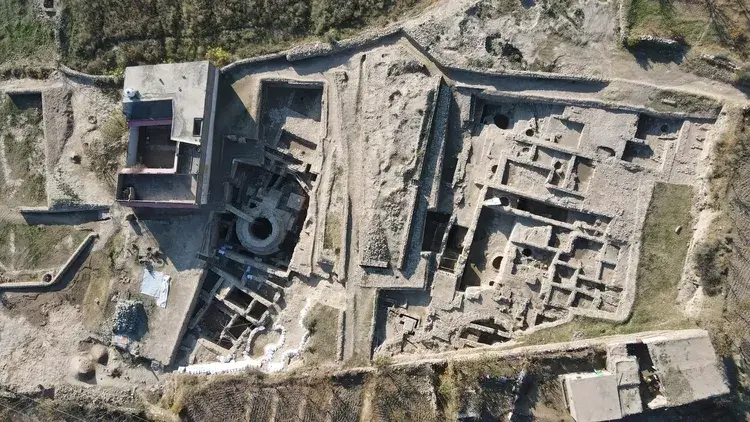
An ancient settlement sitting on the left bank of the Swat River in Pakistan’s Swat Valley, Bazira-Barikot has streets, houses, workshops, defensive structures and religious buildings, preserving evidence of occupation. The settlement also features fortifications, including defensive walls and an acropolis.
The site has also become particularly important within the Gandharan cultural world, which played a major role in the spread of Buddhism.